Birds · Taeniopygia guttata
Zebra finch cage & care
Zebra finches need at least a 30 × 18 × 18 in cage and a steady 70–78°F. They live 5–10 years, and a complete setup costs $181–$404.
- Lifespan
- 5–10 years
- Adult size
- 4-5 in (10-13 cm) beak to tail tip
- Smallest cage
- 30×18×18 in
- Diet
- Pellets, seeds, greens, cuttlebone
- Handling
- Hands-off: best watched
- First year
- $321–$694
What do zebra finches eat?
Finch pellets as the base (avian vets suggest more than half the diet), plus a quality finch seed mix, fresh chopped greens and vegetables daily, a cuttlebone for calcium, and egg food during breeding or molting.
Food per year: $40–$80
Zebra finch temperature & humidity
Warm side
70–78°F
Cool side
65–72°F
- Night
- 65–70°F
- Humidity
- 40–60%
Keep enclosure in a room with a stable ambient temperature free from cold drafts, direct window sun, or cooking fumes.
Zebra finch cage size
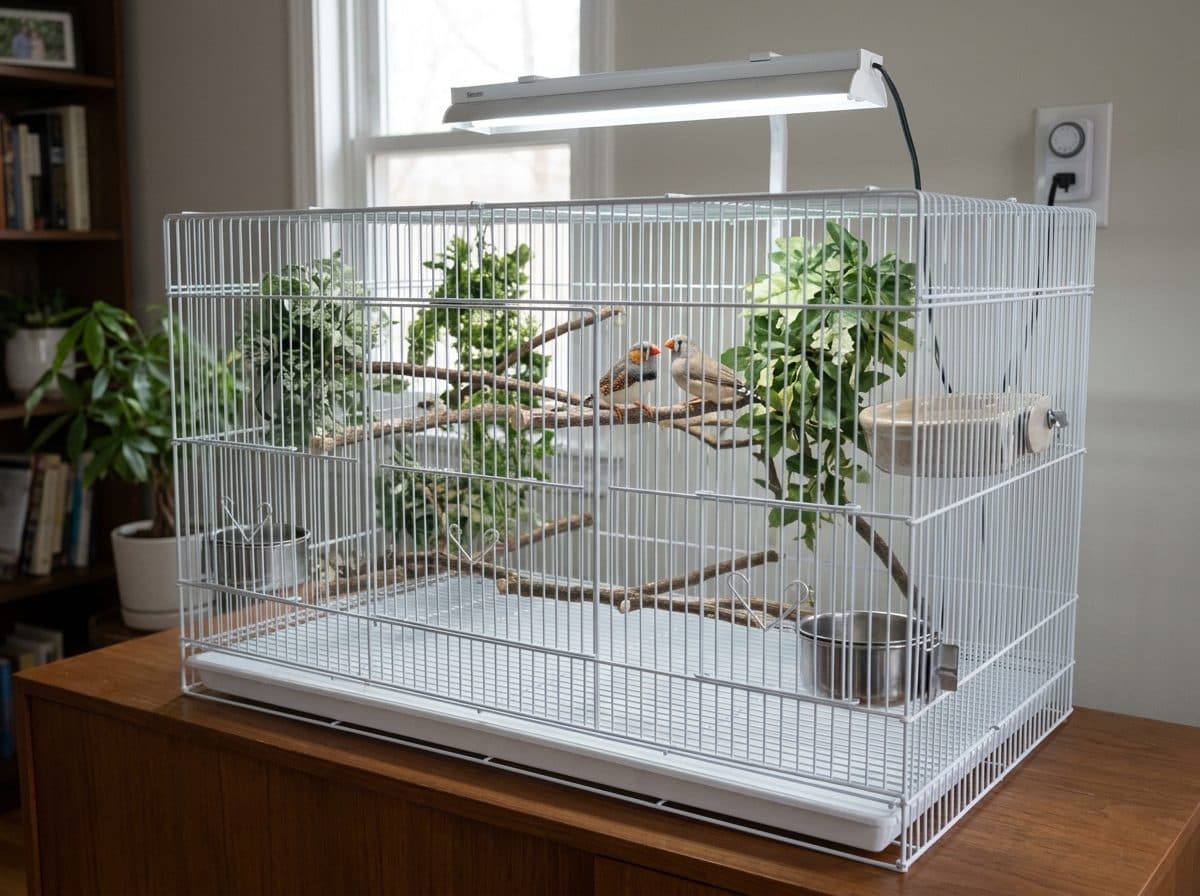
30 × 18 × 18 in (2.5 × 1.5 × 1.5 ft) for an adult. Wire cage with solid floor, horizontal layout.
Weaned youngsters need the same cage and narrow bar spacing as adults.
Never keep one alone. Keep at least a pair: two males or two females won't breed, while a male-female pair will nest. Add about 12 inches of cage length per extra pair, and use an aviary for a real flock.
Lighting & heat
UVB: Full-spectrum avian UV lamp (a bird-specific UVB tube or bulb) 12-18 in above the top perches, on for the same 10-12 hour day as the room lights
Heat: Not required under normal indoor room temperatures
Day length: 10–12 hours light, 12–14 hours dark
Substrate
Good choices: Plain paper cage liners; Unprinted newsprint; Paper towels.
Avoid: Crushed walnut shells; Wood shavings; Loose sand or grit paper; Corn cob bedding.
What a zebra finch needs
Everything for a complete adult setup. Essentials are ticked; untick anything you already have.
How much is a zebra finch?
- The zebra finch itselfPrice is per bird, and you need at least two. Chain pet stores and local breeders charge similar prices; rare color mutations cost more.
- $15–$40
- Setup, essentials
- $181–$404
- Every year after
- $140–$290
- First year, setup plus supplies
- $321–$694
What you keep buying, per year
| Finch Pellets and Low-Fat Seed MixA continuous supply of fresh pellets and high-quality seeds forms the core daily diet. | monthly | $40–$80 |
| Paper Cage Liners and Fresh GreensFresh paper liners maintain hygiene while weekly fresh greens provide essential nutritional variety. | weekly | $50–$100 |
| Cuttlebone and toysReplaces worn calcium sources and provides vital mental stimulation to prevent boredom. | every 2-3 months | $20–$50 |
| Avian Linear UVB Bulb ReplacementUVB bulbs stop emitting effective UV wavelengths over time even if they still produce visible light. | every 6-12 months | $30–$60 |
Typical US prices. Vet care isn't included: budget for a check-up with an exotics vet after your pet comes home, and keep an emergency fund.
Are zebra finches good pets?
Yes, and a good first pet.
Zebra finches live 5–10 years, need about 15–30 minutes of care a day and cost $140–$290 a year in supplies. They are animals to watch, not hold.
- Handling
- Hands-off: best watched
- Difficulty
- Beginner
- Daily care
- 15–30 min
- Lives
- 5–10 years
Before your zebra finch comes home
- 01
1 week before
Assemble the flight cage and install perches and accessories
Setting up early ensures all fixtures are secure, correctly spaced, and free of manufacturing dust or safety hazards.
- 02
48 hours before
Set up and test the UVB light and digital timer
Testing the light schedule in advance ensures the light operates reliably without subjecting the bird to trial-and-error changes.
- 03
Day one
Transfer finches to the cage and provide food and water immediately
Finches have rapid metabolisms and high stress levels, so quick access to nourishment in a quiet room prevents fatal exhaustion.
- 04
First two weeks
Observe from a distance and minimize direct interaction
Allowing finches to acclimate undisturbed prevents severe stress and helps them adjust safely to their new environment.
- 05
First month
Schedule a baseline health exam with an avian veterinarian
A professional wellness check establishes a baseline and screens for hidden illness or parasite risks.
Common setup mistakes
- Buying a tall, narrow parrot cage instead of a wide horizontal flight cage
- Using a cage with bar spacing wider than 3/8 inch, which lets finches escape or get stuck.
- Housing a Zebra Finch strictly alone rather than in a pair or flock
- Relying solely on smooth plastic or uniform wooden dowel perches
- Feeding an all-seed diet with no pellets, fresh greens or calcium.
- Placing the cage in a kitchen where non-stick cookware fumes can be fatal
Questions people ask
What cage size do I need for a pair of Zebra Finches?
Give a pair at least 30 x 18 x 18 inches, with bar spacing of 3/8 inch or less. Length matters most, because finches exercise by flying side to side.
Can I keep a single Zebra Finch by itself?
No, Zebra Finches are highly social flock birds and experience distress when kept completely alone. They should always be kept in pairs or even-numbered small groups.
What ambient room temperatures do Zebra Finches need?
They do best at normal indoor room temperatures between 65°F and 78°F, avoiding sudden temperature drops or cold drafts.
How much does a complete Zebra Finch setup cost?
Expect about $181-$404 for the essentials: a flight cage, natural perches, liners, dishes, a bird UV lamp and timer, cuttlebone, a bath and a bird-safe cleaner. The birds and food are extra.
Sources
The numbers on this page come from these care sheets and references, checked October 2026. How we make these guides.