Birds · Serinus canaria domestica
Canary cage & care
Canaries need at least a 30 × 18 × 18 in cage. They live 8–12 years, and a complete setup costs $236–$473.
- Lifespan
- 8–12 years
- Adult size
- 4.5-5.5 in (11-14 cm)
- Smallest cage
- 30×18×18 in
- Diet
- Pellets, a little seed, greens
- Handling
- Hands-off: best watched
- First year
- $386–$768
What do canaries eat?
Canary pellets as the base (ideally about three-quarters of the diet) with a small amount of canary seed, plus fresh greens and vegetables such as kale, endive, broccoli and dandelion greens. Offer a cuttlebone for calcium; grit isn't needed. Never feed avocado.
Food per year: $90–$180
Canary temperature & humidity
- Humidity
- 40–60%
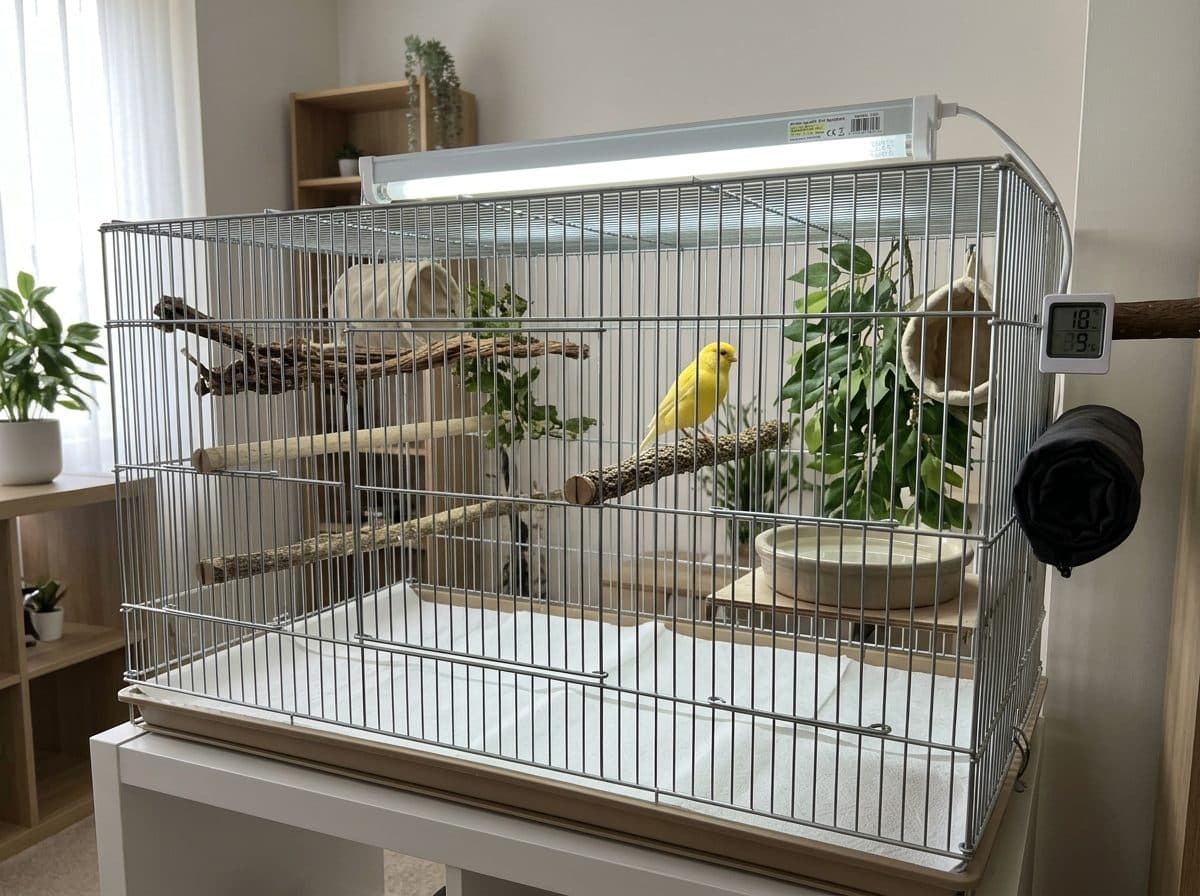
Canaries thrive in standard room temperatures between 65°F and 75°F. Keep the enclosure completely away from cold drafts, air conditioning vents, and direct, unshaded sunlight.
Canary cage size
30 × 18 × 18 in (2.5 × 1.5 × 1.5 ft) for an adult. Wire flight cage with solid tray floor, horizontal layout.
Weaned juvenile canaries have identical cage size and maximum 1/2-inch bar spacing requirements as adults to prevent escape or injury.
Canaries do fine alone, and a lone male usually sings most. Males can fight, especially in spring, so keep them in separate cages; a few females can share a roomy flight cage.
Lighting & heat
UVB: Linear full-spectrum avian UVB fluorescent light (2.4% UVB) placed directly above the cage top
Heat: not required
Day length: 12–14 on, then 10–12 hours of quiet darkness
Substrate
Good choices: plain paper cage liners; paper towels; unprinted butcher paper; recycled paper sheets.
Avoid: loose sand or gravel paper; crushed walnut shells; corn cob bedding; cedar shavings; pine shavings.
What a canary needs
Everything for a complete adult setup. Essentials are ticked; untick anything you already have.
How much is a canary?
- The canary itselfPrices vary depending on whether you adopt or purchase from a pet store or breeder, as well as the bird's sex, color variety, and singing ability.
- $30–$200
- Setup, essentials
- $236–$473
- Every year after
- $150–$295
- First year, setup plus supplies
- $386–$768
What you keep buying, per year
| Canary pellet and seed dietProvides essential balanced daily nutrition to prevent metabolic deficiencies. | monthly | $40–$80 |
| Fresh produce and greensSupplies necessary vitamins, minerals, and moisture enrichment. | weekly | $50–$100 |
| Cage paper linersMaintains cage hygiene and prevents fungal or bacterial build-up. | monthly | $20–$40 |
| Cuttlebone and pet-safe cleanerEnsures essential calcium access and allows for safe, non-toxic cage disinfection. | every 3-6 months | $15–$30 |
| Avian linear UVB fluorescent tubeUVB output degrades over time even if visible light remains functional. | every 6-12 months | $25–$45 |
Typical US prices. Vet care isn't included: budget for a check-up with an exotics vet after your pet comes home, and keep an emergency fund.
Are canaries good pets?
Yes, and a good first pet.
Canaries live 8–12 years, need about 15–30 minutes of care a day and cost $150–$295 a year in supplies. They are animals to watch, not hold.
- Handling
- Hands-off: best watched
- Difficulty
- Beginner
- Daily care
- 15–30 min
- Lives
- 8–12 years
- Before you buy
- Canaries are legal to keep in every US state with no permit needed.
Before your canary comes home
- 01
1 week before
Assemble cage and test lighting schedule
Ensures the cage environment is stable and that the photoperiod timer operates properly without exposing a bird to sudden lighting stress.
- 02
48 hours before
Stock food, water, and liners
Prevents last-minute disturbance to the cage layout right before or during arrival.
- 03
day one
Place canary gently in cage and cover three sides
Reduces visual stressors and helps the bird settle safely into a novel environment.
- 04
first two weeks
Observe quietly and minimize physical interaction
Canaries are easily stressed by human handling, so giving them space allows them to acclimate and begin eating reliably.
- 05
first 30 days
Schedule a baseline health exam with an avian veterinarian
Identifies subclinical infections, parasitic issues, or dietary imbalances early before stress triggers severe disease.
Common setup mistakes
- Choosing a tall, narrow cage instead of a wide, horizontal flight cage.
- Using non-stick (PTFE/PFOA) cookware, scented candles, or aerosol sprays in the same home.
- Placing the cage in a kitchen, near drafty windows, or in direct unshaded sunlight.
- Using uniform smooth plastic or dowel perches, which leads to foot sores.
- Feeding an all-seed diet, which causes obesity, fatty liver disease, and nutritional deficiencies.
Questions people ask
What size cage does a canary need?
A single canary requires a horizontal flight cage at least 30 inches wide, 18 inches deep, and 18 inches high, with bar spacing no wider than 1/2 inch. Canaries fly side-to-side rather than climbing, so width is much more important than height.
What temperature range is safe for a canary?
Canaries do best in standard indoor temperatures between 65°F and 75°F. Avoid placing the cage near heating vents, air conditioners, or cold drafts.
What initial supplies do I need to buy for a canary?
You need a horizontal flight cage, natural branch perches of varied thickness, stainless steel food and water dishes, an avian UVB light, cage paper liners, a bird bath, cuttlebone, and high-quality canary pellets.
How much does a canary setup cost?
An initial setup typically costs between $235 and $475 for the flight cage, perches, UVB lighting, dishes, starter food, a cover and a travel carrier.
Sources
The numbers on this page come from these care sheets and references, checked October 2026. How we make these guides.