Birds · Forpus coelestis
Parrotlet cage & care
Parrotlets need at least a 24 × 20 × 30 in cage. They live 15–20 years, and a complete setup costs $285–$584.
- Lifespan
- 15–20 years
- Adult size
- 4.5-5.5 in (11-14 cm) head to tail tip
- Smallest cage
- 24×20×30 in
- Diet
- Pellets, greens, vegetables, seeds
- Handling
- Enjoys handling
- First year
- $580–$1,174
What do parrotlets eat?
A balanced diet consists of high-quality formulated organic bird pellets (60–70%), daily fresh leafy greens and vegetables (20–30%), and small portions of seeds or healthy grains reserved for treats and training. Avoid avocado, chocolate, caffeine, fruit seeds, and high-fat all-seed mixtures.
Food per year: $120–$240
Parrotlet temperature & humidity
- Humidity
- 40–60%
Parrotlets do well at normal room temperatures of about 65-80°F. Keep the cage away from cold drafts, heating vents, air conditioners and kitchen fumes (especially non-stick PTFE pans).
Parrotlet cage size
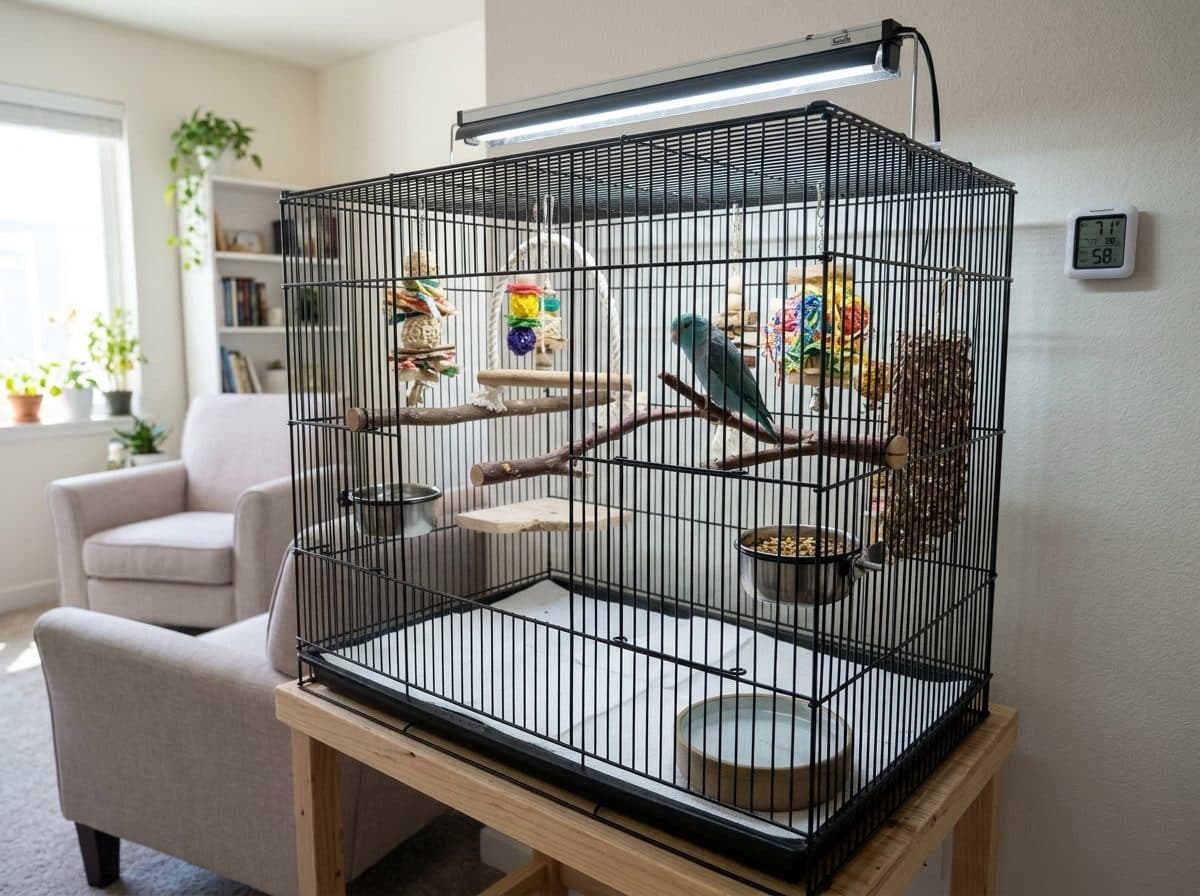
24 × 20 × 30 in (2 × 1.7 × 2.5 ft) for an adult. Wire cage with solid floor, any orientation.
Young birds use the same cage as adults; keep bar spacing at 1/2 inch or less (3/8 inch is ideal) to prevent head entrapment.
A single parrotlet bonds most closely with people. A male-female pair can share a larger cage after a slow introduction, but pairs bond to each other and may breed. Never house parrotlets with other bird species, which they will pick fights with.
Lighting & heat
UVB: Avian-specific 2.4% UVB linear lamp mounted over the cage on a daytime timer; time in unfiltered sunlight (not through glass) also helps
Heat: Not required at normal room temperatures; if the room drops below 65°F, warm the room with a bird-safe heater that has no non-stick (PTFE) coating
Day length: 12–14 on, then 10–12 hours of quiet darkness
Substrate
Good choices: plain paper towels; unprinted newsprint; recycled paper cage liners.
Avoid: wood shavings (cedar, pine); crushed corn cob; walnut shells; cat litter; loose sand or grit.
What a parrotlet needs
Everything for a complete adult setup. Essentials are ticked; untick anything you already have.
- $90–$180Amazon ↗
- $8–$16Amazon ↗
- $7–$14Amazon ↗
- $6–$12Amazon ↗
- $40–$75Amazon ↗
- $6–$15Amazon ↗
- $5–$12Amazon ↗
- $15–$30Amazon ↗
- $12–$22Amazon ↗
- $10–$18Amazon ↗
- $8–$16Amazon ↗
- $4–$9Amazon ↗
- $18–$40Amazon ↗
- $30–$70Amazon ↗
- $15–$28Amazon ↗
13 items: $285–$584Typical US retail ranges, not live prices. Untick what you already have.
How much is a parrotlet?
- The parrotlet itselfPrice is primarily driven by color mutation, hand-taming/socialization status, sex, and whether purchased from a rescue, local breeder, or specialty pet store.
- $150–$500
- Setup, essentials
- $285–$584
- Every year after
- $295–$590
- First year, setup plus supplies
- $580–$1,174
What you keep buying, per year
| Pellets, seeds, and fresh produceProvides the required high-quality daily nutrition consisting of organic pellets, fresh vegetables, and occasional seed treats. | monthly | $120–$240 |
| Paper cage linersMaintains cage hygiene and allows easy daily monitoring of droppings. | monthly | $30–$60 |
| Shredding and foraging toysPrevents boredom and feather plucking by providing constant mental stimulation and destructible materials. | monthly | $100–$200 |
| Linear T5 UVB bulbUVB output degrades over time even if the bulb still emits visible light, requiring periodic replacement for proper vitamin D3 synthesis. | every 6-12 months | $25–$50 |
| Bird-safe cage disinfectantEnsures deep cleaning of perches, grate surfaces, and food bowls without exposing sensitive avian lungs to toxic fumes. | every 3-6 months | $20–$40 |
Typical US prices. Vet care isn't included: budget for a check-up with an exotics vet after your pet comes home, and keep an emergency fund.
Are parrotlets good pets?
Yes, for someone ready for the work.
Parrotlets live 15–20 years, need about 45–90 minutes of care a day and cost $295–$590 a year in supplies. They enjoy being handled once they know you.
- Handling
- Enjoys handling
- Difficulty
- Intermediate
- Daily care
- 45–90 min
- Lives
- 15–20 years
- Before you buy
- Parrotlets are legal to keep in all US states without a permit. Buy captive-bred birds; the Wild Bird Conservation Act bars most imports of wild-caught parrots.
Before your parrotlet comes home
- 01
1-2 weeks before
Assemble enclosure and install lighting and accessories
Ensures the cage, perches, dishes, and UVB lighting fixture are fully prepared and secure before the bird arrives.
- 02
48 hours before
Test lighting timers and monitor room temperature
Confirms ambient temperatures remain consistently safe without placing a live bird at risk.
- 03
Day one
Place bird in cage and minimize room stress
Allows the parrotlet to acclimate safely to its new surroundings without added stress from handling or loud noises.
- 04
First 3-7 days
Observe quietly without forced handling
Prevents extreme stress and allows the bird to build confidence while adjusting to its new routine and caregivers.
- 05
First two weeks
Schedule a new-pet wellness exam with an avian veterinarian
Establishes a baseline for health and detects any underlying physical or parasitic issues early.
Common setup mistakes
- Using cages with bar spacing larger than 1/2 inch, which allows parrotlets to squeeze through or get their heads trapped.
- Exposing the bird to airborne toxins like Teflon/PTFE non-stick cookware fumes, scented candles, aerosol sprays, and incense.
- Feeding an all-seed diet, which leads to fatty liver disease, nutritional deficiencies, and reduced lifespan.
- Using smooth plastic perches or uniform wooden dowels exclusively, causing foot cramping and sores.
- Housing parrotlets with other bird species, which they will attack even when the other bird is much larger.
Questions people ask
What is the minimum cage size for a parrotlet?
A single parrotlet needs a cage of at least 24 inches long, 20 inches deep and 30 inches tall, with bar spacing of 1/2 inch or narrower. Pick the widest cage you can; length matters more than height for short flights.
Do parrotlets need full spectrum lighting?
It's strongly recommended. Window glass filters out UVB, so an avian-specific UV lamp over the cage helps with vitamin D3, feather health and normal daily rhythms. Time in unfiltered sunlight, safely supervised, also helps.
How much does a complete parrotlet setup cost?
Initial setup costs typically range from $285 to $585. That covers a proper cage ($90-$180), natural perches, toys, dishes, avian UVB lighting, a travel carrier and cleaning supplies.
Can parrotlets be housed together in the same cage?
Sometimes. A male-female pair can share a roomy cage after a slow introduction, but they will bond to each other more than to you and may breed. Same-sex or unfamiliar birds often fight, and parrotlets should never share a cage with other species.
Sources
The numbers on this page come from these care sheets and references, checked October 2026. How we make these guides.