Birds · Agapornis spp.
Lovebird Cage Setup
Lovebirds are energetic, highly intelligent small parrots known for their vibrant colors and bold personalities. Proper care requires a wide horizontal flight cage with narrow bar spacing, natural perches, a pellet-based diet, and extensive daily social interaction and mental stimulation.
- Minimum cage (adult)
- 36×24×24 in
- Temperature
- Room temp
- Humidity
- 40–60%
- Essentials cost
- $209–$460
The setup at a glance
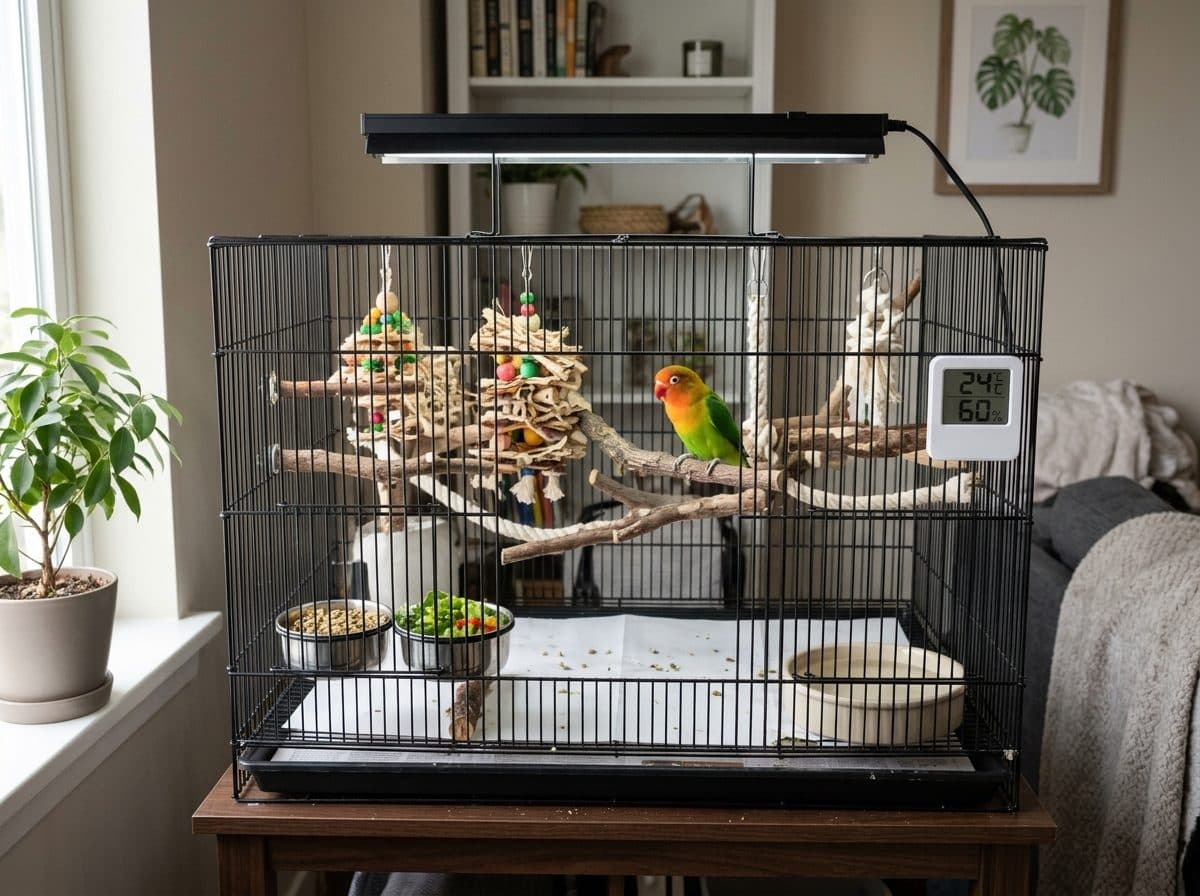
Cage size
Adult minimum: 36 × 24 × 24 in (3 × 2 × 2 ft). Wire flight cage with pull-out tray, horizontal layout.
Ensure strict 1/2-inch or smaller bar spacing to prevent head entrapment, and set perches lower down while young birds gain stability.
Bonded pairs need more room than the 36 x 24 x 24 inch single-bird minimum; go larger and watch closely for territorial feather-plucking or aggression.
Adult size: 5-7 in (13-18 cm) head to tail. Lifespan: 10–15 years. Difficulty: intermediate. Enjoys handling; about 60–120 minutes of care a day.
Temperature & humidity
| Humidity | 40–60% |
Lovebirds thrive at typical room temperatures of 65–80°F. Protect them from cold window drafts, air conditioning vents, and lethal airborne PTFE/Teflon cookware fumes.
Lighting & heat
UVB: recommended, not required: 2.4-5% avian linear T5 fluorescent or LED UVB fixture positioned over top cage bars (window glass blocks UVB)
Heat: None required at standard indoor room temperatures (65-80°F)
Day length: 10-12 on hours
Substrate & diet
Good choices: unprinted newsprint; paper towels; kraft paper cage liners.
Avoid: cedar shavings; pine shavings; corn cob bedding; crushed walnut shells; gravel/sand paper.
Diet: Feed high-quality small parrot pellets as 60-70% of the total diet, supplemented daily with fresh dark leafy greens and raw vegetables. Reserve seeds, nuts, and millet spray for training rewards and foraging activities.
Lovebird setup checklist
Everything for a complete adult setup. Essentials are ticked; untick anything you already have.
What a Lovebird costs to keep
- Setup (essentials)
- $209–$460
- Every year after
- $360–$720
- First year, all in
- $569–$1,180
| Ongoing | How often | Per year |
|---|---|---|
| Small parrot pellet dietPellets serve as the primary dietary staple to prevent nutritional deficiencies. | monthly | $80–$150 |
| Paper cage linersFresh paper liners maintain a hygienic environment and facilitate daily health monitoring via droppings. | monthly | $30–$60 |
| Fresh produce & greensDaily fresh vegetables provide vital micronutrients and mental enrichment. | weekly | $100–$200 |
| Foraging & shredding toysLovebirds need constant shredding materials to satisfy chewing instincts and prevent psychological stress. | monthly | $120–$250 |
| Linear T5 avian UVB lampUVB output degrades over time despite visible light remaining, requiring scheduled replacement for proper vitamin D3 synthesis. | every 6-12 months | $30–$60 |
Typical US prices. Vet care isn't included: budget for a check-up with an exotics vet after you bring your pet home, and keep an emergency fund.
Before your lovebird comes home
2 weeks before
Assemble cage and place perches, food cups, and toys
Setting up early ensures all necessary safety and enrichment elements are in place without rushing.
1 week before
Install overhead UVB lighting and verify temperature/humidity stability
Testing the lighting layout and monitoring room conditions ensures a comfortable, safe environment before the bird arrives.
48 hours before
Sanitize cage surfaces and prep food and paper liners
Cleaning removes shipping dust and prepares a spotless home for arrival.
Day one
Place the lovebird gently in its cage and offer fresh water and food
Allowing immediate entry to the cage reduces transport stress and gives the bird a secure home base.
First week
See an avian vet and quarantine from other birds
Have the bird examined as soon as possible, and keep it in a separate room for 30-45 days before it meets any other birds.
First two weeks
Minimize physical handling and observe eating, drinking, and droppings
Leaving the bird undisturbed while maintaining a predictable routine allows it to acclimate safely without triggering excessive fear.
Common setup mistakes
- Using a cage with bar spacing wider than 1/2 inch, which creates a fatal head entrapment hazard.
- Feeding an all-seed diet instead of nutritionally complete pellets and fresh vegetables.
- Exposing the bird to airborne toxins like non-stick PTFE/Teflon cookware fumes, scented candles, or aerosols.
- Using uniform smooth wood dowels or plastic perches, leading to foot fatigue and bumblefoot.
- Providing fabric snuggles, fuzzy nests, or coconut huts that trigger extreme hormonal aggression and egg binding.
Questions people ask
What size cage does a lovebird need?
A single lovebird needs a horizontal flight cage at least 36 in long by 24 in deep by 24 in tall, with bar spacing strict at 1/2 inch or less to prevent escape or entrapment.
What temperature should a lovebird's environment be?
Lovebirds do best at standard room temperatures between 65°F and 80°F. Keep their cage away from direct drafts, windows, and heater vents.
What do I need to buy before bringing a lovebird home?
You need a flight cage, natural branch perches of varying thickness, stainless steel food and water cups, formulated pellet food, foraging shred toys, and paper cage liners. An avian UVB light is recommended but optional.
How much does a complete lovebird setup cost?
The essentials—cage, perches, bowls, initial food, toys, liners, thermometer, and cleaning supplies—typically cost between $210 and $460; an optional avian UVB light adds $35-$70.
Sources
The numbers on this page come from these care sheets and references, checked October 2026. How we make these guides.