Birds · Pyrrhura molinae
Green-cheeked conure cage & care
Green-cheeked conures need at least a 30 × 24 × 36 in cage. They live 15–25 years, and a complete setup costs $330–$667.
- Lifespan
- 15–25 years
- Adult size
- 10 in (25 cm) head to tail tip
- Smallest cage
- 30×24×36 in
- Diet
- Pellets, greens, vegetables, fruits
- Handling
- Enjoys handling
- First year
- $770–$1,607
What do green-cheeked conures eat?
A healthy conure diet consists of 70% high-quality small parrot pellets and 30% fresh daily vegetable chop, leafy greens, and occasional fruits. Seed mixes should only be given as high-value training rewards to prevent fatty liver disease.
Food per year: $120–$240
Green-cheeked conure temperature & humidity
- Humidity
- 40–60%
Conures thrive at ambient household temperatures between 65°F and 80°F. Keep the enclosure completely out of drafts, away from direct sunlight, and far from kitchens due to fatal non-stick cookware fumes.
Green-cheeked conure cage size
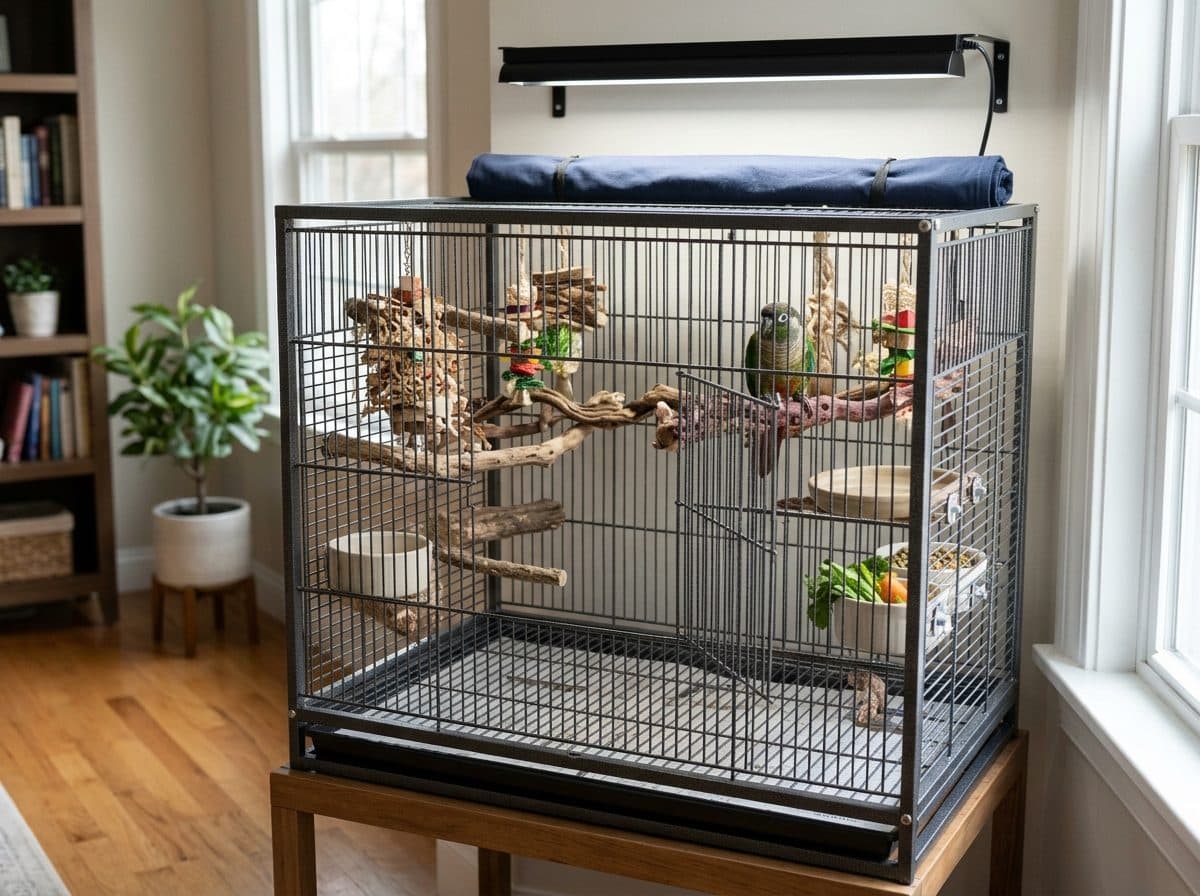
30 × 24 × 36 in (2.5 × 2 × 3 ft) for an adult. Powder-coated wire cage with removable tray, any orientation.
Young birds use the same cage as adults; keep bar spacing at 1/2 to 5/8 inch so a small head can't get through.
A single conure needs a lot of daily attention. Two green-cheeks can be kept together after a slow introduction, but don't house them with smaller birds such as budgies or parrotlets, which they can injure.
Lighting & heat
UVB: Avian-specific 2.4% UVB linear lamp mounted over the cage on a daytime timer; time in unfiltered sunlight (not through glass) also helps
Heat: Not required under normal indoor room temperatures
Day length: 12–14 on, then 10–12 hours of quiet darkness
Substrate
Good choices: unprinted newsprint; paper towels; kraft paper cage liners; plain butcher paper.
Avoid: corn cob bedding; wood shavings; cedar chips; crushed walnut shells; kitty litter.
What a green-cheeked conure needs
Everything for a complete adult setup. Essentials are ticked; untick anything you already have.
How much is a green-cheeked conure?
- The green-cheeked conure itselfPrices vary depending on color mutation (normal/pineapple vs. turquoise/suncheek), hand-reared socialization, and seller type (breeders/rescues vs. retail pet stores).
- $200–$800
- Setup, essentials
- $330–$667
- Every year after
- $440–$940
- First year, setup plus supplies
- $770–$1,607
What you keep buying, per year
| Pelleted Food & Seed RewardsHigh-quality parrot pellets and small training treats form the foundation of their daily nutrition. | monthly | $120–$240 |
| Fresh Produce & Chop IngredientsDaily fresh vegetables, leafy greens, and occasional fruits provide necessary micro-nutrients and enrichment. | weekly | $150–$300 |
| Cage Liners & Cleaning SuppliesRegular paper liner changes and bird-safe disinfectants are required to keep the environment sanitary. | monthly | $40–$90 |
| Foraging Toys & Shredding MaterialsConures need a constant rotation of destructible toys to prevent boredom and feather plucking. | monthly | $100–$250 |
| Avian UVB Bulb ReplacementUVB output degrades over time even if the bulb still emits visible light, needing periodic renewal for proper calcium absorption. | every 6-12 months | $30–$60 |
Typical US prices. Vet care isn't included: budget for a check-up with an exotics vet after your pet comes home, and keep an emergency fund.
Are green-cheeked conures good pets?
Yes, for someone ready for the work.
Green-cheeked conures live 15–25 years, need about 90–180 minutes of care a day and cost $440–$940 a year in supplies. They enjoy being handled once they know you.
- Handling
- Enjoys handling
- Difficulty
- Intermediate
- Daily care
- 90–180 min
- Lives
- 15–25 years
- Before you buy
- Green-cheeked conures are legal to keep in all US states without a permit. Buy captive-bred birds; the Wild Bird Conservation Act bars most imports of wild-caught parrots.
Before your green-cheeked conure comes home
- 01
1-2 weeks before
Assemble cage and set up lighting
Ensures all perches, toys, and the overhead UVB lighting are securely installed before the bird arrives.
- 02
48 hours before
Bird-proof the surrounding home
Remove air pollutants like non-stick cookware, scented candles, and essential oils that are fatal to avian respiratory systems.
- 03
Day one
Place bird in cage with quiet surroundings
Minimizes severe relocation stress by giving the conure a calm space to eat, drink, and acclimate.
- 04
First 3-7 days
Observe without direct handling
Allows the conure to build trust and adjust to your presence through low-stress voice interactions before physical contact.
- 05
First two weeks
Schedule a new-bird wellness exam with an avian vet
Establishes a baseline for health and screens for hidden infectious diseases or underlying health conditions.
Common setup mistakes
- Using non-stick cookware, Teflon, scented candles, or aerosol sprays nearby, which release fatal respiratory toxins.
- Feeding an all-seed diet that causes obesity, fatty liver disease, and severe vitamin A deficiency.
- Using smooth plastic or uniform wood dowel perches, leading to foot cramps and bumblefoot.
- Selecting a cage with bar spacing wider than 5/8 inch, posing a severe head entrapment hazard.
- Failing to provide 10 to 12 hours of uninterrupted dark sleep time, which triggers chronic hormonal behavioral issues.
Questions people ask
What size cage does a green-cheeked conure need?
A single green-cheeked conure needs a cage of at least 30 inches wide, 24 inches deep and 36 inches tall, with bar spacing of 1/2 to 5/8 inch. Bigger is always better for climbing, toys and short flights.
What temperature is best for a green-cheeked conure?
Green-cheeked conures do best in standard room temperatures between 65°F and 80°F. Avoid sudden temperature drops and keep the cage far away from drafty windows, exterior doors, and direct AC vents.
How much does a complete green-cheeked conure setup cost?
An initial setup, including a properly sized cage, natural perches, UVB lighting, dishes, pellets, toys, a cover and a travel carrier, typically costs between $330 and $670 in total.
Sources
The numbers on this page come from these care sheets and references, checked October 2026. How we make these guides.