Fish · Paracheirodon innesi
Neon tetra tank & care
Neon tetras need at least a 20-gallon tank and 72–78°F water. They live 5–8 years, and a complete setup costs $217–$425.
- Lifespan
- 5–8 years
- Adult size
- 1.2-1.5 in (3-4 cm) total length
- Smallest tank
- 20 gal
- Diet
- Micro-pellets, flakes, live, frozen
- Handling
- Hands-off: best watched
- First year
- $297–$570
What do neon tetras eat?
Omnivorous micro-predators requiring small-sized foods. Feed daily high-quality micro-pellets or crushed tropical flakes, supplemented 2–3 times weekly with live or frozen foods like baby brine shrimp, daphnia, or bloodworms.
Food per year: $30–$60
Neon tetra water temperature
- Water
- 72–78°F
Prefer soft, slightly acidic to neutral water (pH 6.0–7.2). Keep the temperature steady between 72°F and 78°F with a reliable submersible heater.
Neon tetra tank size
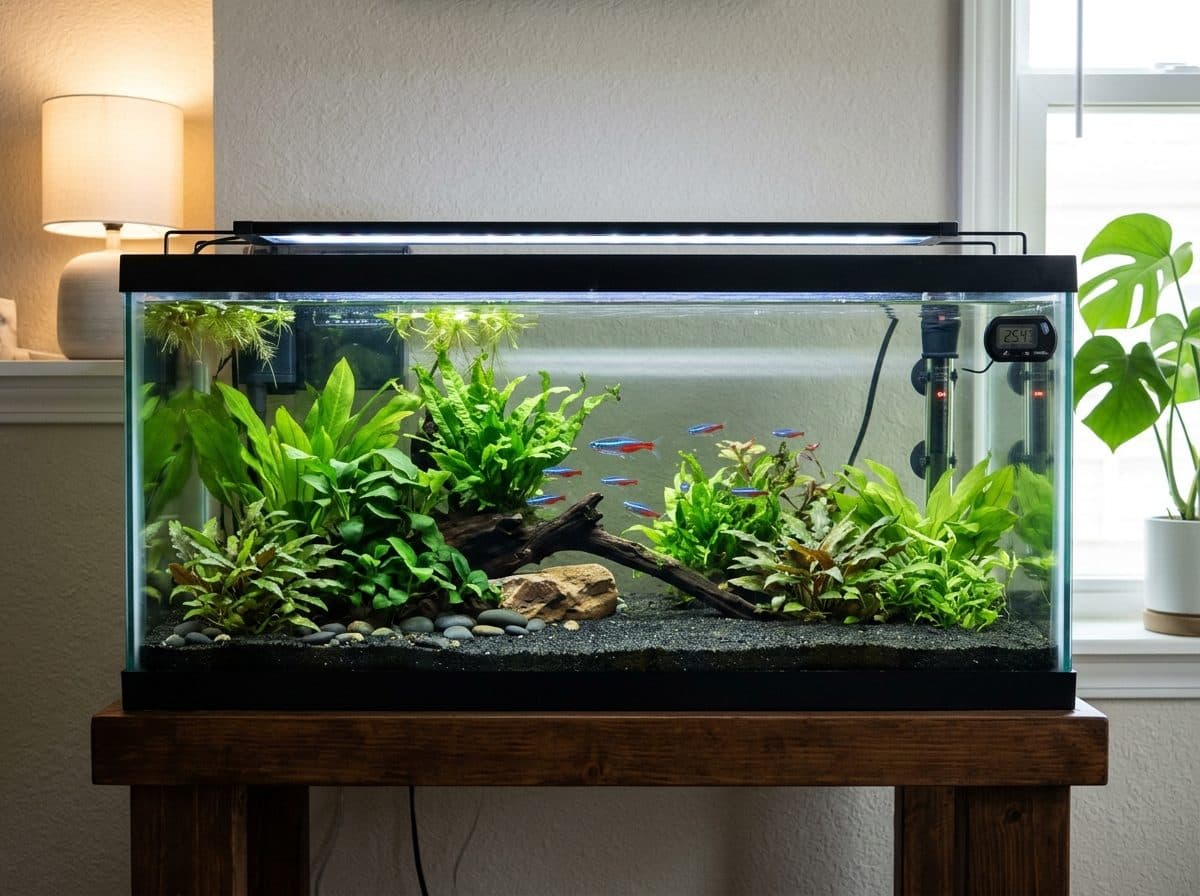
30 × 12 × 12 in (2.5 × 1 × 1 ft), 20 gallons for an adult. Aquarium, horizontal layout.
Store neons are often young and pale; they need the same tank as adults and color up once settled.
Keep a school of at least 8-10, and more is better. A 20-gallon long gives a school of about 10-12 room to swim; a 10-gallon is cramped for a proper group.
Lighting & heat
UVB: not required
Heat: submersible aquarium heater (about 100W for 20 gallons)
Day length: 8–10 hours of light
Substrate
Good choices: dark fine-grained aquarium sand; smooth dark aquarium gravel; aquarium soil for planted tanks.
Avoid: coarse sharp-edged gravel; bright fluorescent artificial gravel; unwashed un-sterilized outdoor dirt.
What a neon tetra needs
Everything for a complete adult setup. Essentials are ticked; untick anything you already have.
How much is a neon tetra?
- The neon tetra itselfPrice is per fish, and you need a school of 8-10 or more. Big-box stores sit at the low end; specialty fish stores and tank-raised stock cost more.
- $2–$5
- Setup, essentials
- $217–$425
- Every year after
- $80–$145
- First year, setup plus supplies
- $297–$570
What you keep buying, per year
| Micro-pellets and crushed flake foodOpened dry fish food loses nutritional value and vitamins over time and needs regular replacement. | every 6 months | $10–$20 |
| Frozen and live micro-foodsSupplemental foods like baby brine shrimp and daphnia provide essential variety and protein. | monthly | $20–$40 |
| Tap water conditionerDechlorinates tap water during weekly water changes to keep the tank safe for fish and beneficial bacteria. | every 6-12 months | $10–$20 |
| Filter replacement sponges or mediaFilter media mechanical surfaces wear down and carbon or fine pads saturate over time. | every 3-6 months | $15–$30 |
| Liquid water testing reagentsTesting solutions expire or run out with weekly testing for ammonia, nitrite, and nitrate. | every 12 months | $25–$35 |
Typical US prices. Vet care isn't included: budget for a check-up with an exotics vet after your pet comes home, and keep an emergency fund.
Are neon tetras good pets?
Yes, and a good first pet.
Neon tetras live 5–8 years, need about 5–10 minutes of care a day and cost $80–$145 a year in supplies. They are animals to watch, not hold.
- Handling
- Hands-off: best watched
- Difficulty
- Beginner
- Daily care
- 5–10 min
- Lives
- 5–8 years
Before your neon tetra comes home
- 01
4-6 weeks before
Fishless cycle the aquarium
Establishes essential beneficial bacteria colonies to process toxic ammonia and nitrite before fish arrive.
- 02
1 week before
Run heater and light to confirm temperature stability
Verifies that the water stays within the ideal 72-78°F range without fluctuation before adding live animals.
- 03
48 hours before
Test all water parameters with the liquid test kit
Ensures ammonia and nitrites are strictly 0 ppm and nitrates remain low.
- 04
Day one
Acclimate and release the neon tetras with lights off
Float the bag to equalize temperature and slowly match water parameters to prevent lethal shock.
- 05
First two weeks
Monitor water parameters daily and observe fish without handling
Catches any sudden ammonia spikes early and lets the schooling fish settle into their environment undisturbed.
Common setup mistakes
- Adding neon tetras into an uncycled new aquarium instead of a mature, biologically stable system.
- Squeezing a school into a bowl or nano tank where they have no room to swim.
- Buying fewer than 8 fish, which leaves them stressed, hiding and pale.
- Housing them with aggressive or large predatory fish (e.g., angelfish) that will eat them.
- Overfeeding foods that are too large for their small mouths to consume.
Questions people ask
What tank size do neon tetras need?
Plan on a 20-gallon long (30 x 12 x 12 inches) for a school of 8-12 neons. They're tiny, but they're schoolers that need numbers and swimming length, and a bigger tank stays more stable.
What water temperature is best for neon tetras?
Maintain water temperature between 72°F and 78°F using a reliable aquarium heater. Rapid fluctuations or keeping them in unheated tanks can weaken their immune system.
What do I need to buy before getting neon tetras?
A 20-gallon long aquarium with a lid and light, filter, heater, thermometer, water conditioner, liquid test kit, dark substrate, plants, a gravel vacuum, and small-grain fish food.
How much does a full neon tetra setup cost?
The tank and equipment for a 20-gallon long setup come to about $217-$425: tank, hood light, filter, heater, thermometer, substrate, conditioner, test kit, plants, food, siphon and net. The fish are extra, about $2-5 each.
Sources
The numbers on this page come from these care sheets and references, checked October 2026. How we make these guides.