Fish · Betta splendens
Betta Fish Tank Setup
Betta fish are interactive, colorful tropical fish that thrive in quiet, heavily planted, warm water environments. Modern veterinary and standard husbandry consensus requires at least a 5-gallon heated and filtered aquarium rather than outdated bowls or small vases. Key success factors are gentle water flow, warm stable water, safe smooth decor, and a fully cycled nitrogen cycle.
- Minimum tank (adult)
- 5 gallons
- Water temperature
- 78–80°F
- Lifespan
- 3–5 years
- Essentials cost
- $141–$272
The setup at a glance
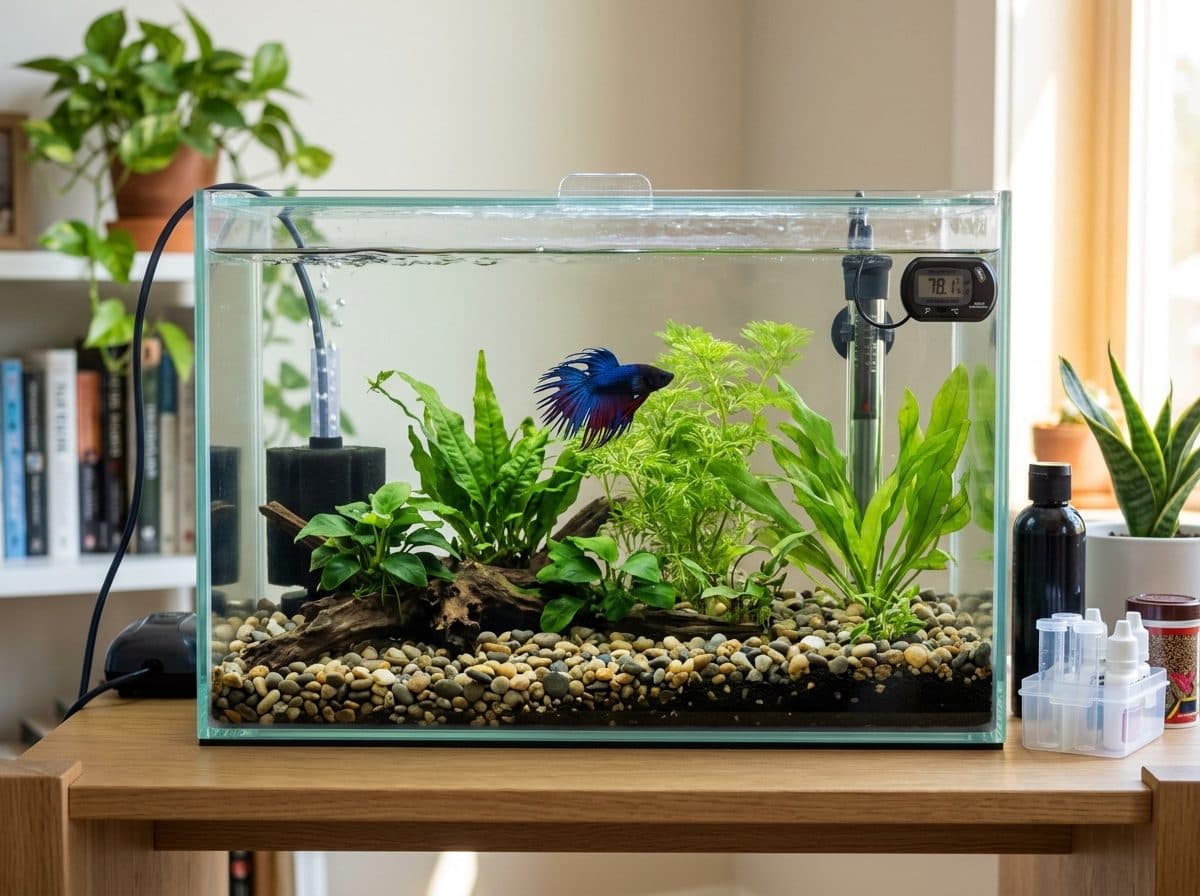
Tank size
Adult minimum: 16 × 8 × 10 in (1.3 × 0.7 × 0.8 ft), 5 gallons. Aquarium, horizontal layout.
Juveniles have the same space requirements, but lower water depth or resting ledges near the surface are beneficial for developing fins.
Males must be housed strictly alone due to extreme aggression; housing females together (sororities) requires 30+ gallons and advanced experience.
Adult size: 2.5-3 in (6-8 cm) body length. Lifespan: 3–5 years. Difficulty: beginner. Hands-off: best watched; about 5–10 minutes of care a day.
Temperature & humidity
| Water | 78–80°F |
Bettas are tropical fish requiring consistent water temperatures between 78°F and 80°F. Room temperature is insufficient and causes lethal immune suppression and lethargy over time.
Lighting & heat
UVB: not required
Heat: aquarium heater (25W adjustable submerged glass or titanium heater)
Day length: 8-10 on hours
Substrate & diet
Good choices: smooth natural river gravel; aquarium plant soil or aqua-soil; smooth sand.
Avoid: sharp artificial gravel with jagged edges; uncoated painted gravel prone to leaching dyes; crushed coral (raises pH excessively).
Diet: Carnivorous surface feeder requiring high-protein pellets, freeze-dried or frozen bloodworms, and brine shrimp. Feed small amounts once or twice daily, avoiding overfeeding to prevent swim bladder issues.
Betta Fish setup checklist
Everything for a complete adult setup. Essentials are ticked; untick anything you already have.
What a Betta Fish costs to keep
- Setup (essentials)
- $141–$272
- Every year after
- $40–$85
- First year, all in
- $181–$357
| Ongoing | How often | Per year |
|---|---|---|
| Betta pellets and frozen foodsOpened dry fish food degrades in nutritional value over time and must be replaced regularly alongside frozen protein treats. | every 3-6 months | $15–$30 |
| Water conditionerDechlorinator is required during every water change to neutralize harmful chlorine and chloramines from tap water. | every 6-12 months | $10–$20 |
| Sponge filter replacement foam and testing reagentsFilter sponges eventually degrade and liquid master test kit reagents expire or run out after frequent water testing. | every 6-12 months | $15–$35 |
Typical US prices. Vet care isn't included: budget for a check-up with an exotics vet after you bring your pet home, and keep an emergency fund.
Before your betta fish comes home
4-6 weeks before
Set up tank and complete nitrogen cycle
Fish produce toxic ammonia, and cycling builds the beneficial bacterial colony needed to convert ammonia into safer nitrates before introducing live animals.
1 week before
Install heater and monitor temperatures
Running the submerged heater in an empty tank ensures the thermostat holds steady within the safe range of 78–80°F without dangerous temperature swings.
Day one
Float bag and float-acclimate the betta
Gradually matching the bag water temperature to the tank water prevents temperature shock, which can be fatal to newly introduced fish.
First two weeks
Test water parameters daily and minimize disturbance
Frequent water testing catches any hidden ammonia or nitrite spikes early while letting the fish acclimate to its new environment undisturbed.
Within first month
Establish care with an aquatic or exotics veterinarian
Locating a vet familiar with fish care ensures you have professional medical support ready if severe disease or swim bladder issues arise.
Common setup mistakes
- Keeping bettas in unheated bowls, vases, or tiny tanks under 5 gallons.
- Using strong filter flow that pushes long-finned bettas around and causes stress.
- Placing plastic decor with sharp edges that tear delicate fins.
- Failing to cycle the tank before adding fish, causing toxic ammonia spikes.
- Overfeeding pellets, leading to severe constipation and swim bladder disease.
Questions people ask
What is the minimum tank size for a betta fish?
Modern aquatic standards require at least a 5-gallon tank with a heater and filter. While bettas can survive temporarily in smaller containers, 5 to 10 gallons is necessary for thermal stability, adequate waste dilution, and normal swimming behavior.
Do betta fish need a heater and filter?
Yes. Bettas are tropical fish requiring 78–80°F water, which room temperature rarely maintains consistently. A low-flow filter (like a sponge filter) is necessary to clear ammonia without pushing the fish around.
What do I need for a complete betta setup?
You need a 5+ gallon tank with a tight-fitting lid, an adjustable 25W heater, a thermometer, a low-flow sponge filter, water conditioner, smooth substrate, soft silk or live plants, high-protein food, and a water test kit.
How much does a full betta tank setup cost?
A proper startup setup typically costs between $140 and $280 total for the tank, heater, filter, water treatments, testing kit, decor, and diet.
Sources
The numbers on this page come from these care sheets and references, checked October 2026. How we make these guides.