Fish · Pterophyllum scalare
Angelfish tank & care
Angelfish need at least a 29-gallon tank and 76–82°F water. They live 8–12 years, and a complete setup costs $207–$403.
- Lifespan
- 8–12 years
- Adult size
- 6 in (15 cm) long, 8-10 in (20-25 cm) tall
- Smallest tank
- 29 gal
- Diet
- Flakes, pellets, bloodworms, brine shrimp
- Handling
- Hands-off: best watched
- First year
- $292–$573
What do angelfish eat?
Freshwater angelfish are omnivorous cichlids that require high-quality tropical or cichlid flakes and pellets as a baseline. Supplement regularly with frozen or live bloodworms, brine shrimp, and daphnia for optimal coloration and vitality.
Food per year: $40–$80
Angelfish water temperature
- Water
- 76–82°F
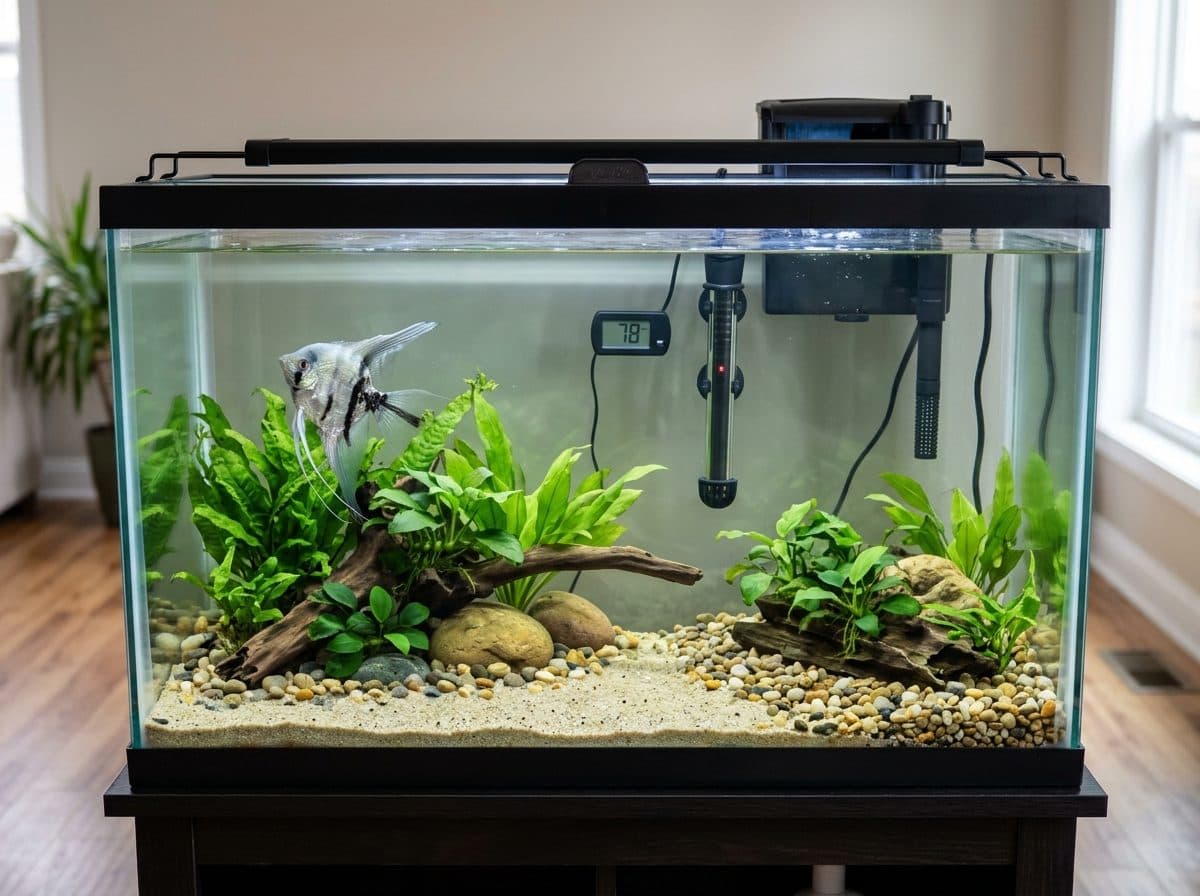
Angelfish thrive in warm tropical water with stable conditions. Use a reliable submersible heater and digital thermometer to prevent temperature swings.
Angelfish tank size
30 × 12 × 18 in (2.5 × 1 × 1.5 ft), 29 gallons for an adult. Aquarium, vertical layout.
Juveniles can be started in 15–20 gallon aquariums, but must be transferred to a tall 29+ gallon tank before their tall dorsal and anal fins become cramped.
To keep a group of 4 to 6 adult angelfish comfortably and minimize territorial disputes, a 55-gallon or larger tall aquarium is required.
Lighting & heat
UVB: not required
Heat: not required (water heated via submersible aquarium heater)
Day length: 8–10 hours of light
Substrate
Good choices: fine pool filter sand; smooth river gravel; aquarium plant soil substrate.
Avoid: coarse sharp gravel; crushed coral substrate.
What an angelfish needs
Everything for a complete adult setup. Essentials are ticked; untick anything you already have.
How much is an angelfish?
- The angelfish itselfPrice is primarily driven by the fish's size, color morph, and whether it is purchased from a chain store or a specialized breeder.
- $5–$30
- Setup, essentials
- $207–$403
- Every year after
- $85–$170
- First year, setup plus supplies
- $292–$573
What you keep buying, per year
| Dry cichlid pellets and flakesProvides the essential omnivorous daily staple diet for healthy growth and vitality. | every 3-6 months | $15–$30 |
| Frozen foods (bloodworms and brine shrimp)Supplements the diet with essential proteins to enhance natural coloration and health. | monthly | $25–$50 |
| Aquarium water conditionerNeutralizes toxic chlorine, chloramines, and heavy metals during weekly water changes. | every 3-6 months | $10–$20 |
| Filter cartridge media and spongesMaintains biological and mechanical filtration efficiency by replacing worn mechanical media. | monthly | $20–$40 |
| Liquid master test kit refillsReplaces expired or depleted testing reagents needed to monitor ammonia, nitrite, and nitrate levels. | every 12 months | $15–$30 |
Typical US prices. Vet care isn't included: budget for a check-up with an exotics vet after your pet comes home, and keep an emergency fund.
Are angelfish good pets?
Yes, for someone ready for the work.
Angelfish live 8–12 years, need about 5–15 minutes of care a day and cost $85–$170 a year in supplies. They are animals to watch, not hold.
- Handling
- Hands-off: best watched
- Difficulty
- Intermediate
- Daily care
- 5–15 min
- Lives
- 8–12 years
Before your angelfish comes home
- 01
4-6 weeks before
Fishless cycle the aquarium
Establishes beneficial bacterial colonies needed to convert toxic ammonia and nitrite into harmless compounds before fish arrival.
- 02
1 week before
Test and stabilize water parameters
Ensures the heater maintains a stable tropical temperature and water chemistry parameters remain fully safe.
- 03
48 hours before
Verify equipment function and parameters
Confirms zero ammonia and nitrite levels and stable heating prior to purchasing the angelfish.
- 04
day one
Drip acclimate and float the angelfish
Prevents severe osmotic and temperature shock when transferring the fish into its new habitat.
- 05
first two weeks
Monitor water parameters daily and minimize stress
Detects early water quality spikes and allows the newly added fish to adapt to its environment without excess lighting or activity.
Common setup mistakes
- Housing adult angelfish in tanks under about 18 inches tall, where their long fins have no room to extend.
- Pairing angelfish with tiny fish like neon tetras, which adult angelfish will consume once mature.
- Keeping angelfish with fin-nipping species like tiger barbs that shred their long trailing fins.
- Placing angelfish in strong, high-flow water currents instead of gentle filtration.
- Introducing angelfish to an uncycled aquarium, leading to ammonia spikes and high mortality.
Questions people ask
What tank size do angelfish need?
A single adult angelfish or a pair requires at least a 29-gallon tall aquarium (18+ inches high). A group of 4–6 adults needs a 55-gallon or larger tank to manage territory.
What water temperature do angelfish require?
Freshwater angelfish are tropical cichlids that need steady water temperatures between 76°F and 82°F (24–28°C).
Are angelfish aggressive toward other fish?
Angelfish are semi-aggressive cichlids. While generally peaceful in large tanks, they become territorial during breeding and will eat any fish small enough to fit in their mouths.
How much does a basic angelfish setup cost?
A complete starter setup with a 29-gallon tank, hood and light, filter, heater, sand, test kit, conditioner and food typically costs between $205 and $405.
Sources
The numbers on this page come from these care sheets and references, checked October 2026. How we make these guides.