Fish · Poecilia reticulata
Guppy tank & care
Guppies need at least a 10-gallon tank and 72–82°F water. They live 2–3 years, and a complete setup costs $137–$279.
- Lifespan
- 2–3 years
- Adult size
- 1.2-2.4 in (3-6 cm) total length
- Smallest tank
- 10 gal
- Diet
- Flake, micro-pellet, brine shrimp
- Handling
- Hands-off: best watched
- First year
- $217–$439
What do guppies eat?
Omnivorous; feed high-quality tropical flake or micro-pellet food daily, supplemented with frozen or live brine shrimp, daphnia, and bloodworms. Avoid overfeeding, which degrades water quality.
Food per year: $35–$70
Guppy water temperature
- Water
- 72–82°F
Guppies like hard, slightly alkaline water (pH 7.0–8.5, GH 8–12 or harder) with zero ammonia and nitrite. Around 76-78°F is ideal; use a heater so room-temperature swings don't stress them.
Guppy tank size
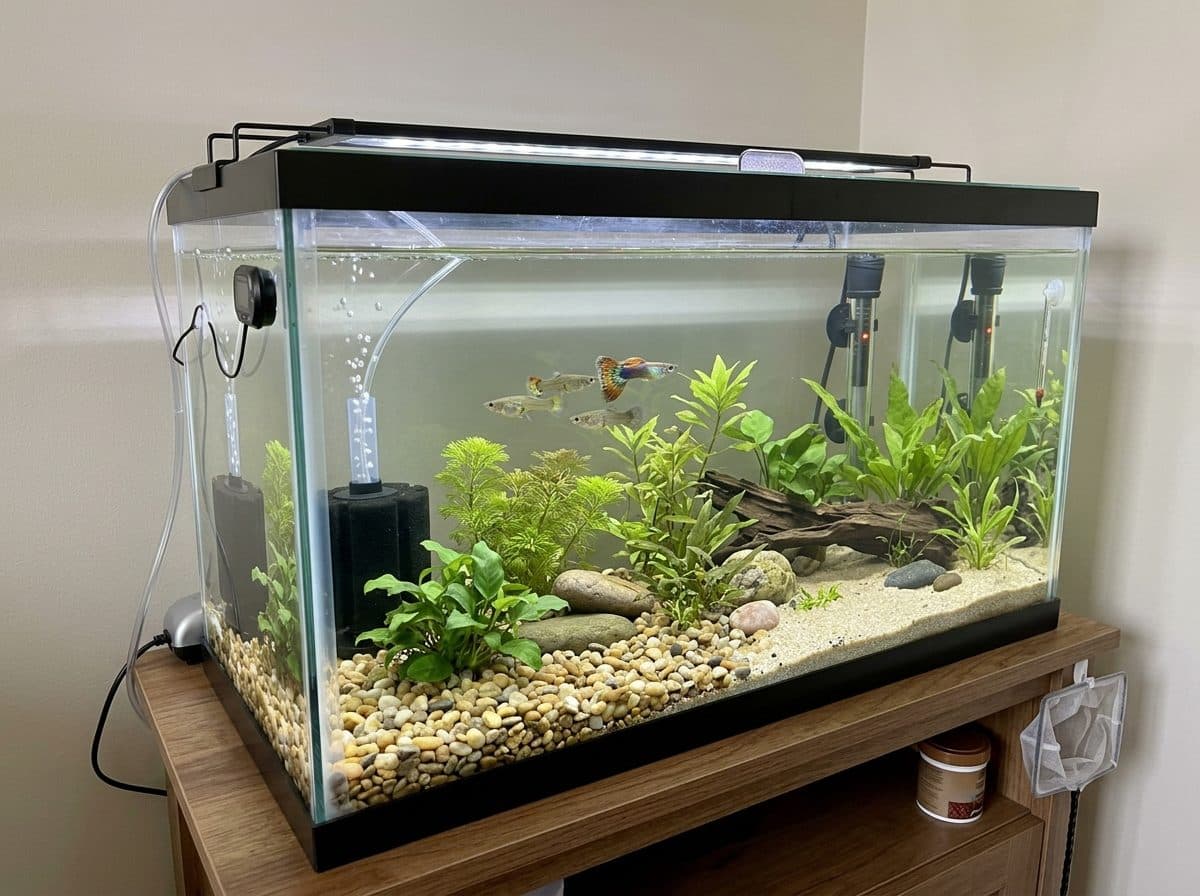
20 × 10 × 12 in (1.7 × 0.8 × 1 ft), 10 gallons for an adult. Aquarium, horizontal layout.
Guppy fry can easily be sucked into high-flow filters, so sponge filters or intake covers must be used in breeding setups.
Keep at least 3. A 10-gallon suits a trio or an all-male group of about 5-6. In mixed groups keep 1 male to 2-3 females, and expect fry every month, so plan for a 20-gallon or homes for the babies.
Lighting & heat
UVB: not required
Heat: submersible aquarium heater (50W for 10 gallons)
Day length: 8–10 hours of light
Substrate
Good choices: smooth freshwater gravel; aquarium sand; planted aquarium substrate.
Avoid: sharp, jagged gravel; unwashed garden soil; painted gravel with toxic sealants.
What a guppy needs
Everything for a complete adult setup. Essentials are ticked; untick anything you already have.
How much is a guppy?
- The guppy itselfPrice is per fish. Pet-store guppies cost a few dollars each; show-quality strains from breeders often sell as pairs or trios for much more.
- $3–$15
- Setup, essentials
- $137–$279
- Every year after
- $80–$160
- First year, setup plus supplies
- $217–$439
What you keep buying, per year
| Tropical Flake and Micro Pellet FoodOpened dry fish food degrades in nutritional value over time and must be replaced regularly. | every 3-6 months | $15–$30 |
| Frozen and Live FoodsProvides essential supplemental protein and natural enrichment for optimal health. | monthly | $20–$40 |
| Tap Water ConditionerDechlorinator is required during every weekly water change to neutralize harmful chlorine and chloramines. | every 6-12 months | $10–$20 |
| Filter Sponge / Media ReplacementsFilter media worn out or degraded over time needs replacement to maintain biological filtration efficiency. | every 6-12 months | $10–$25 |
| Water Testing ReagentsTesting supplies are consumed regularly to monitor ammonia, nitrite, and nitrate levels. | annually | $25–$45 |
Typical US prices. Vet care isn't included: budget for a check-up with an exotics vet after your pet comes home, and keep an emergency fund.
Are guppies good pets?
Yes, and a good first pet.
Guppies live 2–3 years, need about 5–10 minutes of care a day and cost $80–$160 a year in supplies. They are animals to watch, not hold.
- Handling
- Hands-off: best watched
- Difficulty
- Beginner
- Daily care
- 5–10 min
- Lives
- 2–3 years
Before your guppy comes home
- 01
4-6 weeks before
Fishless cycle the aquarium
Establishes beneficial biological filtration that processes toxic fish waste into safe compounds before introducing animals.
- 02
1 week before
Test and stabilize water parameters
Running heat and filtration without fish allows you to verify stable temperature and complete nitrogen cycling.
- 03
48 hours before
Perform final water testing and parameter check
Ensures zero ammonia, zero nitrites, and low nitrates before bringing guppies home.
- 04
Day one
Drip acclimate guppies to the tank
Gradually adjusts new fish to local water temperature and chemistry to prevent fatal osmotic shock.
- 05
First two weeks
Monitor water quality and feed sparingly
Prevents dangerous ammonia spikes while the newly added fish adjust and the biological filter adapts.
Common setup mistakes
- Adding fish before performing a complete nitrogen cycle on the aquarium.
- Housing males and females together without planning for rapid population explosions.
- Overfeeding, which leads to toxic ammonia spikes and cloudy water.
- Keeping guppies in unheated bowls or small nano tanks under 5 gallons.
- Using aggressive filter flow that exhausts high-finned fancy guppies.
Questions people ask
What size tank do guppies need?
A 10-gallon tank is the standard modern minimum for a small group of guppies. While 5 gallons can work for 3 males, a 10-gallon or 20-gallon tank provides significantly more stable water parameters and room for swimming.
Do guppies need a heater?
Yes, guppies are tropical fish that require stable water temperatures between 72°F and 82°F (ideally 76°F–78°F). Unheated tanks subject them to room temperature fluctuations, weakening their immune systems.
How much does a guppy tank setup cost?
A 10-gallon guppy setup costs about $137-$279 for the essentials: tank, hood light, heater, thermometer, sponge filter and air pump, conditioner, test kit, gravel, plants, siphon and food. The fish are extra.
Can I keep guppies in a bowl without a filter?
No, fishbowls are completely unsuitable for guppies. They lack filtration, aeration, and heating, leading to dangerous ammonia buildup and premature death.
Sources
The numbers on this page come from these care sheets and references, checked October 2026. How we make these guides.