Small Mammals · Mus musculus
Pet mouse cage & care
Pet mice need at least a 30 × 12 × 12 in cage. They live 1–3 years, and a complete setup costs $136–$268.
- Lifespan
- 1–3 years
- Adult size
- 5-7.5 in (13-19 cm) nose to tail
- Smallest cage
- 30×12×12 in
- Diet
- Pellets, vegetables, grains, seeds
- Handling
- Tolerates brief handling
- First year
- $226–$463
What do pet mice eat?
A high-quality commercial block or pellet formulated for mice (14–16% protein) supplemented daily with small amounts of fresh vegetables, grains, and occasional low-sugar fruits or seeds.
Food per year: $35–$70
Pet mouse temperature & humidity
- Humidity
- 40–60%
Mice do best at standard indoor room temperatures between 65°F and 75°F. Avoid temperatures above 80°F or drafts, as mice are vulnerable to heat stroke and respiratory illness.
Pet mouse cage size
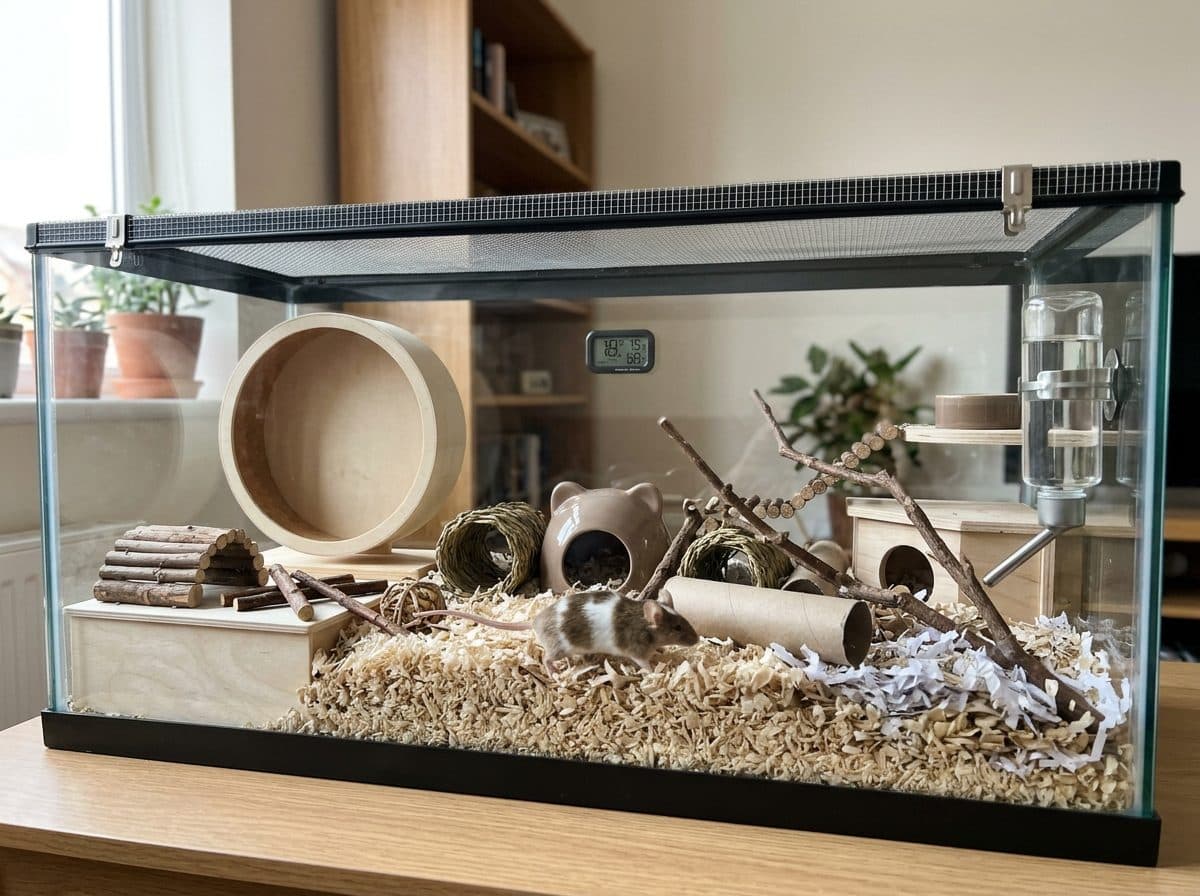
30 × 12 × 12 in (2.5 × 1 × 1 ft) for an adult. Wire cage with solid plastic base or glass tank with mesh screen lid, horizontal layout.
Young mice can fit through tiny gaps; wire spacing must be 0.25 inches (6 mm) or smaller to prevent escape.
Female mice are social and should be kept in groups of two or more. Intact males fight and must live alone; a single male needs extra enrichment and daily attention.
Lighting & heat
UVB: not required
Heat: not required; ambient room temperature is sufficient
Day length: 12 on, 12 off natural ambient light
Substrate
Good choices: kiln-dried aspen shavings; unscented paper bedding; shredded paper card.
Avoid: cedar shavings; un-kiln-dried pine shavings; scented bedding; cat litter; fluffy/cotton nesting fibers.
What a pet mouse needs
Everything for a complete adult setup. Essentials are ticked; untick anything you already have.
How much is a pet mouse?
- The pet mouse itselfUsually $3-20 per mouse from a pet store, rescue or breeder, depending on coat and color. Females do best in a group of two or more, so plan on buying at least two.
- $3–$20
- Setup, essentials
- $136–$268
- Every year after
- $90–$195
- First year, setup plus supplies
- $226–$463
What you keep buying, per year
| Block or pellet mouse dietFormulated pellets provide the core daily nutrients required for healthy growth and weight maintenance. | monthly | $15–$30 |
| Paper or aspen beddingFull bedding replacements prevent ammonia buildup and maintain hygienic nesting areas. | monthly | $40–$90 |
| Wooden chew toys and enrichment itemsConstant gnawing materials are necessary to naturally wear down continuously growing rodent incisors. | every 2-3 months | $15–$35 |
| Fresh produce and occasional seed treatsSmall daily supplements of fresh vegetables and grains add dietary variety and behavioral enrichment. | weekly | $20–$40 |
Typical US prices. Vet care isn't included: budget for a check-up with an exotics vet after your pet comes home, and keep an emergency fund.
Are pet mice good pets?
Yes, and a good first pet.
Pet mice live 1–3 years, need about 10–25 minutes of care a day and cost $90–$195 a year in supplies. They tolerate brief, calm handling.
- Handling
- Tolerates brief handling
- Difficulty
- Beginner
- Daily care
- 10–25 min
- Lives
- 1–3 years
- Before you buy
- Pet mice are legal in every US state with no permit needed, though some leases and rental agreements limit pet rodents.
Before your pet mouse comes home
- 01
1 week before
Assemble the enclosure and install all essential accessories
Setting up early ensures the wheel, hides, food dish, and water bottle fit securely and function properly.
- 02
48 hours before
Monitor ambient room temperature and hygrometer readings
Verifying stable room conditions ensures the mouse will not suffer from extreme heat or cold drafts upon arrival.
- 03
Day one
Gently place the mouse in the enclosure and secure all lid clamps
Mice are agile jumpers and chewers, so immediate security prevents escape while allowing them to locate food and water.
- 04
First 3-4 days
Leave the new mouse completely undisturbed except for essential feeding and watering
Allowing quiet acclimation time prevents severe stress and helps the mouse adjust to its new environment.
- 05
First two weeks
Begin gradual, low-stress hand-taming using treats
Allowing the mouse to approach your hand voluntarily builds trust without causing fear or defensive biting.
- 06
Within first month
Establish care with an exotics veterinarian for a baseline wellness check
Early veterinary relationships ensure prompt care if respiratory infections or skin issues arise later.
Common setup mistakes
- Using wire mesh floors or wire-rung wheels which can cause feet injuries and bumblefoot.
- Housing intact male mice together, leading to territorial aggression and severe injury.
- Using softwood bedding like cedar or un-kiln-dried pine, which releases respiratory-damaging aromatic oils.
- Providing synthetic or cotton 'fluffy' bedding that can tangle around limbs or cause fatal intestinal blockages if swallowed.
- Selecting undersized 'starter' plastic modular cages that lack adequate floor space and ventilation.
Questions people ask
What is the minimum cage size for pet mice?
A minimum of 20 gallons (approx. 30x12 inches of floor space) is recommended for a small group of 2-3 female mice or a single male. Larger enclosures are strongly encouraged to allow for deep bedding and enrichment.
What room temperature do pet mice require?
Mice thrive in typical home room temperatures between 65°F and 75°F. Supplementary heat sources are unnecessary and can easily cause dangerous overheating.
What essential equipment do I need to get started?
You need a well-ventilated enclosure with a screen lid, 4-6 inches of safe bedding, a solid exercise wheel, multiple hides, a water bottle, block food, and chew toys.
How much does a complete pet mouse habitat setup cost?
The enclosure, wheel, bedding, hides, water bottle, food and cleaning supplies typically cost between $135 and $270 in total.
Sources
The numbers on this page come from these care sheets and references, checked October 2026. How we make these guides.