Small Mammals · Petaurus breviceps
Sugar Glider Cage Setup
Sugar gliders are highly social, nocturnal marsupials that require dedicated daily interaction, large vertical climbing spaces, and specialized fresh diets. A proper setup demands a tall, escape-proof wire enclosure housing at least two gliders, rich environmental enrichment, and safe fleece nesting areas.
- Minimum cage (adult)
- 24×24×36 in
- Temperature
- 75–80°F
- Humidity
- 40–60%
- Essentials cost
- $326–$680
The setup at a glance
Cage size
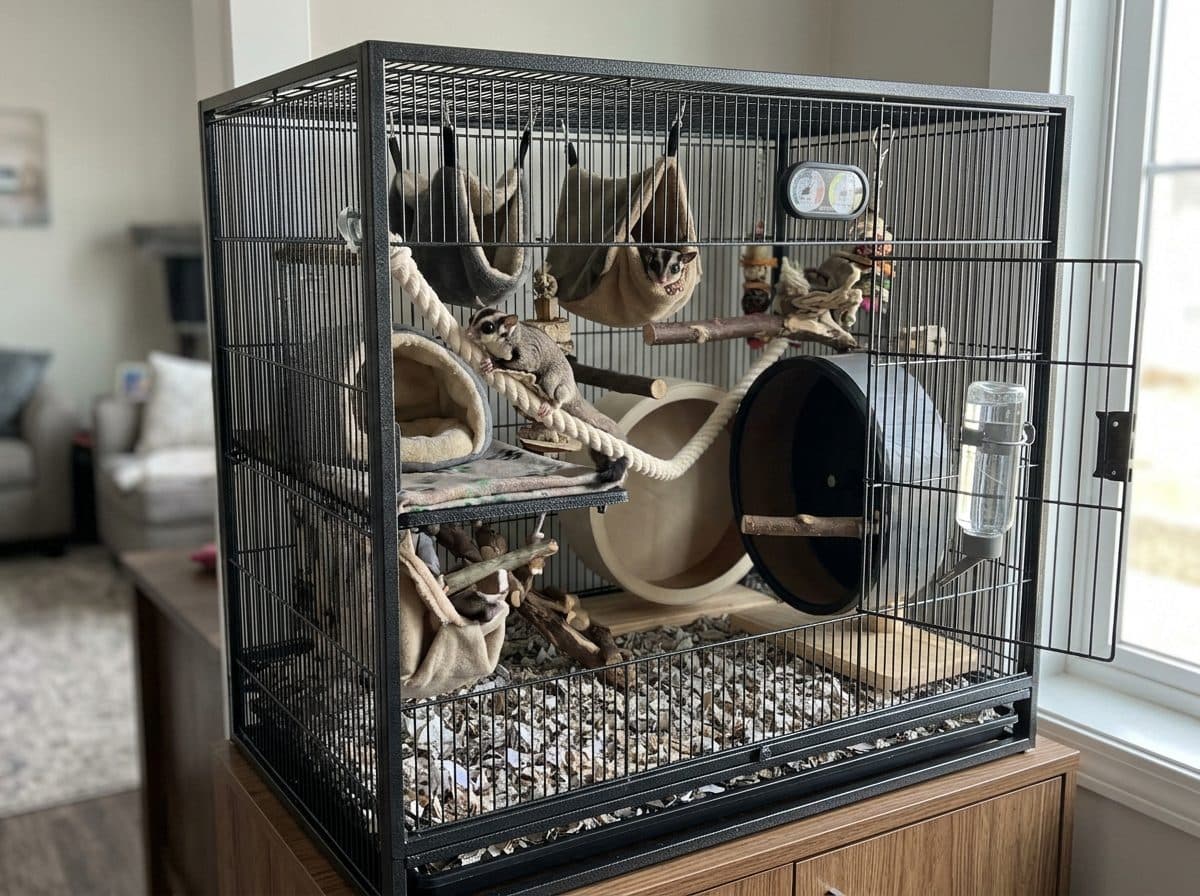
Adult minimum: 24 × 24 × 36 in (2 × 2 × 3 ft). Wire cage with solid floor, vertical layout.
Bar spacing must be 0.5 inches or smaller to prevent joeys from escaping or getting stuck.
Sugar gliders are obligate social animals and must be housed in pairs or groups, never individually.
Adult size: 5-6 in (12-15 cm) body, 10-12 in (25-30 cm) with tail. Lifespan: 12–15 years. Difficulty: advanced. Enjoys handling; about 120–180 minutes of care a day.
Temperature & humidity
| Warm side | 75–80°F |
| Cool side | 70–75°F |
| Night | 68–72°F |
| Humidity | 40–60% |
Maintain stable ambient room temperatures between 70°F and 80°F. Keep the cage away from cold drafts and direct sunlight, using a ceramic heat emitter mounted safely outside the cage if room temps drop.
Lighting & heat
UVB: not required
Heat: ceramic heat emitter or space heater if ambient room drops below 70°F
Day length: 12 on / 12 off (indirect ambient light) hours
Substrate & diet
Good choices: fleece cage liner; recycled paper bedding in bottom tray under grate; puppy pads in tray under grate.
Avoid: cedar shavings; pine shavings; corn cob bedding; cat litter.
Diet: Requires a strict approved nectar diet base (such as BML, HPW, or TPG) combined with targeted fresh fruits, vegetables, and gut-loaded insects or cooked protein. Fresh water must always be available via drip-proof water bottles.
Sugar Glider setup checklist
Everything for a complete adult setup. Essentials are ticked; untick anything you already have.
What a Sugar Glider costs to keep
- Setup (essentials)
- $326–$680
- Every year after
- $370–$750
- First year, all in
- $696–$1,430
| Ongoing | How often | Per year |
|---|---|---|
| Nectar diet mix and raw ingredientsApproved staple diets require specialized powders, high-grade honey, and eggs to make freshly frozen batches. Food costs assume a pair. | monthly | $120–$240 |
| Fresh produce and gut-loaded live insectsFresh daily fruits, vegetables, and live feeders provide necessary dietary variety and behavioral enrichment. | weekly | $150–$300 |
| Paper bedding for waste trayFresh tray liners prevent ammonia buildup and control odor from urine and dropped food. | monthly | $60–$120 |
| Enzymatic cleaner and fleece pouchesPouches wear down from constant laundering and cage surfaces require animal-safe cleaning supplies. | every 6-12 months | $40–$90 |
Typical US prices. Vet care isn't included: budget for a check-up with an exotics vet after you bring your pet home, and keep an emergency fund.
Before your sugar glider comes home
1-2 weeks before
Assemble enclosure and establish thermal monitoring
Test heat sources and verify steady room temperatures before introducing an animal.
48 hours before
Sanitize cage and prepare fresh diet batches
Ensures clean habitats and ready access to proper frozen staple diet portions upon arrival.
Day one
Place the gliders in their habitat and minimize external stimuli
Allows the animal to acclimatize to new sounds and smells without excess stress.
First two weeks
Begin passive bonding using a bonding pouch without forcing physical handling
Carrying them during daytime sleep hours builds trust through scent association while minimizing handling stress.
Within first month
Schedule a baseline health exam with an exotics veterinarian
Establishes care, screens for internal parasites, and confirms overall health early on.
Common setup mistakes
- Housing a single sugar glider, which leads to depression, stress, and self-mutilation.
- Using small bird cages or short enclosures lacking vertical climbing space.
- Purchasing cages with bar spacing wider than 0.5 inches, creating escape or trapping hazards.
- Feeding an unapproved or fruit-only diet instead of a proven balanced nectar-protein plan.
- Using wire exercise wheels or mesh floor grates that catch toenails and tails.
Before you buy: Sugar gliders are illegal to keep as pets in California, Alaska, and Hawaii, and require specific permits or are restricted in certain cities and states.
Questions people ask
What is the minimum cage size for sugar gliders?
A pair of sugar gliders requires a minimum cage size of 24 in W x 24 in D x 36 in H, though larger vertical cages are strongly recommended.
What temperature range do sugar gliders need?
Sugar gliders do best in stable ambient room temperatures between 70°F and 80°F. Avoid exposure to cold drafts below 68°F.
Can I keep just one sugar glider?
No, sugar gliders are obligate social animals and must be kept in pairs or small groups to prevent severe depression and self-mutilation.
How much does a complete sugar glider setup cost?
An initial habitat setup typically costs between $320 and $680 for the cage, sleeping pouches, safe exercise wheel, perches, and feeding supplies.
Sources
The numbers on this page come from these care sheets and references, checked October 2026. How we make these guides.