Small Mammals · Atelerix albiventris
African Pygmy Hedgehog Cage Setup
African Pygmy Hedgehogs are active, nocturnal, solitary insectivores that need a warm, draught-free habitat with plenty of room to roam. The setup must maintain a strict, steady thermal range around the clock to prevent life-threatening attempted hibernation. A solid-floored enclosure fitted with an oversized exercise wheel, secure heating, and soft bedding is essential.
- Minimum cage (adult)
- 36×24×18 in
- Temperature
- 76–80°F
- Humidity
- 30–50%
- Essentials cost
- $258–$529
The setup at a glance
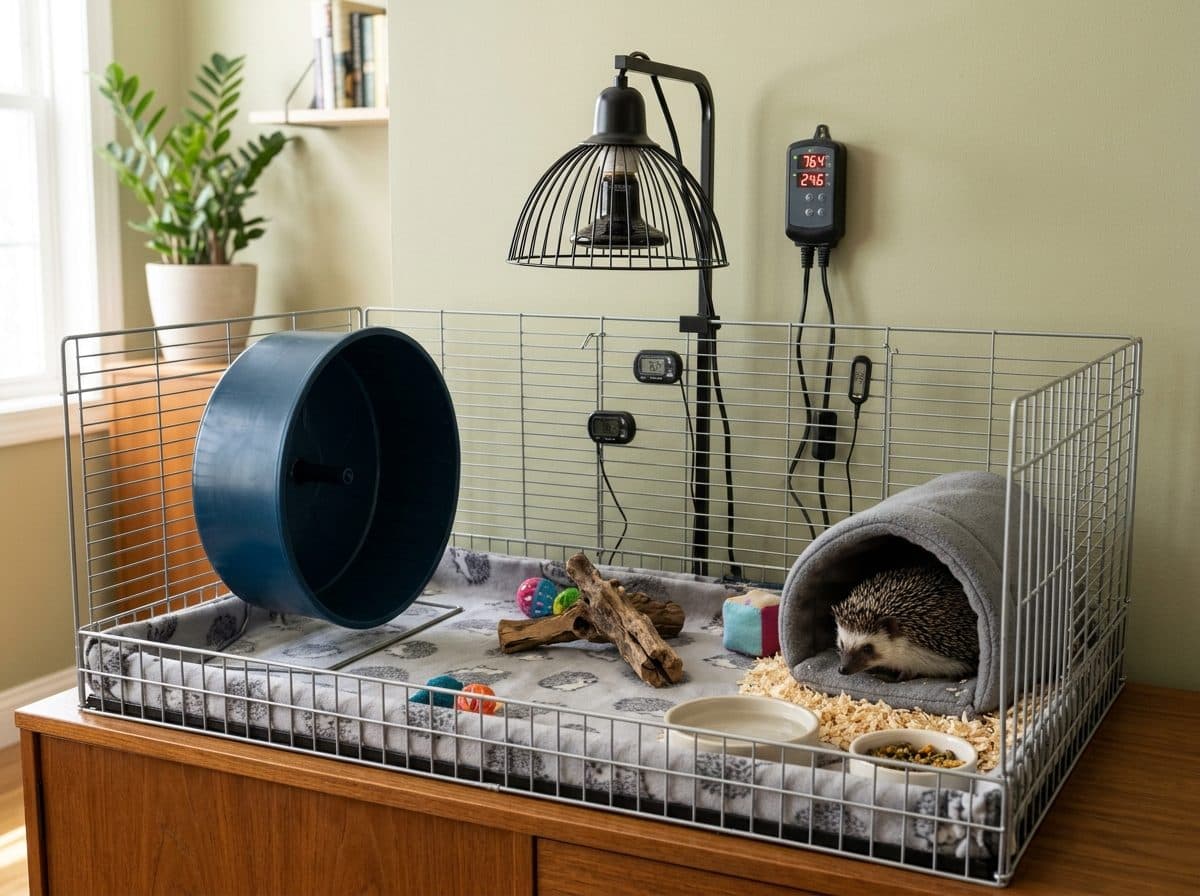
Cage size
Adult minimum: 36 × 24 × 18 in (3 × 2 × 1.5 ft). Wire cage with solid floor or large solid-walled enclosure, horizontal layout.
Young hedgehogs require bar spacing under 0.5 inches or solid side walls to prevent head entrapment and escape.
African Pygmy Hedgehogs are strictly solitary and must always be housed individually to prevent aggressive fights.
Adult size: 6-9 in (15-23 cm) body length. Lifespan: 3–6 years. Difficulty: intermediate. Tolerates brief handling; about 15–30 minutes of care a day.
Temperature & humidity
| Warm side | 76–80°F |
| Cool side | 72–75°F |
| Night | 72–78°F |
| Humidity | 30–50% |
Maintain continuous ambient temperatures between 72°F and 80°F at hedgehog level. Temperature drops below 70°F induce a dangerous attempted hibernation state (torpor) that can be fatal.
Lighting & heat
UVB: not required
Heat: Ceramic heat emitter (100W-150W) in a wire-guard dome fixture connected to a digital thermostat
Day length: 12 on / 12 off hours
Substrate & diet
Good choices: fleece cage liners; kiln-dried aspen shavings; paper-based bedding.
Avoid: cedar shavings; un-kiln-dried pine shavings; clumping cat litter; clay litter; corn cob bedding.
Diet: Feed a formulated hedgehog or insectivore diet, or a high-quality weight-management cat kibble (high protein, low fat), in measured portions. Supplement daily with 1-2 teaspoons of gut-loaded insects like dubia roaches and crickets; offer fatty mealworms only as occasional treats.
African Pygmy Hedgehog setup checklist
Everything for a complete adult setup. Essentials are ticked; untick anything you already have.
What a African Pygmy Hedgehog costs to keep
- Setup (essentials)
- $258–$529
- Every year after
- $160–$325
- First year, all in
- $418–$854
| Ongoing | How often | Per year |
|---|---|---|
| Formulated hedgehog or weight-control cat kibbleProvides the primary daily high-protein, low-fat dry staple diet required for proper nutrition. | monthly | $40–$80 |
| Live gut-loaded insects (dubia roaches, crickets)Offers essential nutritional enrichment, daily protein variety, and physical stimulation. | monthly | $60–$120 |
| Ceramic heat emitter replacement bulbHeating elements degrade over time and can fail unexpectedly, jeopardizing ambient enclosure warmth. | every 6-12 months | $15–$35 |
| Fleece cage liners and snuggle sacksFabric items wear out, fray, or develop loose threads over repeated wash cycles that could entangle toes. | every 6-12 months | $25–$50 |
| Pet-safe enzyme cleanerSafely breaks down waste and disinfects the solid cage floor, running wheel, and food area during deep cleaning. | every 2-3 months | $20–$40 |
Typical US prices. Vet care isn't included: budget for a check-up with an exotics vet after you bring your pet home, and keep an emergency fund.
Before your african pygmy hedgehog comes home
1-2 weeks before
Assemble the cage and set up the heating system
Ensures the ceramic heat emitter fixture and thermostat are securely installed before dialing in the proper environmental temperature.
48 hours before
Run the heat system and verify enclosure temperatures without the animal
Prevents lethal hypothermia or thermal shock by confirming the thermostat consistently maintains a target ambient temperature between 75°F and 80°F.
day one
Place the hedgehog directly into its warm enclosure hide with food and water
Allows the animal to settle in without excess stress after the transition to its new home.
first 3-4 days
Minimize all handling and limit interactions to essential spot-cleaning and feeding
Reduces acute stress during initial acclimation, which helps prevent gastrointestinal distress or illness.
first two weeks
Begin gradual, low-stress handling in a quiet room
Helps the nocturnal animal slowly acclimate to your scent and voice through calm, passive bonding sessions.
within first 30 days
Schedule a initial health screening with a qualified exotics veterinarian
Establishes baseline health, checks for parasites or quilling issues, and builds a professional medical care relationship.
Common setup mistakes
- Using wire-mesh or wire-rung floors and wheels, which break limbs and feet.
- Allowing cage temperatures to fall below 72°F, triggering fatal attempted hibernation.
- Using light-emitting heat bulbs at night that disrupt the hedgehog's nocturnal cycle.
- Housing two or more hedgehogs together, causing territorial aggression and injuries.
- Using cedar or un-kiln-dried pine shavings, which emit toxic aromatic oils.
Before you buy: African Pygmy Hedgehogs are illegal or heavily restricted to own in California, Georgia, Hawaii, Pennsylvania, New York City, and Omaha, Nebraska.
Questions people ask
What size cage does an African Pygmy Hedgehog need?
A single adult hedgehog requires a minimum cage footprint of 36x24 inches (6 sq ft), though larger space is strongly recommended to accommodate an exercise wheel, hides, and feeding areas.
What temperature should a hedgehog cage be kept at?
Keep the cage between 72°F and 80°F constantly. Temps below 70°F force hedgehogs into dangerous, non-natural hibernation attempts.
How much does a complete hedgehog setup cost?
A complete safe setup (large cage, ceramic heat system, thermostat, 12-inch wheel, fleece liners, hides, food, and bowls) typically costs between $250 and $530 initial outlay.
Sources
The numbers on this page come from these care sheets and references, checked October 2026. How we make these guides.