Small Mammals · Mustela putorius furo
Ferret Cage Setup
Ferrets are highly energetic, inquisitive, and social carnivores that require extensive mental stimulation and daily supervised play outside their enclosure. A proper setup pairs a secure, well-ventilated multi-level cage with soft fleece bedding and high-sided litter pans. Because ferrets cannot sweat, maintaining ambient temperatures under 75°F is critical to prevent fatal heatstroke.
- Minimum cage (adult)
- 36×24×48 in
- Temperature
- Room temp
- Humidity
- 40–60%
- Essentials cost
- $375–$698
The setup at a glance
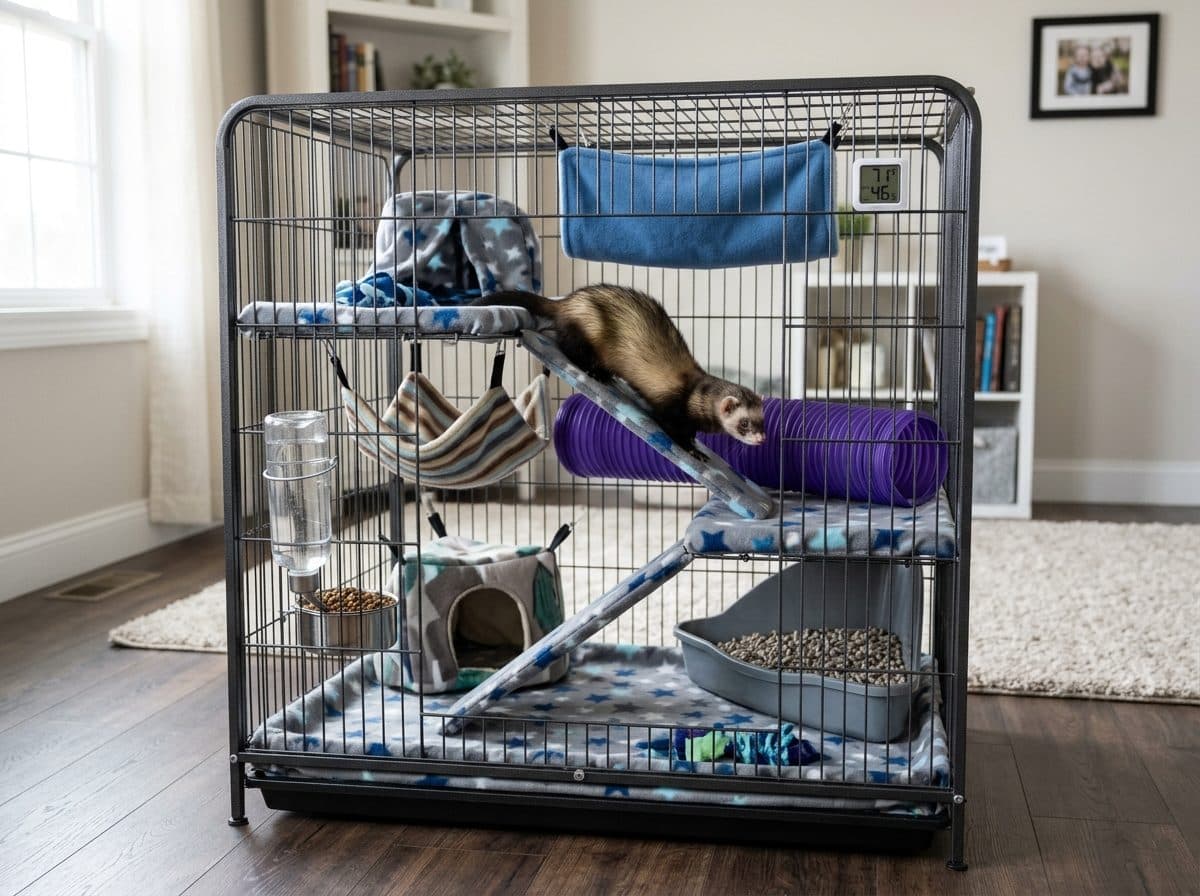
Cage size
Adult minimum: 36 × 24 × 48 in (3 × 2 × 4 ft). Wire cage with solid floor, vertical layout.
Ensure wire bar spacing is 1 inch or less (preferably 1/2 inch) so small young ferrets cannot squeeze through.
Ferrets thrive in pairs or small groups; ensure additional vertical platform levels and extra sleeping hammocks for multiple animals.
Adult size: 14-20 in (35-50 cm) head to tail. Lifespan: 6–10 years. Difficulty: intermediate. Enjoys handling; about 120–240 minutes of care a day.
Temperature & humidity
| Humidity | 40–60% |
Ambient room temperature must remain strictly between 60°F and 75°F. Ferrets lack sweat glands and face severe risk of heatstroke in ambient heat exceeding 80°F.
Lighting & heat
UVB: not required
Heat: none
Day length: 8-12 on hours
Substrate & diet
Good choices: fleece cage liners; washable fleece blankets; cotton towels.
Avoid: cedar shavings; pine shavings; clay clumping cat litter; corn cob bedding; loose sand.
Diet: Ferrets are obligate carnivores that require a high-protein (32-40%), moderate-fat, very low-carbohydrate and low-fiber diet, best provided through high-quality commercial ferret kibble or properly balanced raw meat.
Ferret setup checklist
Everything for a complete adult setup. Essentials are ticked; untick anything you already have.
What a Ferret costs to keep
- Setup (essentials)
- $375–$698
- Every year after
- $340–$680
- First year, all in
- $715–$1,378
| Ongoing | How often | Per year |
|---|---|---|
| High-protein ferret kibbleFerrets have extremely short digestive tracts and high metabolic rates that require a continuous supply of protein-rich food. | monthly | $180–$360 |
| Paper pellet litterCorner litter boxes need regular emptying and replacing to maintain hygiene and control odors. | monthly | $120–$240 |
| Washable cage liners and fleece hammocksFrequent laundering and fabric chewing eventually wear down bedding, requiring replacement to ensure safety. | every 6-12 months | $40–$80 |
Typical US prices. Vet care isn't included: budget for a check-up with an exotics vet after you bring your pet home, and keep an emergency fund.
Before your ferret comes home
1-2 weeks before
Assemble cage and test environmental monitoring equipment
Ensuring the digital thermometer and hygrometer read within safe parameters prevents life-threatening heat stress before the ferret arrives.
1 week before
Schedule an initial exotic vet wellness exam
Establishing care early allows verification of vaccination status and screening for common health conditions.
48 hours before
Proof the play area and set up full cage interior
Ferrets can squeeze through tiny openings and swallow foam or rubber, creating fatal gastrointestinal blockages.
Day one
Place ferret in cage and minimize handling
Allowing the ferret to explore its new cage quietly reduces transition stress and prevents accidental bites.
First two weeks
Begin gradual hand-feeding and litter box training
Consistent, calm positive reinforcement builds trust and establishes early good habits without overwhelming the animal.
Common setup mistakes
- Keeping ferrets in room temperatures above 75°F (24°C), which risks fatal heatstroke.
- Using clumping clay cat litter or cedar/pine wood shavings that release toxic aromatic oils or dust.
- Allowing wire mesh flooring without solid pads or fleece covers, which damages paw pads.
- Confining a ferret to its cage all day without at least 4 hours of supervised out-of-cage play.
- Feeding plant-based or high-carbohydrate pet kibble instead of high-meat protein, obligate-carnivore diets.
Before you buy: Ferrets are illegal to own as pets in California, Hawaii, Washington D.C., and New York City, and require permits or face local restrictions in select other municipalities.
Questions people ask
What size cage do I need for a ferret?
A single adult ferret or pair needs a well-ventilated, multi-level wire cage that is at least 36 inches long, 24 inches wide, and 48 inches high with solid floor platforms.
What temperature is too hot for a ferret?
Temperatures above 75°F (24°C) cause discomfort, and anything over 80°F (27°C) can rapidly lead to severe, potentially fatal heatstroke because ferrets cannot sweat.
What supplies do I need before bringing a ferret home?
You need a large multi-level wire cage, fleece cage liners, hanging hammocks, a paper pellet litter box, heavy food dishes, a water bottle, high-protein ferret kibble, and ferret-safe toys.
How much does a complete ferret setup cost?
An initial proper setup—including a quality multi-level cage, bedding, litter, food, water dishes, and toys—typically costs between $370 and $700.
Sources
The numbers on this page come from these care sheets and references, checked October 2026. How we make these guides.