Small Mammals · Cavia porcellus
Guinea pig cage & care
Guinea pigs need at least a 42 × 28 × 14 in cage. They live 5–8 years, and a complete setup costs $209–$410.
- Lifespan
- 5–8 years
- Adult size
- 8-11 in (20-28 cm)
- Smallest cage
- 42×28×14 in
- Diet
- Hay, pellets, leafy greens
- Handling
- Tolerates brief handling
- First year
- $579–$1,200
What do guinea pigs eat?
Unlimited timothy or orchard grass hay should make up about 80% of what they eat. Add about 1 cup of fresh vegetables per pig each day, including a vitamin C source such as bell pepper, and about 1/8 cup of plain vitamin C-fortified guinea pig pellets per pig.
Food per year: $340–$730
Guinea pig temperature & humidity
- Humidity
- 40–70%
Guinea pigs thrive in room temperatures between 65°F and 75°F. They overheat easily above 80°F and must be kept indoors away from direct sunlight, heating vents, and cold drafts.
Guinea pig cage size
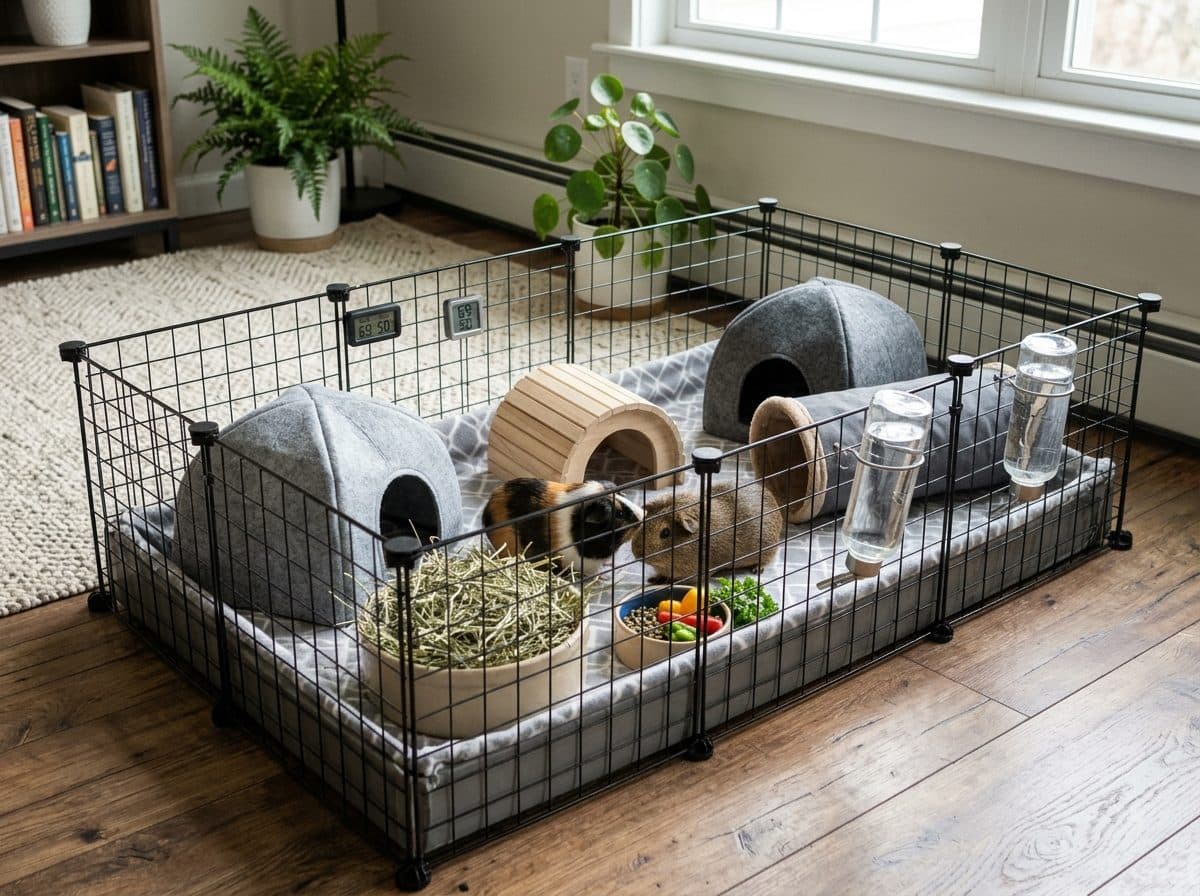
42 × 28 × 14 in (3.5 × 2.3 × 1.2 ft) for an adult. Open-top C&C grid enclosure or solid-bottom cage, horizontal layout.
Babies can squeeze through standard C&C grid openings, so line the lower grids with coroplast or baby-safe grids until they are bigger.
Guinea pigs are herd animals and should live in pairs or small groups. Two need at least 7.5 sq ft (a 2x3 C&C grid, about 28 x 42 in), and 10.5 sq ft or more (a 2x4 grid, about 28 x 56 in) is better; add about 2.5 sq ft for each extra pig.
Lighting & heat
UVB: not required
Heat: not required; ambient room temperature must remain stable at 65-75°F
Day length: 12–14 hours of light
Substrate
Good choices: fleece cage liners with absorbent inner layer; recycled paper bedding; kiln-dried pine shavings.
Avoid: cedar shavings; untreated raw pine shavings; clay or clumping cat litter; loose sand; wire mesh flooring.
What a guinea pig needs
Everything for a complete adult setup. Essentials are ticked; untick anything you already have.
How much is a guinea pig?
- The guinea pig itselfPer pig; you need at least two. Rescue adoption fees and pet store prices usually run $20-50, with breeders charging more for long-haired or show breeds.
- $20–$100
- Setup, essentials
- $209–$410
- Every year after
- $370–$790
- First year, setup plus supplies
- $579–$1,200
What you keep buying, per year
| Timothy or Orchard Grass HayA pair eats roughly 8-12 lb of hay a month; unlimited grass hay keeps their teeth and guts working. | monthly | $150–$350 |
| Fresh Leafy Greens & VegetablesDaily fresh produce provides essential hydration and natural micronutrients to supplement their diet. | weekly | $150–$300 |
| Vitamin C Fortified PelletsGuinea pigs cannot synthesize their own Vitamin C and need uniform pellets to prevent scurvy and nutritional deficiencies. | every 2-3 months | $40–$80 |
| Laundry Detergent & Cleaning SuppliesUnscented, skin-safe detergent and pet-safe vinegar solutions are needed regularly to wash fleece liners and sanitize hideouts. | monthly | $30–$60 |
Typical US prices. Vet care isn't included: budget for a check-up with an exotics vet after your pet comes home, and keep an emergency fund.
Are guinea pigs good pets?
Yes, and a good first pet.
Guinea pigs live 5–8 years, need about 20–40 minutes of care a day and cost $370–$790 a year in supplies. They tolerate brief, calm handling.
- Handling
- Tolerates brief handling
- Difficulty
- Beginner
- Daily care
- 20–40 min
- Lives
- 5–8 years
- Before you buy
- Guinea pigs are widely legal across the United States without special permits, though rental leases and local residential codes may limit pet quantities.
Before your guinea pig comes home
- 01
1-2 weeks before
Assemble enclosure and position in a stable area
Setting up the C&C grid frame and placing it off the floor away from drafts, direct sunlight, and heat vents ensures a safe physical environment.
- 02
48 hours before
Install bedding, accessories, and monitor ambient temperatures
Verifying that room temperatures consistently stay within 65–75°F prevents life-threatening heat stroke or respiratory chills before arrival.
- 03
Day one
Place guinea pig inside with food and leave completely undisturbed
Minimizing noise and physical contact immediately after transport allows the pet to settle in without triggering extreme stress.
- 04
First 3-7 days
Limit interaction to daily feeding and spot cleaning without handling
Giving the guinea pig time to associate your presence with food reduces fear and helps prevent stress-induced illness.
- 05
First two weeks
Schedule a initial health check with a qualified exotic animal veterinarian
An early professional exam establishes a health baseline and detects subtle respiratory or parasitic issues early.
Common setup mistakes
- Buying standard pet store cages, which are far too small for adult guinea pigs.
- Using wire-mesh bottom floors, which cause painful pressure sores and foot infections (bumblefoot).
- Housing guinea pigs individually rather than in bonded pairs.
- Using aromatic cedar or raw pine shavings, which release dangerous respiratory toxins.
- Providing exercise wheels or balls, which cause severe spinal injuries in guinea pigs.
- Failing to supply daily Vitamin C, leading to scurvy and joint disease.
- Housing guinea pigs with rabbits, which can injure them and carry Bordetella bacteria.
Questions people ask
Can I house a guinea pig in a glass aquarium?
No, glass aquariums lack adequate airflow, trap dangerous ammonia fumes from urine, and concentrate heat, which leads to severe respiratory infections.
What temperature range is safe for guinea pigs?
The ideal ambient range is 65°F to 75°F. Temperatures above 80°F can rapidly trigger fatal heat stroke, as guinea pigs cannot sweat.
What is the minimum cage size for two guinea pigs?
Humane World for Animals sets 7.5 square feet of flat floor as the minimum for two guinea pigs and prefers 10.5 square feet or more. A 2x3 C&C grid cage (about 28 x 42 inches) just clears the minimum; a 2x4 grid (about 28 x 56 inches) is the size we recommend.
How much does a complete guinea pig habitat setup cost?
A complete setup for a pair, including a 2x4 C&C cage, fleece liners, hideouts, bowls, water bottles, a hay rack and starter food, typically costs between $210 and $410.
Sources
The numbers on this page come from these care sheets and references, checked October 2026. How we make these guides.