Small Mammals · Octodon degus
Degu cage & care
Degus need at least a 36 × 24 × 36 in cage. They live 5–9 years, and a complete setup costs $328–$544.
- Lifespan
- 5–9 years
- Adult size
- 10-12 in (25-30 cm) nose to tail tip
- Smallest cage
- 36×24×36 in
- Diet
- Timothy hay, degu pellets
- Handling
- Tolerates brief handling
- First year
- $563–$1,014
What do degus eat?
Degus need unlimited Timothy or other grass hay for their gut and teeth, plus a measured amount of low-sugar degu or chinchilla pellets and small amounts of fresh leafy greens. Never offer fruit, sugary treats, honey, molasses, corn or seeds: degus are prone to diabetes and cataracts.
Food per year: $100–$200
Degu temperature & humidity
- Humidity
- 30–50%
Degus thrive at cool room temperatures between 65–70°F (18–21°C). They lack sweat glands and are extremely vulnerable to fatal heat stroke at temperatures exceeding 75–80°F (24–27°C).
Degu cage size
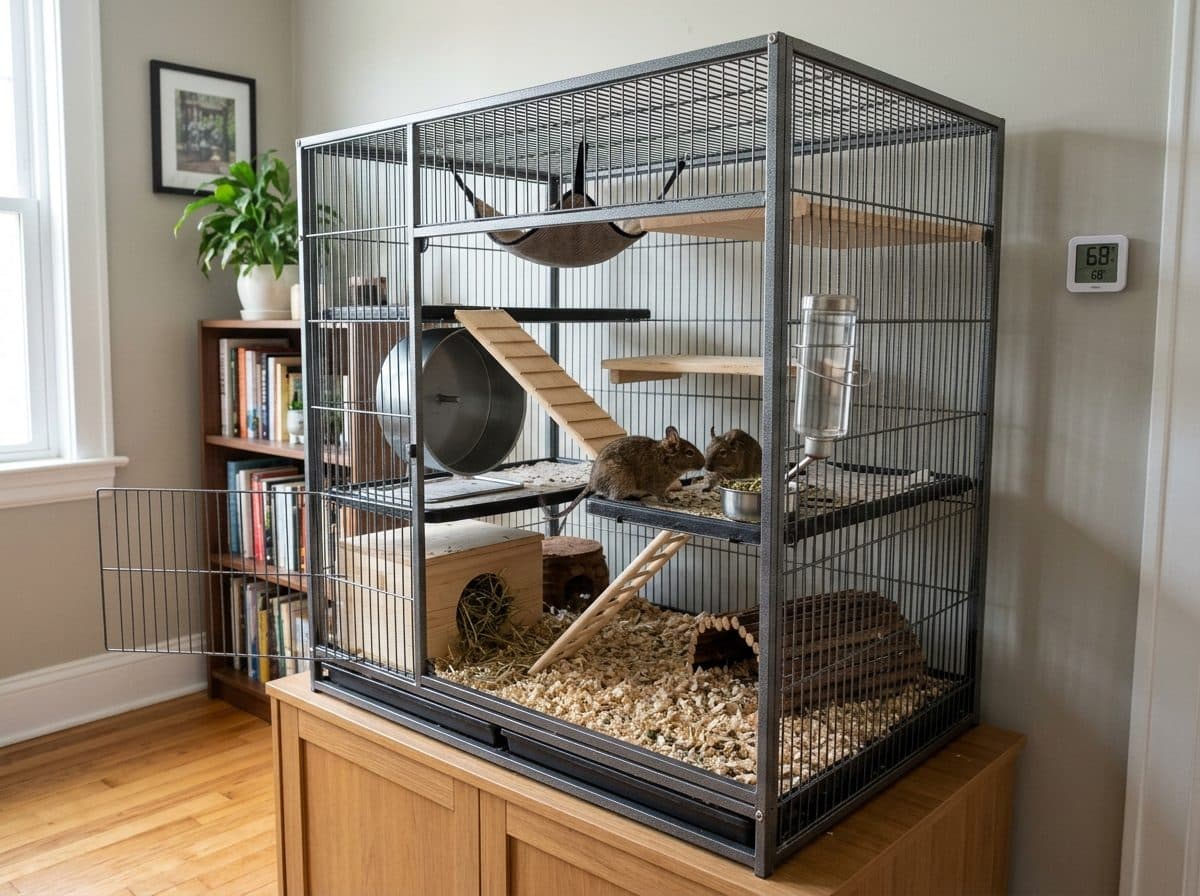
36 × 24 × 36 in (3 × 2 × 3 ft) for an adult. Multi-level chew-proof metal cage with solid base, vertical layout.
Young degus require narrow bar spacing of 0.5 inches (1.3 cm) or less to prevent escape or entrapment.
Degus are highly social and must be housed in same-sex pairs or small groups, as solitary degus experience severe behavioral distress.
Lighting & heat
UVB: not required
Heat: none required; maintain ambient room temperatures below 72°F and never use heat lamps, heating pads, or heat rocks
Day length: 12 on / 12 off natural daytime cycle
Substrate
Good choices: kiln-dried aspen shavings; dust-free recycled paper bedding; timothy hay layers for digging.
Avoid: cedar shavings; un-kiln-dried pine shavings; wire mesh floors; fluffy cotton or synthetic nesting fibers.
What a degu needs
Everything for a complete adult setup. Essentials are ticked; untick anything you already have.
How much is a degu?
- The degu itselfPer degu, and you'll need at least two. Rescues and standard agouti degus sit at the low end; breeder color varieties like blue or sandy cost more.
- $20–$100
- Setup, essentials
- $328–$544
- Every year after
- $235–$470
- First year, setup plus supplies
- $563–$1,014
What you keep buying, per year
| Timothy or meadow grass hayDegus require constant, unlimited high-fiber grass hay to maintain healthy gut motility and wear down continuously growing teeth. | monthly | $60–$120 |
| High-fiber, sugar-free degu pelletsA strict, low-sugar diet is necessary to provide balanced daily nutrition without triggering fatal diabetes. | monthly | $40–$80 |
| Kiln-dried aspen beddingBedding must be completely replaced during routine deep cage cleanings to manage waste and prevent respiratory irritation. | monthly | $80–$150 |
| Chinchilla dust bath refillRegular dust baths remove oils and dirt from their fur, requiring clean, unpolluted dust for skin health. | every 2-3 months | $25–$50 |
| Applewood chewing sticks and wooden chewsDegus have an intense biological need to gnaw wood daily to prevent dangerous open-mouth dental overgrowth. | monthly | $30–$70 |
Typical US prices. Vet care isn't included: budget for a check-up with an exotics vet after your pet comes home, and keep an emergency fund.
Are degus good pets?
Yes, for someone ready for the work.
Degus live 5–9 years, need about 15–30 minutes of care a day and cost $235–$470 a year in supplies. They tolerate brief, calm handling.
- Handling
- Tolerates brief handling
- Difficulty
- Intermediate
- Daily care
- 15–30 min
- Lives
- 5–9 years
- Before you buy
- Degus are banned or need a permit in a number of states, including California, Connecticut, Colorado, Georgia, Alaska, Hawaii and New Mexico, and Utah restricts them. Rules change, so check with your state wildlife agency before buying.
Before your degu comes home
- 01
1-2 weeks before
Assemble cage and verify room temperature stability
Setting up early ensures room ambient temperatures reliably stay below 72°F to prevent fatal heatstroke.
- 02
48 hours before
Fill food, hay, water, dust bath, and add bedding
Pre-stocking supplies allows you to check for water bottle leaks and ensure the environment is fully safe before arrival.
- 03
Day one
Place degus directly into the enclosure and leave undisturbed
Minimizing human interaction on arrival reduces extreme stress and allows the animal to safely acclimate.
- 04
First week
Maintain a quiet room and avoid handling or reaching into the cage
Allowing time to adjust to local sounds and smells prevents panic and bite responses during early transition.
- 05
First two weeks
Begin hand-feeding hay or treats from your palm slowly
Gentle, non-coercive food offers build trust without inducing stress-induced shock or aggression.
- 06
First month
Schedule an initial wellness exam with a qualified exotics veterinarian
An exotics specialist must establish a baseline health check and screen for early signs of dental or metabolic issues.
Common setup mistakes
- Housing a degu alone instead of in same-sex pairs or small social groups.
- Feeding sugary foods, fruit, or seeds, which triggers diabetes, cataracts, and kidney damage.
- Using plastic cages, trays, or toys that degus easily chew through and ingest.
- Housing in unventilated glass aquariums or placing cages in rooms warmer than 75°F.
- Grabbing or catching a degu by its tail, which causes severe tail-sloughing injury ('degloving').
- Using wire mesh floors or wire exercise wheels that trap feet and cause bumblefoot.
Questions people ask
What size cage do degus need?
A minimum enclosure size for a pair of degus is 36 in long by 24 in wide by 36 in high. Because degus are active climbers, vertical height with multiple solid metal levels and solid ramps is strongly recommended over wide single-level cages.
What temperature should a degu cage be kept at?
Degus should be kept in a cool room between 65°F and 70°F (18–21°C). Temperatures over 75–80°F (24–27°C) pose a severe threat of fatal heat stroke, so cages must stay away from radiators, heat lamps, and direct sunlight.
What do I need to buy before bringing home degus?
You need a multi-level chew-proof metal cage, a 12-inch solid running wheel, kiln-dried aspen bedding, unlimited Timothy hay with a hay rack, a glass water bottle, a heavy food dish, wooden chew sticks, and a chinchilla dust bath kit.
How much does a complete degu setup cost?
Expect to spend about $330 to $545 on the essentials, including a heavy-duty metal cage ($200–$300), a solid exercise wheel ($30–$55), bedding, chews, a dust bath and feeding supplies.
Sources
The numbers on this page come from these care sheets and references, checked October 2026. How we make these guides.