Reptiles · Chamaeleo calyptratus
Veiled Chameleon Enclosure Setup
Veiled Chameleons are striking arboreal lizards that require precise heat, linear UVB, and automatic misting to thrive in captivity. They are solitary, display-only pets that become stressed with frequent handling and demand high-ventilation enclosures.
- Minimum enclosure (adult)
- 24×24×48 in
- Basking spot
- 85–90°F
- Humidity
- 40–80%
- Essentials cost
- $397–$788
The setup at a glance
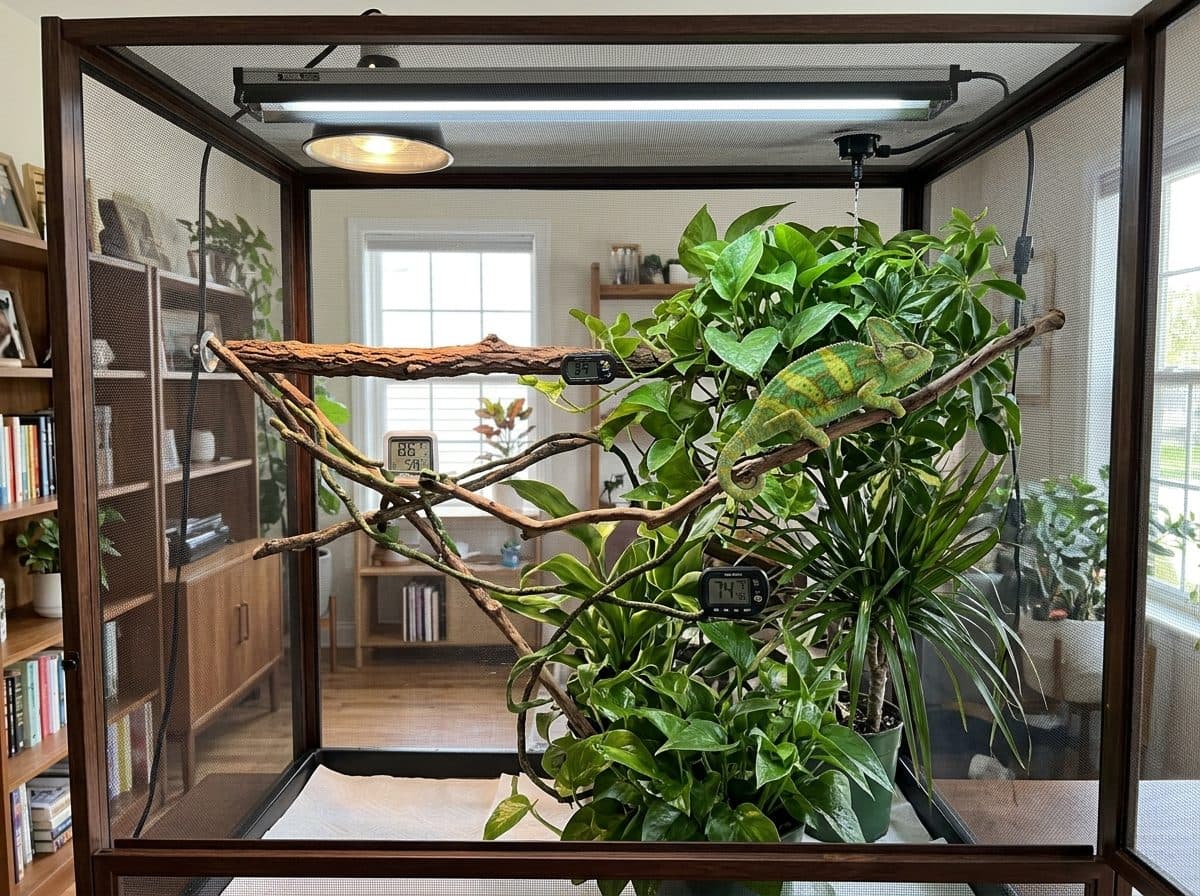
Enclosure size
Adult minimum: 24 × 24 × 48 in (2 × 2 × 4 ft). Screen mesh or hybrid terrarium, vertical layout.
Young hatchlings can temporarily start in a 16x16x30 inch screen enclosure to easily track live prey before upgrading.
Always house veiled chameleons individually; keeping multiple together causes severe stress and physical injury.
Adult size: 14-24 in (35-60 cm) total length. Lifespan: 5–8 years. Difficulty: intermediate. Hands-off: best watched; about 15–30 minutes of care a day.
Temperature & humidity
| Basking surface | 85–90°F |
| Warm side | 80–85°F |
| Cool side | 70–75°F |
| Night | 62–70°F |
| Humidity | 40–80% |
Maintain moderate daytime humidity (40-50%) with heavy morning and evening mistings, allowing higher humidity spikes (75-100%) overnight with cool temperatures.
Lighting & heat
UVB: T5 HO 6% or 10.0 linear tube spanning 1/2 to 2/3 of top ceiling mesh
Heat: Incandescent or halogen basking spotlight mounted above top screen mesh
Day length: 12-12 on/off hours
Substrate & diet
Good choices: bare floor tray; paper towels; bare PVC bottom.
Avoid: loose sand; wood chips; bark nuggets; coconut coir; reptile carpet.
Diet: Strict insectivores fed gut-loaded crickets, dubia roaches, silkworms, and hornworms, lightly dusted with plain calcium carbonate at most feedings and multivitamin with D3 twice monthly.
Veiled Chameleon setup checklist
Everything for a complete adult setup. Essentials are ticked; untick anything you already have.
What a Veiled Chameleon costs to keep
- Setup (essentials)
- $397–$788
- Every year after
- $210–$475
- First year, all in
- $607–$1,263
| Ongoing | How often | Per year |
|---|---|---|
| Live Feeder Insects (Crickets, Dubia Roaches, Worms)Veiled chameleons require a varied diet of live, gut-loaded insects to maintain proper nutrition. | weekly | $150–$350 |
| Calcium and Multivitamin SupplementsCalcium without D3 is needed almost daily, while multivitamins with D3 prevent metabolic bone disease and nutritional deficiencies. | every 3-6 months | $20–$40 |
| T5 HO Linear UVB BulbUVB output degrades over time even if the bulb still produces visible light, which can cause metabolic bone disease if not replaced. | every 12 months | $25–$50 |
| Incandescent Basking BulbsBasking heat bulbs burn out with regular daily use and require regular replacement to maintain ambient temperature gradients. | every 3-6 months | $15–$35 |
Typical US prices. Vet care isn't included: budget for a check-up with an exotics vet after you bring your pet home, and keep an emergency fund.
Before your veiled chameleon comes home
2-3 weeks before
Assemble the screen enclosure and plant live foliage
Setting up live plants early ensures they settle, wash away potential nursery pesticides, and help establish proper humidity levels.
1 week before
Test lighting, misting, drippers, and temperature gradients
Running equipment without the animal present allows you to calibrate thermostats, timers, and hydrometers to prevent overheating or dehydration.
48 hours before
Purchase and gut-load live feeder insects
Insects need at least 24 to 48 hours to consume nutrient-dense feed so they pass vital nutrients on to the chameleon.
Day one
Place the chameleon directly into the enclosure and start automated misting
Minimizing initial contact prevents severe stress-induced shock and allows the chameleon to locate water immediately.
First two weeks
Observe strictly hands-off care while monitoring droppings and intake
Veiled chameleons are easily stressed by human presence and require undisturbed time to acclimate to their new environment.
First month
Schedule a baseline health exam and fecal test with an exotics veterinarian
An initial exotic vet checkup detects intestinal parasites and verifies proper body condition early in the chameleon's life.
Common setup mistakes
- Using a glass aquarium without sufficient top-to-bottom airflow, leading to upper respiratory infections.
- Expecting a chameleon to drink standing water from a bowl instead of foliage droplets.
- Using loose substrate on the floor, which risks impaction and traps excess bacteria.
- Using compact coil UVB bulbs instead of a high-output linear T5 tube.
- Placing heat bulbs too close to perches, causing serious thermal casque burns.
Before you buy: Veiled chameleons are invasive in parts of Florida and Hawaii, where local regulations may restrict breeding, sale, or possession without specific permits.
Questions people ask
What size cage does an adult veiled chameleon need?
Adult veiled chameleons need an enclosure measuring at least 24x24x48 inches (LxWxH), prioritizing height for climbing and vertical thermal regulation.
What temperatures are required for a veiled chameleon?
The upper basking branch should reach 85-90°F, while ambient upper enclosure temps stay around 80-85°F, cooling down to 70-75°F at the bottom and 62-70°F overnight.
What lighting equipment do I need?
You need a linear T5 HO 6% or 10.0 UVB tube covering at least half the enclosure length alongside a dedicated incandescent basking bulb, set to a 12-hour day/night cycle.
How much does a complete veiled chameleon habitat setup cost?
A full modern setup including a tall screen cage, linear UVB, automatic misting system, live plants, branches, and supplements typically costs between $400 and $790 USD.
Sources
The numbers on this page come from these care sheets and references, checked October 2026. How we make these guides.