Reptiles · Correlophus ciliatus
Crested Gecko Enclosure Setup
Crested geckos are docile, nocturnal arboreal reptiles that make excellent pet species for beginners. They require room-temperature housing with high humidity and ample climbing structure rather than extensive heating or floor space. Modern care standards recommend a tall enclosure equipped with proper daily humidity cycles and low-level UVB lighting.
- Minimum enclosure (adult)
- 18×18×36 in
- Basking spot
- 82–85°F
- Humidity
- 60–80%
- Essentials cost
- $428–$773
The setup at a glance
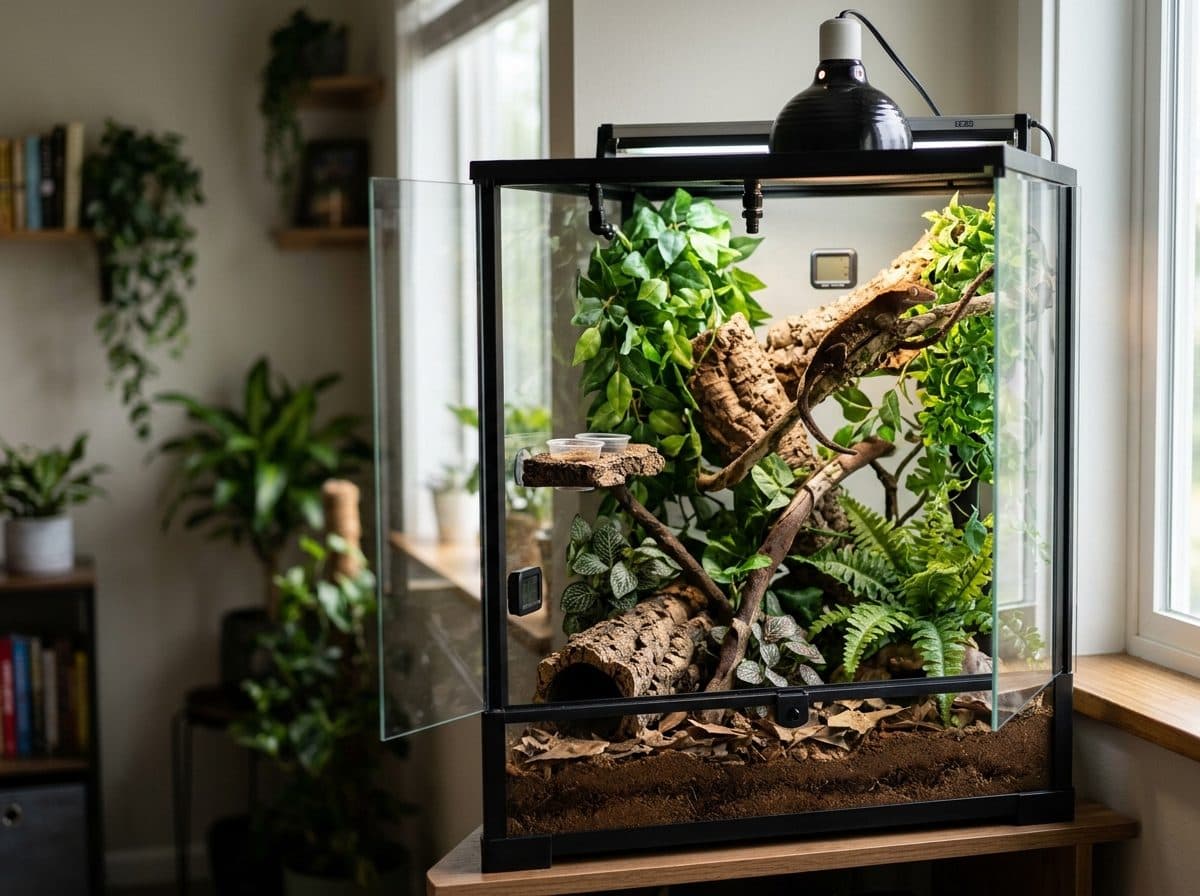
Enclosure size
Adult minimum: 18 × 18 × 36 in (1.5 × 1.5 × 3 ft). Front-opening glass terrarium, vertical layout.
Hatchlings and juveniles under 12 grams should start in a smaller enclosure (such as 12x12x18 inches) so they can easily locate food and water.
Crested geckos are solitary animals and should be housed individually to prevent territorial fighting and severe stress.
Adult size: 7-9 in (18-23 cm) nose to tail. Lifespan: 15–20 years. Difficulty: beginner. Tolerates brief handling; about 5–15 minutes of care a day.
Temperature & humidity
| Basking surface | 82–85°F |
| Warm side | 75–78°F |
| Cool side | 70–75°F |
| Night | 65–72°F |
| Humidity | 60–80% |
Provide a nightly humidity spike of 80-100% via misting, followed by a daytime dry-down to 50-60%. Temperatures consistently above 85°F are dangerous and can cause lethal heat stroke.
Lighting & heat
UVB: Low-output 2.5-7% T5 linear tube (UVI 1.0-2.0 at the basking branch) mounted over the top mesh
Heat: Low-wattage (about 25W) white halogen or incandescent lamp on a thermostat to create an 82-85°F basking area; no heat at night
Day length: 10 (winter) to 14 (summer) on hours
Substrate & diet
Good choices: Paper towels (essential for juveniles or quarantine); Coconut fiber (coco coir); Bioactive tropical soil blend with sphagnum moss.
Avoid: Loose sand or calci-sand; Cedar, pine, or aromatic wood shavings; Gravel or small pebbles; Wood chips or bark chunks large enough to swallow.
Diet: Feed a complete powdered crested gecko fruit diet mixed with water 3 times a week. Offer small, calcium-dusted feeder insects (such as gut-loaded crickets or small dubia roaches) once or twice weekly for enrichment.
Crested Gecko setup checklist
Everything for a complete adult setup. Essentials are ticked; untick anything you already have.
- $180–$260Amazon ↗
- $40–$65Amazon ↗
- $10–$20Amazon ↗
- $35–$75Amazon ↗
- $10–$18Amazon ↗
- $12–$60Amazon ↗
- $10–$20Amazon ↗
- $12–$25Amazon ↗
- $8–$15Amazon ↗
- $25–$50Amazon ↗
- $15–$30Amazon ↗
- $8–$16Amazon ↗
- $8–$14Amazon ↗
- $10–$18Amazon ↗
12 items: $428–$773Typical US retail ranges, not live prices. Untick what you already have.
What a Crested Gecko costs to keep
- Setup (essentials)
- $428–$773
- Every year after
- $140–$285
- First year, all in
- $568–$1,058
| Ongoing | How often | Per year |
|---|---|---|
| Powdered Crested Gecko DietComplete diet powder must be replaced periodically to maintain freshness and nutritional potency once opened. | every 2-3 months | $30–$60 |
| Live Feeder Insects & Calcium PowderCrickets or roaches are bought regularly for enrichment, along with calcium dusting powder. | monthly | $40–$90 |
| Coconut Coir SubstrateSubstrate requires periodic full replacement to prevent mold growth and maintain hygiene. | monthly | $25–$50 |
| Linear T5 UVB Bulb ReplacementT5 UVB bulbs lose effective UV output over a year of daily use even if visible light remains. | every 12 months | $25–$45 |
| Biodegradable Feeding Cups & CleanerDisposable ledge cups and reptile-safe terrarium cleaner are consumed routinely during feeding and sanitization. | every 3-6 months | $20–$40 |
Typical US prices. Vet care isn't included: budget for a check-up with an exotics vet after you bring your pet home, and keep an emergency fund.
Before your crested gecko comes home
1-2 weeks before
Assemble the full enclosure, substrate, decor, and lighting equipment
Setting up early ensures all heat, misting, and lighting components fit properly before stress testing.
48 hours before
Test heating, misting, and light cycles while monitoring digital thermometer readings without the gecko
Running equipment in advance verifies that basking temperatures and ambient humidity stay within safe limits before adding the animal.
Day one
Gently place the gecko inside the enclosure and offer fresh water and powdered diet
Minimizing stress during initial transfer allows the gecko to safely explore and find drinking water.
First two weeks
Maintain a strict hands-off quarantine period except for essential feeding and misting
Avoiding handling during acclimation prevents severe stress and hunger strikes while the gecko adjusts to its new territory.
First month
Schedule an initial health checkup and fecal exam with a licensed exotics veterinarian
A professional checkup detects underlying parasites or health issues early before symptoms become life-threatening.
Common setup mistakes
- Overheating the enclosure above 85°F, which can be fatal to heat-sensitive crested geckos.
- Keeping substrate constantly soaking wet without a dry-down period, leading to bacterial infections and skin rot.
- Using outdated 18x18x24 or 10-gallon horizontal tanks for full-grown adults instead of modern 18x18x36 vertical standards.
- Housing two or more geckos together, leading to tail loss, fighting, and extreme stress.
- Placing food dishes on the tank floor rather than elevated on climbing ledges where arboreal geckos feel safe.
Before you buy: Geckos, including crested geckos, are prohibited for private possession in Hawaii.
Questions people ask
What size tank does an adult crested gecko need?
Modern husbandry guidelines recommend a minimum 18x18x36 inch (WxDxH) vertical front-opening enclosure for a single adult crested gecko.
Do crested geckos need heat lamps?
Not always. Crested geckos do well at 72-78°F, with a gentle 82-85°F basking spot from a low-wattage lamp on a thermostat. Rooms that stay at or below 72°F cause lethargy, and temperatures above 85°F can cause lethal heat stroke.
What do I need to buy for a crested gecko setup?
You need an 18x18x36 vertical tank, low-strength T5 UVB light, digital thermometer/hygrometer, spray bottle, elevated feeding ledge, powdered crested gecko diet, substrate, and plenty of cork bark branches and artificial foliage.
How much does a full crested gecko setup cost?
A proper initial setup typically costs between $430 and $780 total, including the vertical enclosure, lighting, environmental monitoring, climbing decor, and feeding supplies.
Sources
The numbers on this page come from these care sheets and references, checked October 2026. How we make these guides.