Reptiles · Eublepharis macularius
Leopard Gecko Enclosure Setup
Leopard geckos are docile, crepuscular desert lizards that make fantastic pets for beginners and experienced keepers alike. Modern husbandry requires a spacious horizontal enclosure with a distinct thermal gradient, halogen overhead heat, safe linear UVB light, and at least three distinct hides including a moist shedding hide.
- Minimum enclosure (adult)
- 36×18×18 in
- Basking spot
- 94–97°F
- Humidity
- 30–40%
- Essentials cost
- $369–$628
The setup at a glance
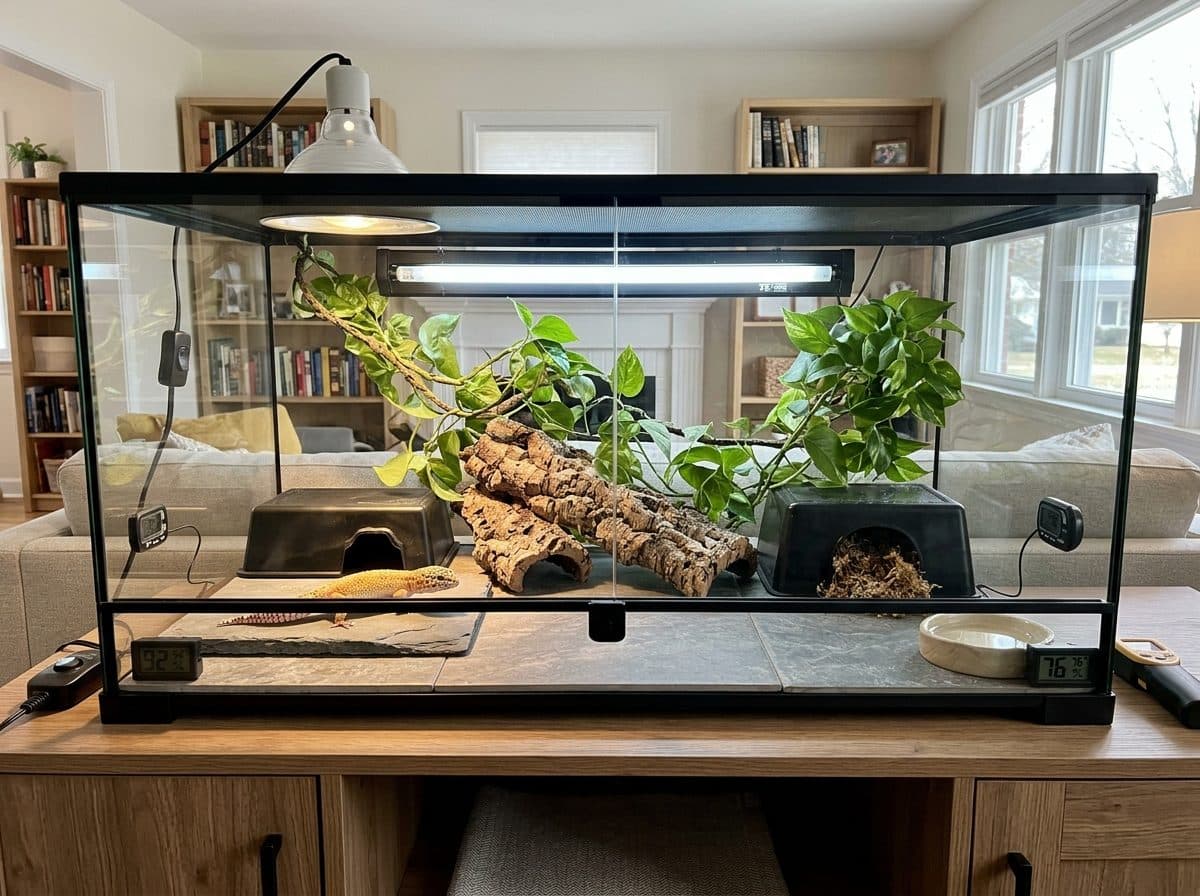
Enclosure size
Adult minimum: 36 × 18 × 18 in (3 × 1.5 × 1.5 ft). Front-opening glass or PVC terrarium, horizontal layout.
Hatchlings can be housed temporarily on paper towels in smaller enclosures (20-gallon long), but standard 36x18x18 inch (40-gallon equivalent) enclosures are suitable for all ages.
Leopard geckos are strictly solitary animals and must be housed alone; cohabitation causes chronic stress and physical aggression.
Adult size: 7-10 in (18-25 cm) nose to tail. Lifespan: 15–20 years. Difficulty: beginner. Tolerates brief handling; about 5–15 minutes of care a day.
Temperature & humidity
| Basking surface | 94–97°F |
| Warm side | 90–92°F |
| Cool side | 70–77°F |
| Night | 60–72°F |
| Humidity | 30–40% |
Provide a continuous thermal gradient across the length of the enclosure. The warm hide floor should read 90-92°F. Provide a humid hide filled with moist sphagnum moss in the middle to cool end with 70-80% localized micro-humidity to ensure proper shedding.
Lighting & heat
UVB: Low-output 2.5-7% T5 linear tube (Ferguson Zone 1, UVI 0.5-1.5; 0.5-0.7 for albino morphs) covering 1/2 of the enclosure length
Heat: Halogen flood bulb mounted overhead inside a dome, regulated by a dimming thermostat
Day length: 12 (winter) to 14 (summer) on hours
Substrate & diet
Good choices: Paper towels (for quarantine or juveniles); Textured slate or ceramic tile; 70/30 topsoil and play sand mixture; Excavator clay and soil mixture.
Avoid: Pure loose sand or calcium sand; Reptile carpet; Crushed walnut shells; Wood shavings (cedar, pine, aspen); Heat rocks.
Diet: Strict insectivores requiring a rotation of live gut-loaded insects like Dubia roaches, crickets, and mealworms dusted with plain calcium carbonate and periodic multivitamin/vitamin D3 powder.
Leopard Gecko setup checklist
Everything for a complete adult setup. Essentials are ticked; untick anything you already have.
What a Leopard Gecko costs to keep
- Setup (essentials)
- $369–$628
- Every year after
- $140–$300
- First year, all in
- $509–$928
| Ongoing | How often | Per year |
|---|---|---|
| Live feeder insectsLeopard geckos are obligate insectivores requiring a regular rotation of live, gut-loaded insects for nutrition. | weekly | $80–$180 |
| Calcium and multivitamin supplementsPowdered supplements degrade over time and must be routinely refreshed to prevent metabolic bone disease. | every 6 months | $15–$30 |
| Sphagnum mossMoist substrate inside the humid hide must be periodically replaced to prevent mold growth and bacterial contamination. | monthly | $10–$25 |
| Linear T5 UVB lampUVB bulbs lose their ultraviolet light output over time even while continuing to produce visible light. | every 12 months | $25–$45 |
| Halogen heat bulbIncandescent halogen filaments degrade with daily thermostatic regulation and require replacement when burnt out. | every 6-12 months | $10–$20 |
Typical US prices. Vet care isn't included: budget for a check-up with an exotics vet after you bring your pet home, and keep an emergency fund.
Before your leopard gecko comes home
1-2 weeks before
Assemble enclosure and set up all heating, lighting, and hide elements
Completing the full physical setup in advance ensures all parameters can be monitored and adjusted without stressing a live animal.
48 hours before
Run heat lamps and UVB on target day cycles and verify thermal gradients with an infrared temperature gun
Testing environmental parameters prior to arrival prevents lethal overheating or severe chilling when the gecko is introduced.
Day one
Gently place the gecko directly into the enclosure near a hide and immediately close it
Minimizing initial handling lowers intense shipping stress and allows the gecko to find shelter and adjust safely.
First two weeks
Perform necessary feeding, spot cleaning, and water changes without unnecessary handling
Leaving the gecko unbothered during the acclimation period prevents stress-induced anorexia and immune suppression.
2-4 weeks after arrival
Schedule a baseline health check and fecal exam with an experienced exotics veterinarian
Early veterinary screening detects underlying internal parasites and establishes healthy baseline metrics.
Common setup mistakes
- Housing multiple geckos together, which leads to territorial stress and severe injuries.
- Using reptile carpet or calcium sand, which catch claws or cause fatal digestive impaction.
- Relying on heat rocks or un-thermostatted heat mats that cause severe belly burns.
- Using compact coil UVB bulbs or failing to provide a humid hide, causing incomplete sheds and lost toes.
- Relying on stick-on analog dial thermometers which are highly inaccurate.
Before you buy: Geckos, including leopard geckos, are prohibited for private possession in Hawaii.
Questions people ask
What size tank does an adult leopard gecko need?
While older guides suggested 10 or 20 gallons, conservative modern veterinary guidelines recommend a minimum 36x18x18 inch enclosure (40-gallon front-opening tank) to allow room for a proper thermal gradient, physical exercise, and three separate hides.
What temperatures do leopard geckos need?
Leopard geckos need a surface basking spot of 94-97°F, a warm hide of 90-92°F, and a cool side around 70-77°F. Nighttime temperatures can drop safely to about 60°F.
What do I need to buy for a complete leopard gecko setup?
You need a minimum 36x18x18 front-opening tank, a halogen heat lamp with a dimming thermostat, a linear T5 UVB fixture, at least three hides (warm, cool, and humid), digital thermometers, safe substrate (paper towels or a 70/30 soil-sand mix), a shallow water dish, live feeder insects, and calcium supplements.
How much does a complete leopard gecko habitat setup cost?
Setting up a modern, welfare-focused habitat typically costs between $370 and $630, depending on enclosure materials, lighting equipment, and thermostat choices.
Sources
The numbers on this page come from these care sheets and references, checked October 2026. How we make these guides.