Reptiles · Uromastyx spp.
Uromastyx enclosure & care
Uromastyx need at least a 48 × 24 × 24 in enclosure, a 120–130°F basking spot and UVB lighting. They live 20–40 years, and a complete setup costs $531–$931.
- Lifespan
- 20–40 years
- Adult size
- Most 10-18 in (25-45 cm); 9-30 in depending on species
- Smallest enclosure
- 48×24×24 in
- Diet
- Greens, lentils, squash, seeds
- Handling
- Tolerates brief handling
- First year
- $766–$1,411
What do uromastyx eat?
Mostly herbivorous. About 90% leafy greens and flowers (collard, mustard, dandelion, endive), about 5% hard vegetables like squash, and about 5% dry foods such as lentils and split peas. Seeds sparingly. Juveniles eat daily, adults 4-5 times a week. Insects only as a rare treat, if at all.
Food per year: $170–$350
Uromastyx temperature & humidity
Basking surface
120–130°F
Warm side
90–100°F
Cool side
80–90°F
- Night
- 65–75°F
- Humidity
- 20–30%
Measure the basking surface with a temp gun; this heat is what lets them digest plant matter. Keep the air dry (around 20-30%, measured on the cool side); a few species such as Yemeni uromastyx need more.
Uromastyx enclosure size
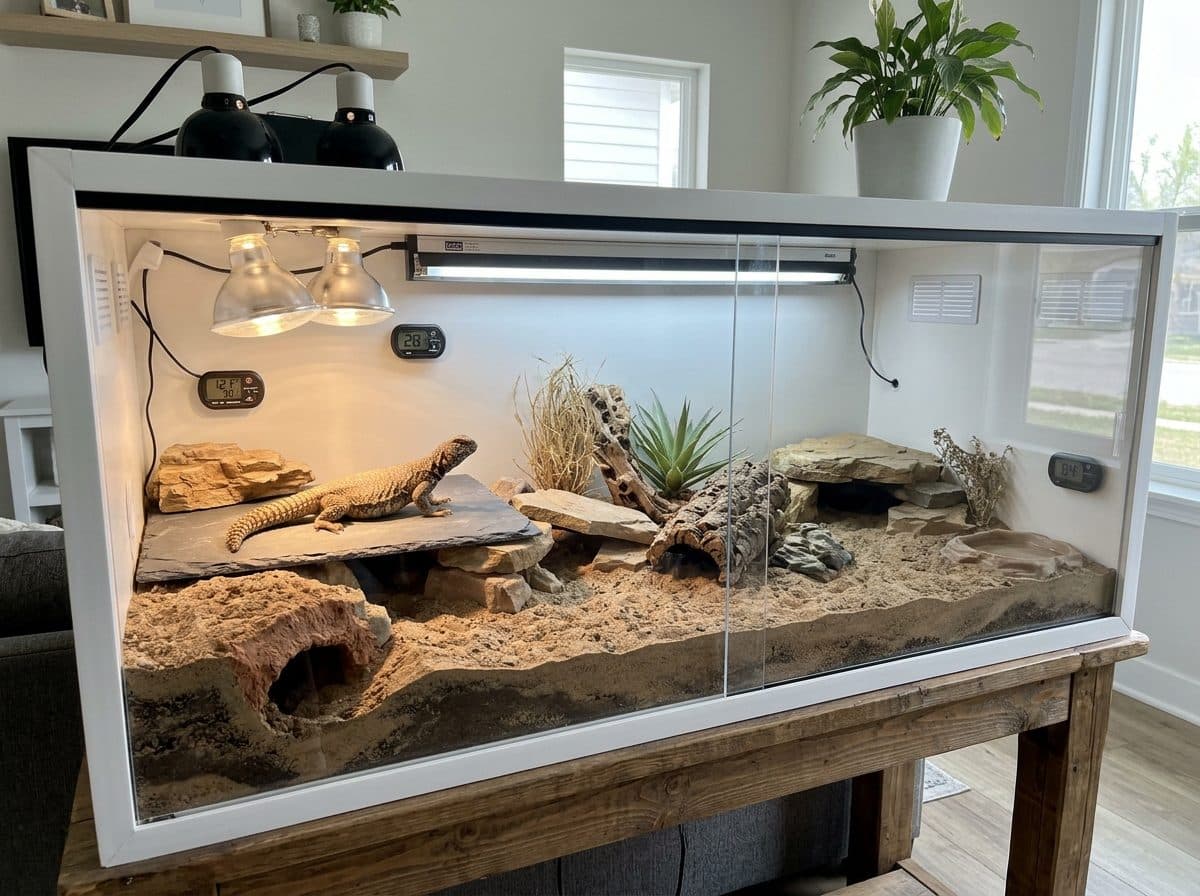
48 × 24 × 24 in (4 × 2 × 2 ft) for an adult. Front-opening PVC or glass terrarium, horizontal layout.
Hatchlings can start in a full-sized 4x2x2 ft enclosure if provided with multiple snug hides, or a smaller temporary enclosure to ensure easy feeding.
Keep one per enclosure. Pairs or a male with females sometimes work, but only in at least double the minimum space and with no guarantee they'll get along.
Lighting & heat
UVB: Strong T5 HO 12-14% linear tube (e.g., Arcadia Dragon 14%) about half the enclosure length over the basking area; aim for UVI 4.5-6
Heat: Two or more halogen flood bulbs clustered over a flat stone basking platform, on a thermostat; add a bright 6500K LED for daylight
Day length: 12–14 hours of light
Substrate
Good choices: 70/30 play sand and organic topsoil mix; Excavator clay burrow substrate; Unpolished slate or ceramic tile; Paper towels (for juveniles or quarantine period).
Avoid: Calcium sand or Vita-Sand; Crushed walnut shell; Wood chips or bark mulch; Alfalfa pellets; Reptile carpet.
What an uromastyx needs
Everything for a complete adult setup. Essentials are ticked; untick anything you already have.
How much is an uromastyx?
- The uromastyx itselfPrice depends mainly on the species, age, vibrant coloration, captive-bred status, and seller type.
- $100–$450
- Setup, essentials
- $531–$931
- Every year after
- $235–$480
- First year, setup plus supplies
- $766–$1,411
What you keep buying, per year
| Fresh Greens and VegetablesUromastyx need a steady supply of fresh, dark leafy greens and some varied vegetables. | weekly | $150–$300 |
| Dry Seeds, Lentils, and GrainsDry legumes, lentils, and seeds like millet provide essential calories and dietary variety. | monthly | $20–$50 |
| Calcium and Vitamin PowderDietary supplements are vital for preventing metabolic bone disease in captive reptiles. | every 6 months | $15–$30 |
| Linear T5 HO UVB BulbUVB lamps degrade and lose their necessary ultraviolet output over time even if they still emit visible light. | every 6-12 months | $30–$60 |
| Halogen Heat BulbsHeat bulbs frequently burn out or experience diminished thermal output over continuous daily use. | every 6 months | $20–$40 |
Typical US prices. Vet care isn't included: budget for a check-up with an exotics vet after your pet comes home, and keep an emergency fund.
Are uromastyx good pets?
Yes, for someone ready for the work.
Uromastyx live 20–40 years, need about 10–20 minutes of care a day and cost $235–$480 a year in supplies. They tolerate brief, calm handling.
- Handling
- Tolerates brief handling
- Difficulty
- Intermediate
- Daily care
- 10–20 min
- Lives
- 20–40 years
- Before you buy
- Hawaii prohibits private possession of most reptiles, including Uromastyx. They are CITES-listed, so choose captive-bred animals with paperwork; check local rules elsewhere.
Before your uromastyx comes home
- 01
2-3 weeks before
Assemble the enclosure and install all heating and lighting equipment
Setting up the habitat early allows sufficient time to wire, mount, and arrange basking platforms safely.
- 02
48 hours before
Run the complete thermal and light cycle without the animal present
Testing the thermal gradient with an infrared temp gun ensures the surface temperature reaches the required 120-130°F without unsafe spikes.
- 03
Day one
Place the Uromastyx directly into the enclosure with fresh greens and water
Minimizing extra handling upon arrival reduces transport stress and helps the lizard locate secure hiding spots.
- 04
First two weeks
Observe from a distance, spot clean, and refrain from handling
Acclimation takes time, and avoiding physical interaction prevents unnecessary stress that could trigger anorexia.
- 05
Within first month
Schedule an initial health check and fecal exam with a qualified exotics veterinarian
A baseline professional exam ensures the reptile is free of internal parasites or underlying stress-induced illnesses.
Common setup mistakes
- Failing to provide a hot enough basking spot (below 115°F prevents proper food digestion).
- Feeding insects or other animal protein regularly; too much protein can harm their kidneys.
- Using coil UVB bulbs or skipping linear T5 UVB lighting.
- Allowing humidity to build up or misting the tank, causing scale rot and respiratory illness.
- Cohabiting multiple Uromastyx in a standard enclosure, leading to chronic stress and injuries.
Questions people ask
What size tank does an adult Uromastyx need?
Most adult Uromastyx (such as Mali, Saharan or Ornate) need at least 48 x 24 x 24 inches (4 x 2 x 2 ft). Large species like the Egyptian Uromastyx need at least 8 x 4 x 4 ft.
How hot should a Uromastyx basking spot be?
The surface temperature of the basking stone must reach 120°F to 130°F, measured with an infrared temp gun. Air on the cool side should drop to 80-85°F to allow proper thermoregulation.
Do Uromastyx need a water dish?
Yes. Most of their water comes from fresh greens, but keep a small, shallow bowl of fresh water available. Keep it small so it doesn't raise humidity.
What do Uromastyx eat?
Uromastyx are mostly herbivorous. Feed dark leafy greens like collard, dandelion and mustard greens, with some shredded squash and a little dry lentils or split peas. Insects are a rare treat at most.
How much does it cost to set up a Uromastyx habitat?
Expect to spend between $530 and $930 for a 4x2x2 enclosure, strong T5 UVB, halogen heat, a thermostat, daylight LED, basking stone, hides and monitoring tools.
Sources
The numbers on this page come from these care sheets and references, checked October 2026. How we make these guides.