Reptiles · Testudo horsfieldii
Russian Tortoise Enclosure Setup
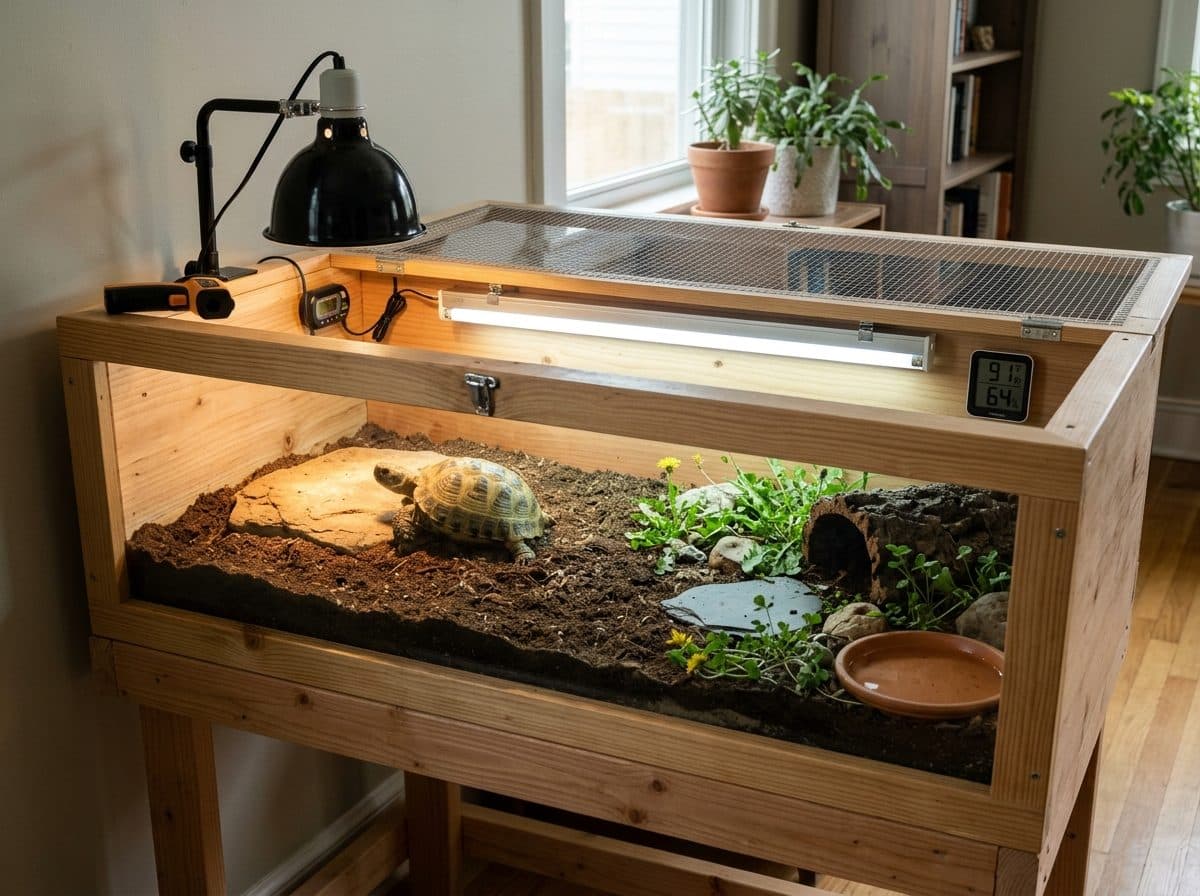
Russian tortoises are active, hardy, and curious reptiles known for their strong burrowing instinct and constant pacing. Indoor setups require maximum ground area with high walls, proper linear UVB lighting, deep diggable substrate, and strong basking heat. Glass tanks should be avoided as clear walls cause chronic stress to tortoises trying to walk through them.
- Minimum enclosure (adult)
- 48×24×18 in
- Basking spot
- 95–105°F
- Humidity
- 30–50%
- Essentials cost
- $355–$707
The setup at a glance
Enclosure size
Adult minimum: 48 × 24 × 18 in (4 × 2 × 1.5 ft). Wooden tortoise table or heavy-duty plastic stock tank, horizontal layout.
Juveniles under 4 inches shell length can temporarily start in a 36x18 inch tub with a moist micro-climate hide.
Solitary by nature; cohousing multiple adults frequently leads to severe bullying, stress, and territorial aggression.
Adult size: 6-10 in (15-25 cm) shell length. Lifespan: 40–50 years. Difficulty: beginner. Hands-off: best watched; about 10–20 minutes of care a day.
Temperature & humidity
| Basking surface | 95–105°F |
| Warm side | 80–85°F |
| Cool side | 70–75°F |
| Night | 65–70°F |
| Humidity | 30–50% |
Ambient air humidity should remain around 30–50%, but substrate deep beneath the surface and inside a designated humid hide box should be kept damp (60–70%) to ensure healthy shell growth.
Lighting & heat
UVB: T5 HO 10-12% linear tube fixture covering 1/2 to 2/3 of enclosure length
Heat: Incandescent halogen heat lamp mounted overhead above the basking spot
Day length: 12-14 on hours
Substrate & diet
Good choices: 50/50 mix of organic topsoil and play sand; coconut coir; cypress mulch; sphagnum moss in humid hide.
Avoid: pure loose sand; calcium sand; pine or cedar shavings; rabbit pellets; cat litter; newspaper.
Diet: Strictly herbivorous requiring a broad fiber-rich diet of leafy greens and broadleaf weeds such as dandelion, collard greens, mustard greens, and spineless opuntia cactus pads. Avoid fruits, grains, animal protein, and high-oxalate foods like spinach.
Russian Tortoise setup checklist
Everything for a complete adult setup. Essentials are ticked; untick anything you already have.
What a Russian Tortoise costs to keep
- Setup (essentials)
- $355–$707
- Every year after
- $235–$460
- First year, all in
- $590–$1,167
| Ongoing | How often | Per year |
|---|---|---|
| Fresh Leafy Greens & WeedsRussian tortoises require a daily diet of varied, fiber-rich broadleaf greens and weeds like dandelion and collard greens. | weekly | $150–$300 |
| Substrate RefillsDeep substrate needs periodic replacement to clean out accumulated waste and maintain proper moisture levels. | every 3-6 months | $30–$60 |
| Calcium SupplementCalcium powder dusted on food prevents metabolic bone disease and supports healthy shell development. | every 6-12 months | $10–$20 |
| T5 HO UVB Tube BulbLinear T5 HO UVB bulbs stop emitting safe UV radiation over time even though they still produce visible light. | every 12 months | $30–$50 |
| Incandescent Basking BulbsBasking heat bulbs eventually burn out and must be replaced to maintain crucial basking temperatures. | every 6-12 months | $15–$30 |
Typical US prices. Vet care isn't included: budget for a check-up with an exotics vet after you bring your pet home, and keep an emergency fund.
Before your russian tortoise comes home
1-2 weeks before
Assemble enclosure and substrate
Setting up early gives you time to mix the substrate and build the humid hide before dialing in environmental conditions.
48 hours before
Run heat and UVB lights to test thermal gradient
Testing the enclosure without the tortoise ensures the dimming thermostat maintains safe basking and cool-side temperatures.
Day one
Soak the tortoise and place it directly in the enclosure
A brief warm water soak prevents transport dehydration and allows the tortoise to settle into its warm environment immediately.
First two weeks
Minimize handling and establish a consistent routine
Avoiding unnecessary handling allows the tortoise to acclimate to its environment without experiencing chronic stress.
First month
Schedule a new-pet exam with an exotics veterinarian
A initial veterinary health check and fecal exam ensures the tortoise is free of internal parasites and underlying health issues.
Common setup mistakes
- Housing in a clear glass tank, which causes constant stress as the tortoise attempts to walk through invisible walls.
- Using heat rocks or heat mats underneath the floor, which can cause severe shell burns to burrowing tortoises.
- Feeding fruits, high-protein foods, or commercial dog/cat food that cause rapid, abnormal growth and shell deformity.
- Keeping the substrate completely dry and dusty, leading to chronic dehydration and respiratory irritation.
- Co-housing multiple adults in small spaces, leading to physical fighting and relentless bullying.
Questions people ask
Can I keep a Russian tortoise in a standard glass aquarium?
No, glass aquariums restrict ventilation and confuse tortoises because they cannot comprehend transparent boundaries, causing chronic perimeter-pacing stress. Wooden tortoise tables or stock tanks are recommended.
What temperature does my Russian tortoise need?
Provide a thermal gradient featuring a 95-105°F basking zone, an 80-85°F warm side, and a 70-75°F cool side, with night drops to 65-70°F.
How much does a complete Russian tortoise setup cost?
Initial habitat equipment, proper UVB lighting, heating controls, and substrates generally cost between $360 and $710.
Sources
The numbers on this page come from these care sheets and references, checked October 2026. How we make these guides.