Reptiles · Lampropeltis triangulum complex
Milk snake enclosure & care
Milk snakes need at least a 48 × 24 × 24 in enclosure, an 85–90°F basking spot and UVB lighting. They live 15–25 years, and a complete setup costs $467–$816.
- Lifespan
- 15–25 years
- Adult size
- Most 24-48 in (60-120 cm); 14-72 in depending on subspecies
- Smallest enclosure
- 48×24×24 in
- Diet
- Appropriately sized frozen-thawed mice
- Handling
- Tolerates brief handling
- First year
- $637–$1,196
What do milk snakes eat?
Strict carnivore. Feed appropriately sized frozen-thawed mice: hatchlings every 5-7 days, juveniles every 7-10 days, adults every 10-14 days. Prey should be no wider than the snake's thickest point.
Food per year: $40–$90
Milk snake temperature & humidity
Basking surface
85–90°F
Warm side
80–85°F
Cool side
75–80°F
- Night
- 68–75°F
- Humidity
- 40–60%
Turn overhead heat off at night unless your room drops below about 68°F. Higher humidity on the cool end and at night is normal. Keep a humid hide packed with damp sphagnum moss, especially around sheds.
Milk snake enclosure size
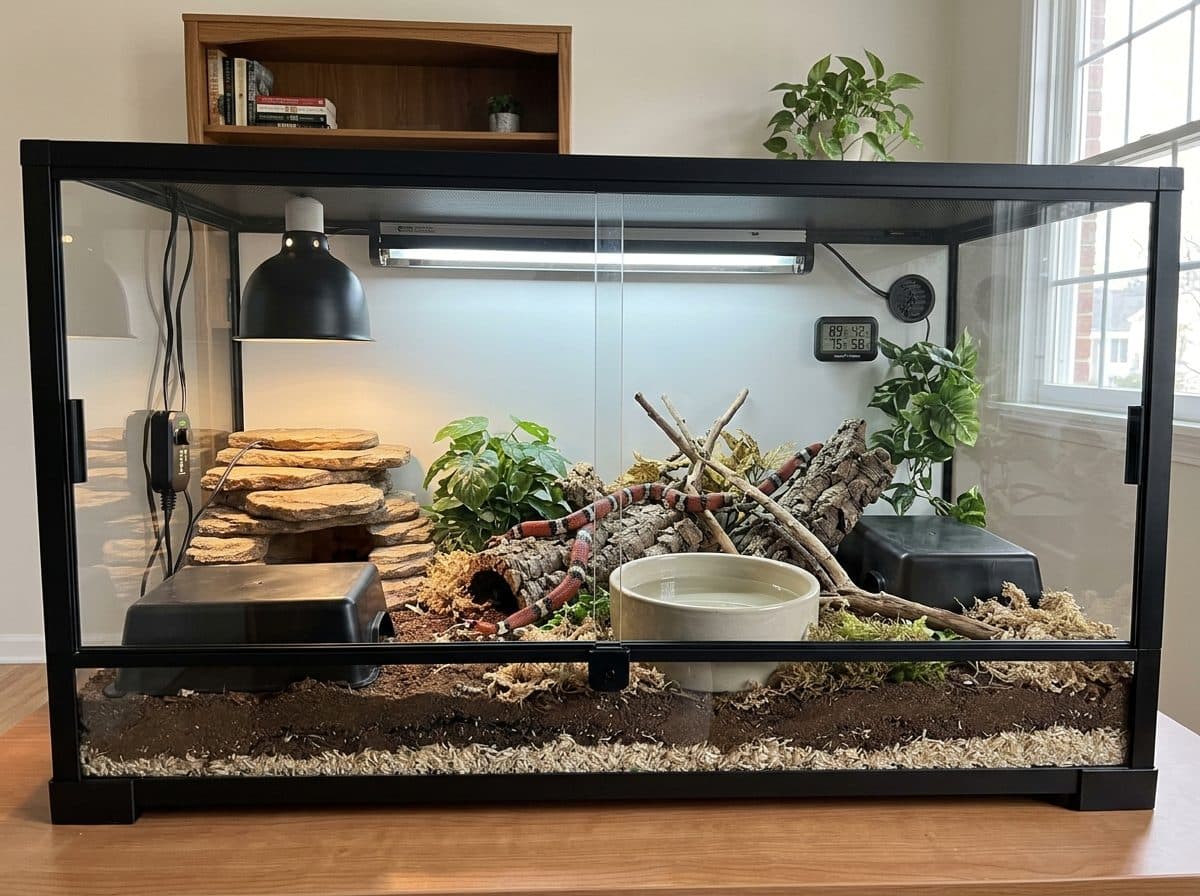
48 × 24 × 24 in (4 × 2 × 2 ft) for an adult. Front-opening glass or PVC terrarium, horizontal layout.
Hatchlings can start in a secure 10-20 gallon enclosure or tub with snug hides, then move up to the adult enclosure as they grow.
Milk snakes are solitary and will eat other snakes; house one per enclosure to prevent cannibalism.
Lighting & heat
UVB: Recommended: T5 HO 5.0 or 6% linear tube (e.g., ReptiSun 5.0 or Arcadia Forest 6%) spanning about half the enclosure on the warm side
Heat: One or two 50W halogen flood bulbs over the basking area, on a dimming thermostat; larger snakes need more
Day length: 12–14 hours of light
Substrate
Good choices: topsoil-based reptile soil mix; aspen shavings; cypress mulch; paper towels (quarantine).
Avoid: cedar shavings; un-kiln-dried pine; loose sand; gravel.
What a milk snake needs
Everything for a complete adult setup. Essentials are ticked; untick anything you already have.
How much is a milk snake?
- The milk snake itselfPrices vary depending on the specific subspecies, morph, age, and whether purchased from a rescue, big-box store, or specialized breeder.
- $80–$250
- Setup, essentials
- $467–$816
- Every year after
- $170–$380
- First year, setup plus supplies
- $637–$1,196
What you keep buying, per year
| Frozen-thawed miceMice serve as the complete staple diet for milk snakes from juvenile to adult stages. | every 5-14 days | $40–$90 |
| Aspen bedding substrateSpot clean daily and replace all of the bedding every few months to keep the enclosure hygienic. | every 3-4 months | $60–$150 |
| Linear T5 HO UVB tubeUVB lamps lose their beneficial ultraviolet output over time even if they still emit visible light. | every 12 months | $25–$45 |
| Halogen heat bulbsBasking bulbs burn out and need replacing to keep the warm end at temperature. | every 6-12 months | $15–$35 |
| Sphagnum mossMoss in humid hide boxes must be refreshed periodically to prevent mold growth and bacterial accumulation. | every 2-3 months | $15–$30 |
| Veterinary disinfectantConcentrated reptile-safe disinfectant is required for routine deep cleaning of the enclosure and decor. | every 6-12 months | $15–$30 |
Typical US prices. Vet care isn't included: budget for a check-up with an exotics vet after your pet comes home, and keep an emergency fund.
Are milk snakes good pets?
Yes, and a good first pet.
Milk snakes live 15–25 years, need about 5–10 minutes of care a day and cost $170–$380 a year in supplies. They tolerate brief, calm handling.
- Handling
- Tolerates brief handling
- Difficulty
- Beginner
- Daily care
- 5–10 min
- Lives
- 15–25 years
- Before you buy
- All snakes are illegal to keep in Hawaii. Some states protect their native milk snakes, so buy captive-bred and check state wildlife rules.
Before your milk snake comes home
- 01
1-2 weeks before
Assemble the enclosure and decor
Setting up substrate, hides, and water dishes early ensures you have all required hardware ready before dialing in environmental parameters.
- 02
48-72 hours before
Test heat and lighting setup
Running heating elements on a thermostat continuously allows you to verify accurate temperature gradients with dual digital probes before introducing the snake.
- 03
Day one
Place snake directly into enclosure and secure latches
Minimizing handling upon arrival reduces transport stress and prevents accidental escapes.
- 04
First 7-14 days
Observe without handling
Allowing the snake to acclimate undisturbed prevents stress-induced regurgitation and helps establish a consistent feeding response.
- 05
After first successful meal
Schedule an initial exotics vet exam
A baseline physical examination and fecal check ensure the snake is parasite-free and healthy.
Common setup mistakes
- Housing multiple milk snakes in the same enclosure, which can result in fatal cannibalism.
- Leaving small gaps in wire pathways or enclosure lids, allowing slender milk snakes to escape.
- Using un-thermostatted heat rocks or heat mats, leading to thermal burns.
- Using aromatic wood substrates like pine or cedar, which cause severe respiratory and skin toxicity.
- Relying on inaccurate analog dial gauges instead of digital probe thermometers.
Questions people ask
What size tank does an adult milk snake need?
Most adult milk snakes need an enclosure at least 48 x 24 x 24 inches (4 x 2 x 2 ft). Larger subspecies over 4 ft, like Honduran milk snakes, need 5-6 ft long enclosures.
What temperatures do milk snakes need?
Aim for a basking surface of 85-90°F, a cool side of 75-80°F, and nights around 68-75°F.
What basic items do I need for a milk snake setup?
You need an escape-proof enclosure, a thermostat-controlled heat source, low-level linear UVB, substrate, two secure hides, a heavy water dish, and digital monitoring tools.
How much does a full milk snake setup cost?
A complete setup with a 4x2x2 enclosure, heat lamp, thermostat, UVB, substrate, hides and monitoring tools typically costs between $465 and $815.
Sources
The numbers on this page come from these care sheets and references, checked October 2026. How we make these guides.