Reptiles · Lampropeltis californiae
Kingsnake enclosure & care
Kingsnakes need at least a 48 × 24 × 24 in enclosure, an 85–90°F basking spot and UVB lighting. They live 15–25 years, and a complete setup costs $466–$855.
- Lifespan
- 15–25 years
- Adult size
- 3.5-4 ft (42-50 in / 107-127 cm)
- Smallest enclosure
- 48×24×24 in
- Diet
- Appropriately sized frozen-thawed mice
- Handling
- Tolerates brief handling
- First year
- $621–$1,205
What do kingsnakes eat?
Feed appropriately sized frozen-thawed mice: hatchlings every 5-7 days, juveniles every 7-10 days, adults every 10-14 days. Prey should be no wider than the snake's thickest point.
Food per year: $40–$90
Kingsnake temperature & humidity
Basking surface
85–90°F
Warm side
80–85°F
Cool side
70–78°F
- Night
- 68–75°F
- Humidity
- 40–60%
Keep a warm-to-cool gradient with the heat lamp on a thermostat, and turn heat off at night unless your room drops below about 68°F. Offer a humid hide with damp sphagnum moss around sheds.
Kingsnake enclosure size
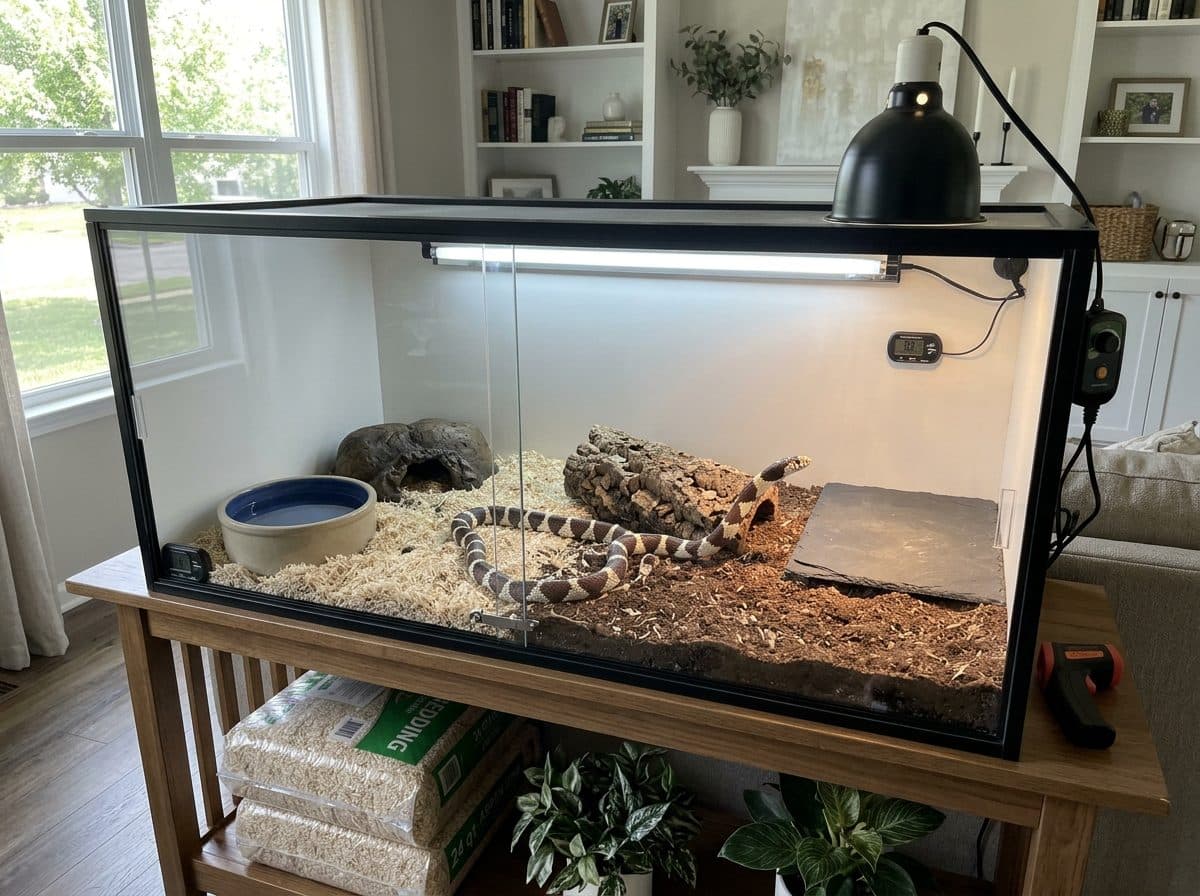
48 × 24 × 24 in (4 × 2 × 2 ft) for an adult. Front-opening PVC or glass terrarium, horizontal layout.
Hatchlings can start in a secure 10-20 gallon enclosure or tub with snug hides, then move to the adult enclosure as they grow.
California Kingsnakes are strictly solitary and ophiophagous (snake-eaters); house only one snake per enclosure.
Lighting & heat
UVB: Recommended: T5 HO 5.0 or 6% linear tube (e.g., ReptiSun 5.0 or Arcadia Forest 6%) spanning about half the enclosure length on the warm side
Heat: Overhead halogen flood bulb(s) on a dimming thermostat
Day length: 12–14 hours of light
Substrate
Good choices: topsoil-based reptile soil mix; aspen shavings; cypress mulch; coconut coir.
Avoid: cedar shavings; pine shavings; gravel; calcium sand.
What a kingsnake needs
Everything for a complete adult setup. Essentials are ticked; untick anything you already have.
How much is a kingsnake?
- The kingsnake itselfPrices vary primarily based on pattern or color morphs (such as albino, high white, or chocolate), age, and vendor type.
- $70–$200
- Setup, essentials
- $466–$855
- Every year after
- $155–$350
- First year, setup plus supplies
- $621–$1,205
What you keep buying, per year
| Frozen-thawed miceMice are the primary staple diet for a California Kingsnake, fed at appropriate intervals depending on age. | weekly or biweekly | $40–$90 |
| Aspen substrateSpot clean daily and replace all of the bedding every few months to prevent bacteria and waste buildup. | every 3-4 months | $60–$150 |
| Linear T5 UVB bulb replacementT5 UVB tubes lose effective ultraviolet output over time even if they continue to emit visible light. | every 12 months | $25–$45 |
| Basking heat bulbsIncandescent and halogen basking bulbs eventually burn out and require periodic replacement to maintain proper thermoregulation. | every 6-12 months | $15–$35 |
| Veterinary disinfectantDisinfectant concentrated solution is used routinely for deep cleaning and sanitizing hides, bowls, and enclosure surfaces. | every 6-12 months | $15–$30 |
Typical US prices. Vet care isn't included: budget for a check-up with an exotics vet after your pet comes home, and keep an emergency fund.
Are kingsnakes good pets?
Yes, and a good first pet.
Kingsnakes live 15–25 years, need about 5–15 minutes of care a day and cost $155–$350 a year in supplies. They tolerate brief, calm handling.
- Handling
- Tolerates brief handling
- Difficulty
- Beginner
- Daily care
- 5–15 min
- Lives
- 15–25 years
- Before you buy
- All snakes are illegal to keep in Hawaii. California kingsnakes are native to California, where only captive-bred animals from permitted breeders can be sold; check state wildlife rules elsewhere.
Before your kingsnake comes home
- 01
1-2 weeks before
Assemble enclosure and install substrate, hides, and water dish
Setting up the physical habitat in advance ensures all structural components are securely in place before testing environmental parameters.
- 02
48 hours before
Run heating and lighting on the dimming thermostat and verify thermal gradient with an infrared temp gun
Testing the heating and lighting continuously without the snake present prevents dangerous thermal spikes or incorrect gradient conditions.
- 03
Day one
Gently place the snake directly into a hide and leave it completely undisturbed
Minimizing stress during initial introduction prevents immediate regurgitation or prolonged behavioral suppression.
- 04
First week
Perform necessary daily checks without attempting handling or feeding
Allowing an acclimation period lets the snake adjust to its new surroundings and reduce cortisol levels.
- 05
After 7 days
Offer a properly sized frozen-thawed rodent inside the enclosure using feeding tongs
Establishing a successful feeding routine confirms the snake has settled in and is not overly stressed.
- 06
First two weeks
Schedule a baseline physical and fecal examination with an exotics veterinarian
An initial vet visit screens for pre-existing parasites or hidden health issues while establishing care.
- 07
After 2 consecutive successful meals
Begin short, calm handling sessions away from feeding days
Waiting until the snake is feeding reliably ensures handling does not induce feeding strike or regurgitation.
Common setup mistakes
- Housing two or more kingsnakes together, which leads to cannibalism.
- Underestimating escape potential by leaving loose screen tops, unlocked doors, or unsealed cord gaps.
- Using dangerous substrates like cedar or pine shavings, which contain toxic aromatic oils.
- Relying on unregulated heat sources or heat rocks, which cause severe thermal burns.
- Failing to establish a clear thermal gradient, leaving the entire cage too hot or too cold.
Questions people ask
What size tank does an adult California Kingsnake need?
A fully grown California Kingsnake requires a minimum enclosure size of 48x24x24 inches (4x2x2 feet). This provides adequate room for burrowing, climbing, and establishing a healthy thermal gradient.
What temperatures do California Kingsnakes need?
Aim for a basking surface of 85-90°F, a warm side of 80-85°F and a cool side of 70-78°F. Nights can drop to 68-75°F.
What do I need to buy before bringing a California Kingsnake home?
You need an escape-proof enclosure, an overhead heat lamp with a digital thermostat, digital thermometers, a linear UVB light fixture, at least two hides, a heavy water dish, aspen or soil substrate, and feeding tongs.
How much does it cost to set up a California Kingsnake habitat?
A proper setup (4x2x2 enclosure, heat lamp, thermostat, UVB, substrate, hides and monitoring tools) typically costs between $465 and $855.
Sources
The numbers on this page come from these care sheets and references, checked October 2026. How we make these guides.