Reptiles · Heterodon nasicus
Hognose snake enclosure & care
Hognose snakes need at least a 36 × 18 × 18 in enclosure, a 90–95°F basking spot and UVB lighting. They live 12–20 years, and a complete setup costs $406–$749.
- Lifespan
- 12–20 years
- Adult size
- 14-36 in (35-90 cm) nose to tail
- Smallest enclosure
- 36×18×18 in
- Diet
- Appropriately sized frozen-thawed mice
- Handling
- Tolerates brief handling
- First year
- $521–$994
What do hognose snakes eat?
Feed appropriately sized frozen-thawed mice (thoroughly warmed) every 4-5 days for juveniles and every 7-10 days for adults using feeding tongs.
Food per year: $40–$90
Hognose snake temperature & humidity
Basking surface
90–95°F
Warm side
85–88°F
Cool side
75–80°F
- Night
- 60–75°F
- Humidity
- 30–50%
Keep ambient humidity around 30-50% and offer a humid hide with damp sphagnum moss for shedding. Turn all heat and light off at night; a drop into the 60s°F is fine and no night bulb is needed.
Hognose snake enclosure size
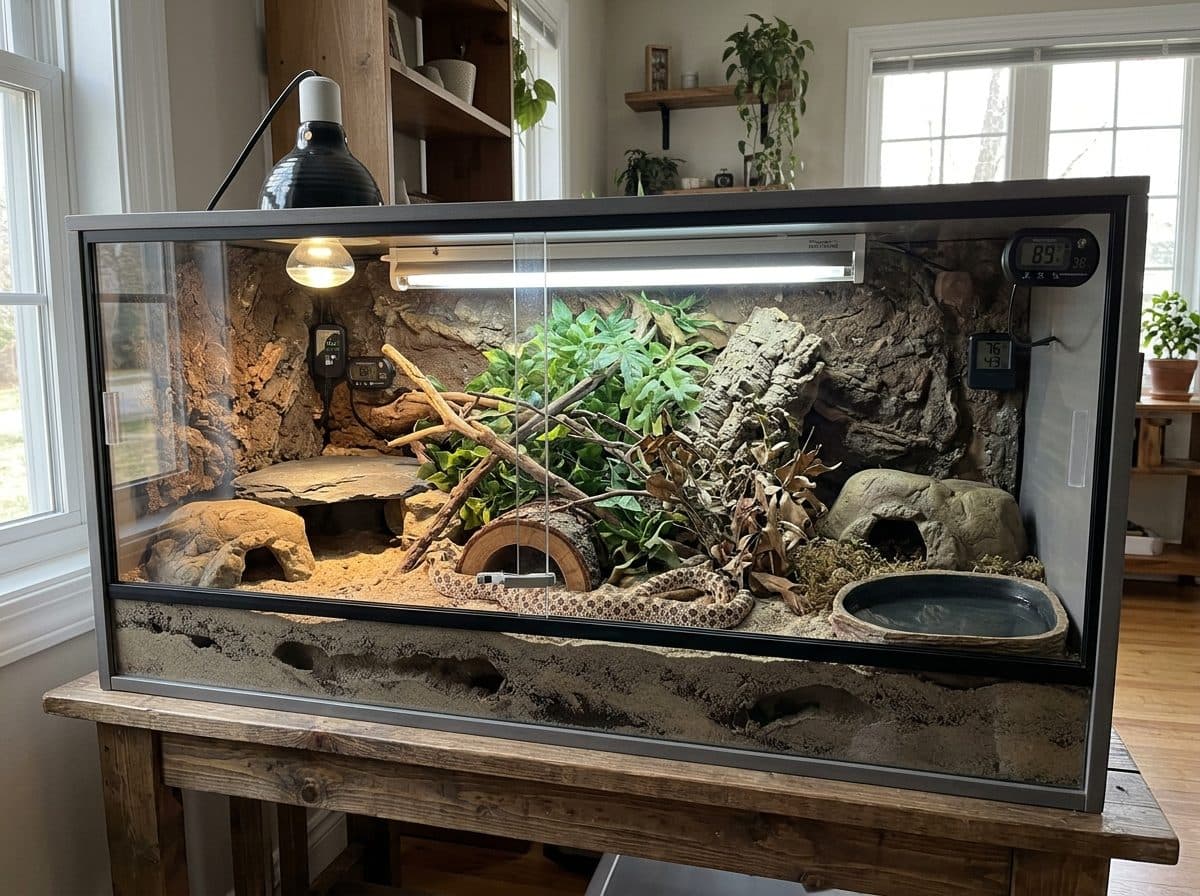
36 × 18 × 18 in (3 × 1.5 × 1.5 ft) for an adult. Front-opening glass or PVC terrarium, horizontal layout.
Hatchlings and juveniles can live in a 10-gallon (20x10x12 in) enclosure or secure tub with plenty of clutter until about a year old, which helps them feel safe enough to feed.
Hognose snakes must be housed individually due to high stress and risk of cannibalism.
Lighting & heat
UVB: T5 HO 5-6% linear tube covering 1/2 to 2/3 of enclosure length
Heat: 50-75W overhead halogen flood bulb in a ceramic fixture
Day length: 12 on, 12 off
Substrate
Good choices: aspen snake bedding; sand-topsoil mix (70/30); bioactive soil-sand substrate.
Avoid: cedar shavings; pine shavings; pure loose calcium sand; wet soil; aquarium gravel.
What a hognose snake needs
Everything for a complete adult setup. Essentials are ticked; untick anything you already have.
How much is a hognose snake?
- The hognose snake itselfPrice is primarily driven by morph genetics, sex, age, and whether purchased from a breeder, pet store, or rescue.
- $120–$350
- Setup, essentials
- $406–$749
- Every year after
- $115–$245
- First year, setup plus supplies
- $521–$994
What you keep buying, per year
| Frozen-thawed miceAppropriately sized frozen mice are the staple diet for Western Hognose snakes throughout their life. | weekly to every 10 days | $40–$90 |
| Aspen substrateRegular full substrate replacements are required to maintain hygiene and prevent bacterial growth in burrowing beddings. | every 1-2 months | $30–$60 |
| Linear T5 HO UVB bulbUVB lamps degrade over time and stop emitting sufficient ultraviolet light long before the visible light burns out. | every 12 months | $25–$45 |
| Halogen heat bulbIncandescent halogen bulbs have a limited lifespan and require routine replacement when they burn out. | every 6-12 months | $10–$30 |
| Sphagnum mossMoss in the humid hide needs periodic replacement to prevent mold growth and maintain clean humidity. | every 1-2 months | $10–$20 |
Typical US prices. Vet care isn't included: budget for a check-up with an exotics vet after your pet comes home, and keep an emergency fund.
Are hognose snakes good pets?
Yes, and a good first pet.
Hognose snakes live 12–20 years, need about 5–15 minutes of care a day and cost $115–$245 a year in supplies. They tolerate brief, calm handling.
- Handling
- Tolerates brief handling
- Difficulty
- Beginner
- Daily care
- 5–15 min
- Lives
- 12–20 years
- Before you buy
- Captive-bred western hognoses are legal to keep in most of the US, but some states where they are native protect them: Illinois lists them as threatened and requires a permit, and states such as Missouri and Iowa also restrict them. Never collect wild hognoses, and check your state wildlife agency before buying.
Before your hognose snake comes home
- 01
1-2 weeks before
Assemble enclosure and substrate
Setting up the habitat early allows you to organize decor, hides, and deep aspen substrate without rushing.
- 02
48-72 hours before
Run heat and light on thermostat
Running the setup beforehand verifies that the dimming thermostat maintains safe thermal gradients before introducing the snake.
- 03
Day one
Place snake directly into enclosure
Minimizing handling upon arrival prevents excess stress and helps the snake adjust quickly to its new home.
- 04
First week
Observe without handling or feeding
Leaving the snake entirely alone for the first several days reduces stress and ensures it settles into its environment.
- 05
7 days after arrival
Offer first meal
Waiting a full week before offering a warm frozen-thawed mouse ensures the snake is settled enough to eat reliably.
- 06
First two weeks
Schedule initial exotics vet exam
A wellness checkup and fecal parasite exam establish a health baseline and catch hidden health issues early.
Common setup mistakes
- Using un-thermostatted heat rocks or heat mats that cause severe belly burns.
- Providing shallow substrate that prevents burrowing behaviors.
- Keeping humidity too high (>60%), leading to scale rot and respiratory infections.
- Housing juveniles in massive open spaces without dense cover, causing severe feeding refusal.
- Using toxic softwood substrates like pine or cedar.
Questions people ask
What size tank does an adult Western Hognose Snake need?
Adult females need at least a 36x18x16 inch (40-gallon) enclosure; we suggest 36x18x18. Smaller adult males can live in a 30x12x12 inch (20-gallon) enclosure, though more room is always better.
What temperatures do Western Hognose Snakes need?
Aim for a basking surface of 90–95°F, a warm side around 85–88°F and a cool side of 75–80°F. At night, turn the heat off; temperatures can safely drop into the 60s°F.
How much does it cost to set up a Western Hognose Snake habitat?
Expect to spend about $400 to $750 on the essentials: the enclosure, halogen heat with a thermostat, linear UVB, thermometers, substrate, hides and a water dish.
Why is my hognose snake refusing to eat?
Feeding strikes are common and usually caused by inadequate enclosure temperatures, lack of ground cover, excessive handling, or winter seasonal changes. Scenting mice with salmon juice or toad scent can help restart feeding.
Sources
The numbers on this page come from these care sheets and references, checked October 2026. How we make these guides.