Small Mammals · Meriones unguiculatus
Gerbil Cage Setup
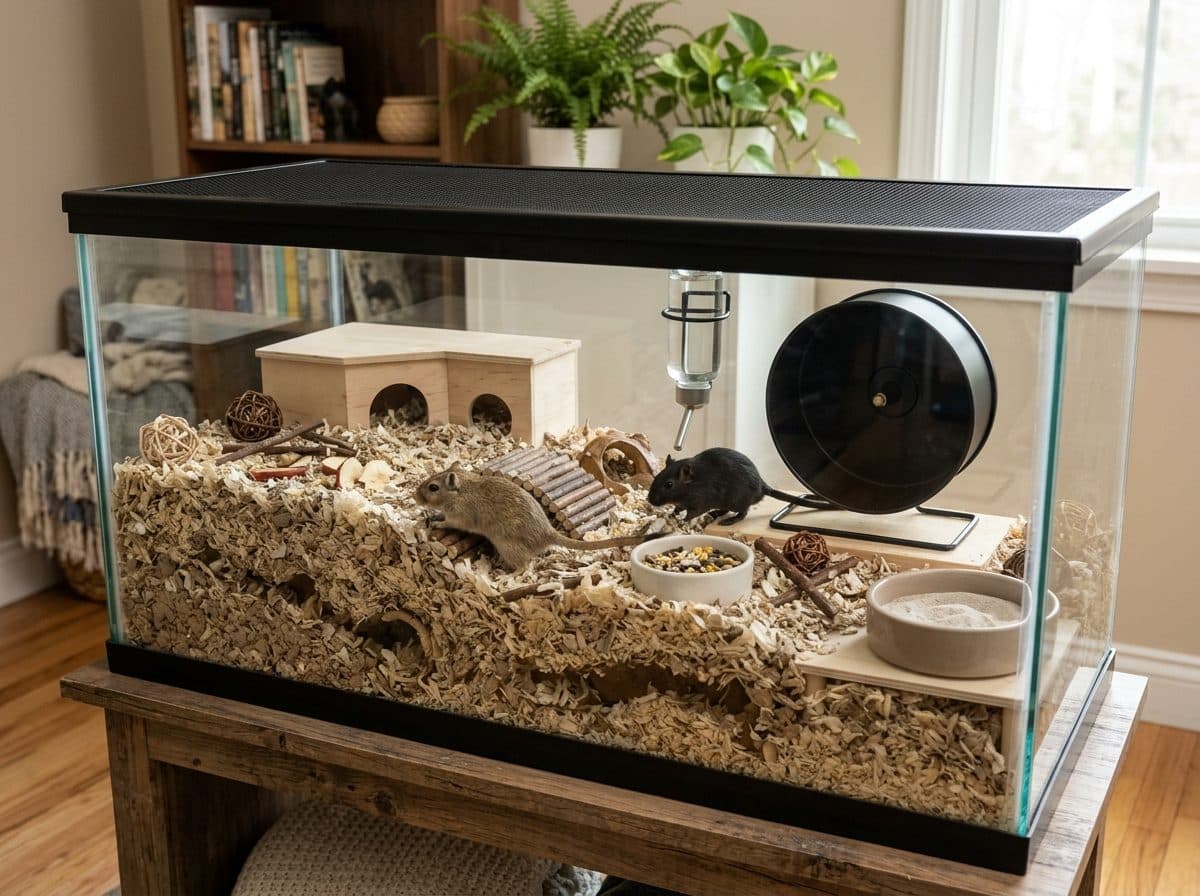
Mongolian gerbils are energetic, curious, and diurnal social rodents that make engaging pets. To keep them thriving, you must provide a glass tank with deep, burrow-supporting substrate for tunneling, along with non-plastic chew toys and a same-sex companion.
- Minimum cage (adult)
- 36×18×16 in
- Temperature
- 65–75°F
- Humidity
- 30–50%
- Essentials cost
- $188–$395
The setup at a glance
Cage size
Adult minimum: 36 × 18 × 16 in (3 × 1.5 × 1.3 ft). Glass aquarium with heavy screen lid or wire tank topper, horizontal layout.
Gerbils are highly social and must be kept in same-sex pairs or small bonded sibling groups.
Adult size: 4-5 in (10-13 cm) body, plus 4 in (10 cm) tail. Lifespan: 2–4 years. Difficulty: beginner. Tolerates brief handling; about 10–25 minutes of care a day.
Temperature & humidity
| Warm side | 65–75°F |
| Night | 65–75°F |
| Humidity | 30–50% |
Standard room temperature (65–75°F) is ideal. Keep humidity below 50% to prevent greasy fur and respiratory issues.
Lighting & heat
UVB: not required
Heat: not required under standard room temperatures (65-75°F)
Day length: 12-14 on hours
Substrate & diet
Good choices: unscented paper-based bedding; aspen shavings; timothy hay mix.
Avoid: cedar shavings; pine shavings; scented bedding; fluffy cotton nesting fibers; clay or cat litter.
Diet: Feed a high-quality pellet and seed mix supplemented with timothy hay, small bits of fresh vegetables, and occasional seeds or mealworms as treats.
Gerbil setup checklist
Everything for a complete adult setup. Essentials are ticked; untick anything you already have.
What a Gerbil costs to keep
- Setup (essentials)
- $188–$395
- Every year after
- $150–$305
- First year, all in
- $338–$700
| Ongoing | How often | Per year |
|---|---|---|
| Commercial Gerbil Pellets & Seed MixProvides the primary balanced nutritional intake required to maintain health and weight. Costs assume a pair. | monthly | $30–$60 |
| Paper Bedding & Aspen ShavingsDeep substrate is regularly replaced during full tank cleans to manage waste and allow burrowing. | monthly | $60–$120 |
| Timothy HayOffers essential dietary fiber and structure for burrow stability and natural chewing habits. | monthly | $20–$40 |
| Bathing SandUsed in dust baths to absorb skin oils and keep their fur clean without using water. | every 2-3 months | $15–$35 |
| Wooden Chew Toys & HideoutsContinuous chew opportunities are required to wear down open-rooted continually growing teeth. | every 2-3 months | $25–$50 |
Typical US prices. Vet care isn't included: budget for a check-up with an exotics vet after you bring your pet home, and keep an emergency fund.
Before your gerbil comes home
1-2 weeks before
Assemble enclosure and establish deep bedding layer
Ensures all housing components, water bottles, and wheel attachments are secure before bringing gerbils home.
48 hours before
Verify stable room temperature and secure lid latches
Confirms the room stays consistently between 65–75°F and the tank screen lid prevents escapes.
day one
Place gerbils in enclosure with minimal disturbance
Reduces acute transport stress and allows them to explore and build initial burrows quietly.
first 24-48 hours
Observe without handling or making sudden movements
Prevents severe stress and allows the pair or group to settle into their new environment.
first two weeks
Begin gradual taming using hand-offered treats
Builds trust gently so gerbils learn to associate human hands with positive experiences rather than danger.
first month
Schedule a baseline wellness exam with an exotics veterinarian
Establishes health records and screens for underlying health issues or parasites early on.
Common setup mistakes
- Housing gerbils in wire cages or plastic modular habitats that allow bedding to spill out and get chewed apart.
- Providing less than 6-10 inches of substrate, preventing natural tunnel construction and leading to chronic stress.
- Using softwood shavings (pine or cedar) which release toxic aromatic oils that cause respiratory distress.
- Bathing gerbils in water instead of offering a dry sand bath for coat grooming.
- Keeping a gerbil alone without a same-sex companion, as gerbils are obligate social animals.
Before you buy: Gerbils are illegal to own as pets in California and Hawaii due to concerns about potential invasive feral populations.
Questions people ask
What size tank do gerbils need?
A 40-gallon breeder glass tank (36x18x16 in, about 100x50 cm of floor) with a mesh lid is the minimum recommended size for a pair of gerbils; smaller 20-gallon tanks leave too little floor space and bedding depth.
What temperature and humidity do gerbils need?
Gerbils thrive in standard home room temperatures between 65°F and 75°F. Maintain humidity under 50% to keep their coat clean and prevent respiratory health issues.
What do I need to set up a gerbil habitat?
You need a glass tank with a screen lid, 8+ inches of mixed paper and aspen bedding, a glass water bottle, ceramic food bowl, solid exercise wheel, chew toys, and a sand bath.
How much does a complete gerbil setup cost?
A basic initial setup generally costs between $180 and $400 total, depending on the tank and accessories you choose.
Sources
The numbers on this page come from these care sheets and references, checked October 2026. How we make these guides.