Reptiles · Terrapene carolina
Box turtle enclosure & care
Box turtles need at least a 66 × 36 × 18 in enclosure, an 84–88°F basking spot and UVB lighting. They live 30–60 years, and a complete setup costs $410–$1,043.
- Lifespan
- 30–60 years
- Adult size
- 4.5-8 in (11-20 cm) shell length
- Smallest enclosure
- 66×36×18 in
- Diet
- Worms, insects, greens, berries
- Handling
- Hands-off: best watched
- First year
- $660–$1,543
What do box turtles eat?
Omnivores: roughly half animal protein (earthworms, dubia roaches, crickets, snails) and half plants (dark leafy greens, squash, mushrooms, berries). Juveniles eat daily and lean more toward protein; adults eat every other day. Dust food with calcium and a multivitamin that contains preformed vitamin A.
Food per year: $150–$300
Box turtle temperature & humidity
Basking surface
84–88°F
Cool side
70–75°F
- Night
- 60–70°F
- Humidity
- 60–80%
Turn heat off at night so temperatures drop. Keep humidity at 60-80% (never below about 50%) with deep, damp soil and a humid hide filled with moist sphagnum moss. Outdoor pens need shade, sun, well-drained soil, walls at least 2 ft tall sunk 12 in into the ground, and a plan for winter.
Box turtle enclosure size
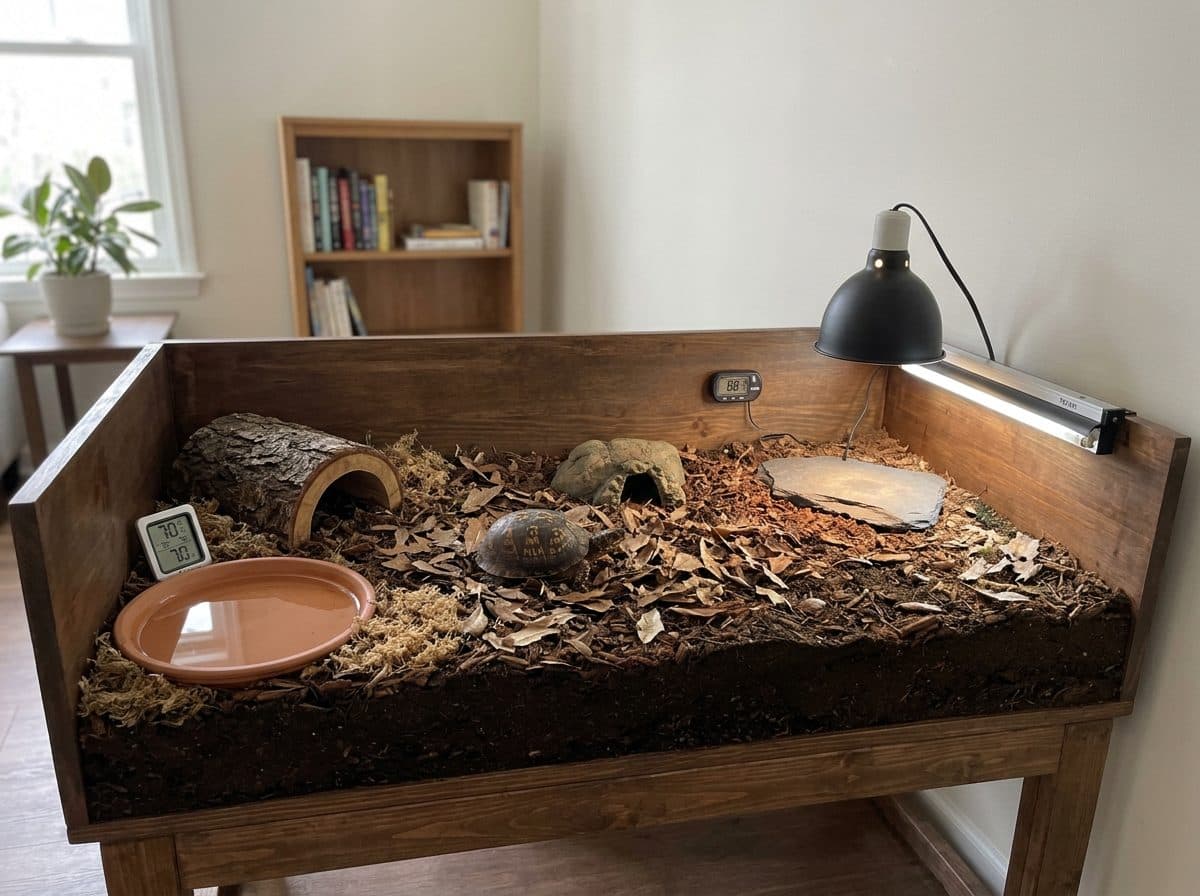
66 × 36 × 18 in (5.5 × 3 × 1.5 ft) for an adult. Secure outdoor pen, large tortoise table, or wide PVC enclosure, horizontal layout.
Federal law bars selling turtles under 4 inches, so most new keepers start with a larger juvenile or adult. A young turtle can start in a smaller, very humid enclosure (about 36 x 18 in) and move up as it grows.
House box turtles alone unless you have a very large outdoor pen; males in particular fight and stress each other.
Lighting & heat
UVB: T5 HO 6% or 5.0 linear tube over the warm half, about 13-14 in above the basking spot through mesh
Heat: Halogen or incandescent flood lamp in a dome fixture over the basking area; heat off at night
Day length: 10–14 on (shorter in winter, longer in summer)
Substrate
Good choices: organic topsoil (no fertilizer or perlite); coconut coir; cypress mulch; leaf litter; sphagnum moss.
Avoid: calcium sand; silica sand; cedar shavings; pine shavings; gravel; paper towels.
What a box turtle needs
Everything for a complete adult setup. Essentials are ticked; untick anything you already have.
How much is a box turtle?
- The box turtle itselfCaptive-bred box turtles over 4 inches usually cost $100-350 from a breeder or specialty seller, depending on species, age and sex; turtle rescues often have box turtles for adoption.
- $100–$350
- Setup, essentials
- $410–$1,043
- Every year after
- $250–$500
- First year, setup plus supplies
- $660–$1,543
What you keep buying, per year
| Insects and fresh produceBox turtles need a regular supply of fresh leafy greens, fruits, vegetables, and live gut-loaded insects like earthworms and roaches. | weekly | $150–$300 |
| Topsoil, mulch and mossSubstrate must be periodically replaced to maintain clean, mold-free conditions and proper moisture retention. | every 2-3 months | $60–$120 |
| Calcium and multivitamin supplementsPowdered supplements degrade over time and must be refreshed to ensure adequate bone development and metabolic health. | every 6-12 months | $15–$30 |
| Linear T5 HO UVB bulbUVB output degrades over time even if the bulb still produces visible light, which is critical to prevent metabolic bone disease. | every 6-12 months | $25–$50 |
Typical US prices. Vet care isn't included: budget for a check-up with an exotics vet after your pet comes home, and keep an emergency fund.
Are box turtles good pets?
Yes, for someone ready for the work.
Box turtles live 30–60 years, need about 10–20 minutes of care a day and cost $250–$500 a year in supplies. They are animals to watch, not hold.
- Handling
- Hands-off: best watched
- Difficulty
- Intermediate
- Daily care
- 10–20 min
- Lives
- 30–60 years
- Before you buy
- Federal law bars selling any turtle with a shell under 4 inches. Many states protect native box turtles: taking them from the wild is widely illegal, some states require a permit, and Virginia banned keeping them as pets in 2021. Buy captive-bred or adopt, and check your state wildlife agency.
Before your box turtle comes home
- 01
1-2 weeks before
Assemble enclosure and establish thermal gradients
Setting up substrate, hides, and heating elements in advance lets you verify that microclimates and humidity levels remain stable.
- 02
48 hours before
Monitor and calibrate temperature and humidity
Running lights and heaters without the animal ensures target basking and ambient temperatures are reached before introduction.
- 03
Day one
Place turtle in enclosure and soak briefly in warm water
Soaking encourages hydration and waste elimination after transport before settling into the new environment.
- 04
First two weeks
Minimize handling and establish feeding routines
Allowing an acclimation period reduces environmental stress and reduces the risk of initial food refusal.
- 05
First month
Schedule an initial exotic vet checkup and fecal exam
A baseline professional health check and parasite screening prevent undetected issues from worsening in a new home.
Common setup mistakes
- Keeping a box turtle in a small glass aquarium, which is too small and loses humidity fast.
- Taking a box turtle from the wild; it's illegal in many states and wild turtles rarely adjust to captivity.
- Using dry substrate like sand or wood shavings, which dehydrates turtles and irritates their eyes.
- Relying on coil UVB bulbs instead of a linear T5 tube.
- Using a deep water bowl; box turtles are poor swimmers and can drown.
- Feeding a mostly plant or fruit diet without enough animal protein and calcium.
Questions people ask
What size tank or enclosure does an adult box turtle need?
One adult box turtle needs at least 5.5 x 3 feet of floor (about 16 square feet), and more is better. A secure outdoor pen is ideal where the climate allows; indoors, use a tortoise table or wide enclosure rather than a glass tank.
What temperatures and humidity do box turtles require?
Provide an 84-88°F basking spot and a cool end of 70-75°F, and let temperatures drop at night with the heat off. Keep humidity between 60% and 80%.
What essential equipment do I need to set up a box turtle enclosure?
You need an enclosure of at least 5.5 x 3 ft, a T5 HO 6% or 5.0 UVB tube, a heat lamp, deep damp soil-based substrate, a shallow water dish, two hides (one humid) and a calcium and multivitamin powder.
How much does a full box turtle setup cost?
A proper indoor setup costs roughly $410 to $1,045, depending mostly on the enclosure, plus UVB lighting, heating, substrate, hides, a water dish, supplements and monitoring tools.
Sources
The numbers on this page come from these care sheets and references, checked October 2026. How we make these guides.