Reptiles · Boa constrictor
Boa constrictor enclosure & care
Boa constrictors need at least a 72 × 36 × 36 in enclosure, a steady 86–90°F and UVB lighting. They live 20–35 years, and a complete setup costs $1,017–$2,133.
- Lifespan
- 20–35 years
- Adult size
- 6-10 ft (1.8-3 m) nose to tail
- Smallest enclosure
- 72×36×36 in
- Diet
- Frozen thawed rodents or fowl
- Handling
- Tolerates brief handling
- First year
- $1,212–$2,643
What do boa constrictors eat?
Strictly carnivorous: whole frozen/thawed rodents or birds about as wide as the snake's thickest point. Juveniles eat every 7-14 days, adults every 3-6 weeks; overfeeding quickly makes boas obese.
Food per year: $100–$300
Boa constrictor temperature & humidity
Warm side
86–90°F
Cool side
75–80°F
- Night
- 68–75°F
- Humidity
- 55–75%
Keep a gradient from about 75°F at the cool end to 86-90°F air at the warm end; surfaces under the lamps read warmer, so check them with a temp gun. Let it drop at night, but not below about 68°F. Raise humidity to 75-85% when the snake is going into a shed.
Boa constrictor enclosure size
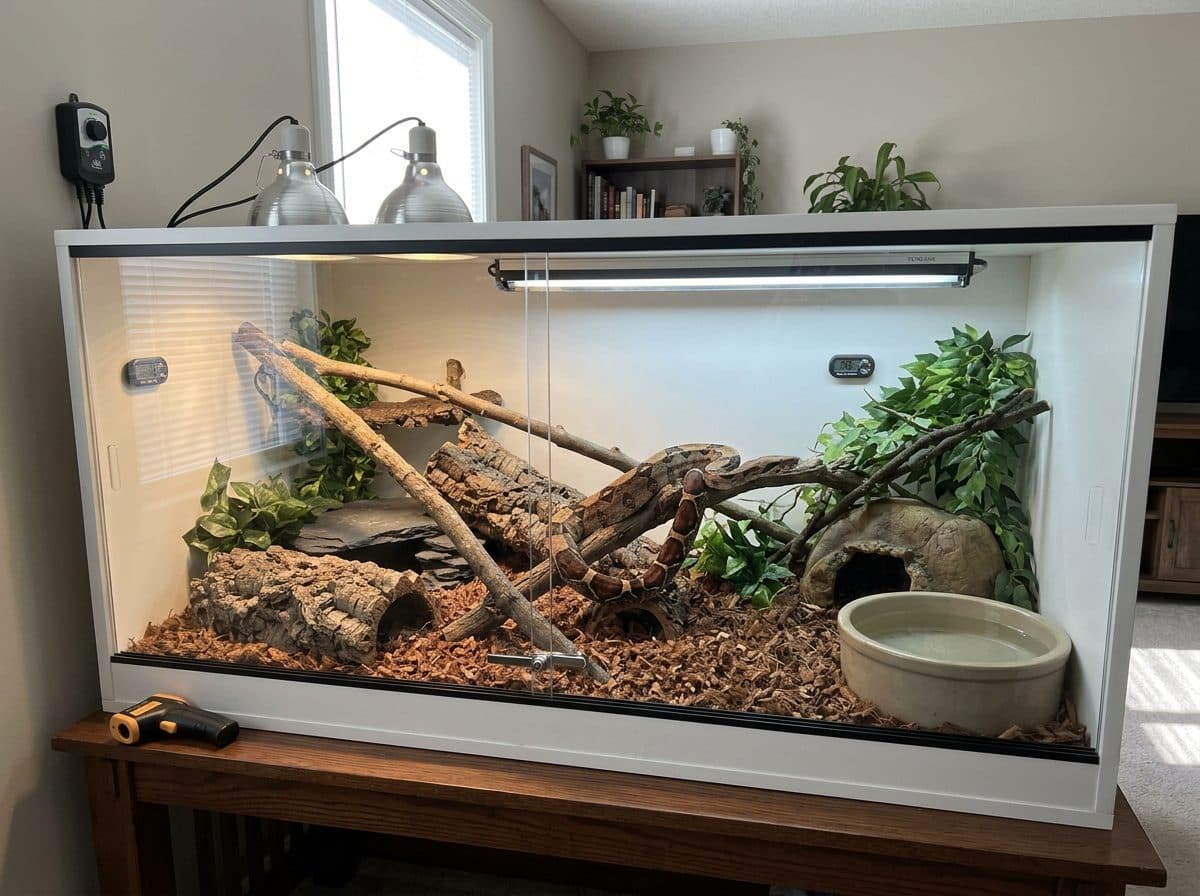
72 × 36 × 36 in (6 × 3 × 3 ft) for an adult. Front-opening PVC terrarium, horizontal layout.
Juveniles can be started in a 48x24x24 inch PVC enclosure before upgrading to an adult habitat.
Always house boa constrictors individually, as cohabitation causes severe stress and risk of injury.
Lighting & heat
UVB: T5 HO 5-6% linear tube covering 1/2 of the enclosure length
Heat: Two or more halogen flood bulbs in dome fixtures over the warm end on a dimming thermostat; add a ceramic heat emitter or deep heat projector on a proportional thermostat only if the room falls below 68°F at night
Day length: 12 on / 12 off
Substrate
Good choices: coco husk; cypress mulch; topsoil and coco fiber mix.
Avoid: cedar shavings; pine shavings; calcium sand; gravel; unsealed wood pellets.
What a boa constrictor needs
Everything for a complete adult setup. Essentials are ticked; untick anything you already have.
How much is a boa constrictor?
- The boa constrictor itselfNormal-colored common boas usually cost $100-200; designer morphs and localities run higher. Rescues often have adult boas for adoption.
- $100–$500
- Setup, essentials
- $1,017–$2,133
- Every year after
- $195–$510
- First year, setup plus supplies
- $1,212–$2,643
What you keep buying, per year
| Frozen whole prey (rodents/fowl)Adults move up to large rats or rabbits; a big female can cost $15-25 per meal. | monthly | $100–$300 |
| Coconut husk substrateSubstrate needs regular full replacement to maintain hygiene and manage enclosure humidity. | every 2-3 months | $50–$120 |
| Linear T5 HO UVB lampUVB bulbs lose functional ultraviolet output over time even though they continue emitting visible light. | every 6-12 months | $25–$50 |
| Veterinary disinfectantConcentrated disinfectant is required for routine deep cleans and sanitation of water bowls and hides. | every 6 months | $20–$40 |
Typical US prices. Vet care isn't included: budget for a check-up with an exotics vet after your pet comes home, and keep an emergency fund.
Are boa constrictors good pets?
Yes, for someone ready for the work.
Boa constrictors live 20–35 years, need about 5–15 minutes of care a day and cost $195–$510 a year in supplies. They tolerate brief, calm handling.
- Handling
- Tolerates brief handling
- Difficulty
- Intermediate
- Daily care
- 5–15 min
- Lives
- 20–35 years
- Before you buy
- Boa constrictors are legal in most US states and are not on the federal injurious-species list, but some states, counties and cities restrict large constricting snakes or require a permit. Check your state wildlife agency and local ordinances before buying.
Before your boa constrictor comes home
- 01
1-2 weeks before
Assemble enclosure and install heat and lighting elements
Assembling all equipment early allows time to identify missing parts or correct setup issues before the snake arrives.
- 02
48-72 hours before
Run heat source and UVB on thermostats to verify thermal gradient
Testing the enclosure without the animal ensures heat lamps and thermostats maintain appropriate basking and cool zone temperatures.
- 03
Day one
Place the snake directly into the warm hide and secure enclosure
Minimizing initial interaction helps the snake feel secure in its new environment and prevents stress-induced escape attempts.
- 04
First 7-14 days
Leave the snake completely alone except for fresh water changes and spot cleaning
Avoiding handling allows the snake to acclimate to its territory, lowering stress so it will reliably accept its first meal.
- 05
First 2-4 weeks
Offer first feed and schedule an initial exotic vet wellness exam
Establishing care with a qualified veterinarian and securing a health baseline early prevents undetected health issues.
Common setup mistakes
- Using an un-thermostatted heat rock or unshielded internal bulb which causes thermal burns.
- Attempting to keep an adult boa in a screen-top glass tank that drains heat and humidity.
- Overfeeding prey items that are too large or feeding too frequently, leading to severe obesity.
- Failing to install secure locks on doors, allowing powerful adults to push open terrariums.
- Using toxic softwood substrates like cedar or pine shavings that release harmful aromatic oils.
Questions people ask
What size tank does an adult boa constrictor need?
An adult boa constrictor requires an enclosure measuring at least 6x3x3 feet (72x36x36 inches), though exceptionally large females over 8 feet long should have an 8x4x4 foot enclosure.
What temperatures and humidity do boa constrictors need?
Keep the warm end at 86-90°F air, the cool end at 75-80°F, and nights no lower than about 68°F. Humidity should stay between 55% and 75%, a little higher before a shed.
How much does a full boa constrictor setup cost?
A proper setup with a 6x3x3 ft PVC enclosure, thermostat, heat lamps, UVB light, hides, branches and monitoring tools generally costs between $1,015 and $2,135, mostly depending on the enclosure.
Sources
The numbers on this page come from these care sheets and references, checked October 2026. How we make these guides.