Reptiles · Hemitheconyx caudicinctus
African fat-tailed gecko enclosure & care
African fat-tailed geckos need at least a 36 × 18 × 18 in enclosure, a 90–94°F basking spot and UVB lighting. They live 15–20 years, and a complete setup costs $402–$763.
- Lifespan
- 15–20 years
- Adult size
- 8-10 in (20-25 cm) nose to tail
- Smallest enclosure
- 36×18×18 in
- Diet
- Dusted live insects
- Handling
- Tolerates brief handling
- First year
- $612–$1,183
What do African fat-tailed geckos eat?
Insectivores. Feed gut-loaded live insects such as crickets, dubia roaches and mealworms, lightly dusted with calcium, plus a multivitamin now and then. Juveniles eat daily; adults with a full tail every 5 days or so.
Food per year: $120–$240
African fat-tailed gecko temperature & humidity
Basking surface
90–94°F
Warm side
82–88°F
Cool side
70–77°F
- Night
- 65–75°F
- Humidity
- 50–80%
Measure the warm hide or basking surface with a temp gun. Daytime humidity of 50-80% is fine, rising at night; keep the humid hide damp with moist substrate or sphagnum moss. Many keepers mimic a cooler, drier winter from November to March.
African fat-tailed gecko enclosure size
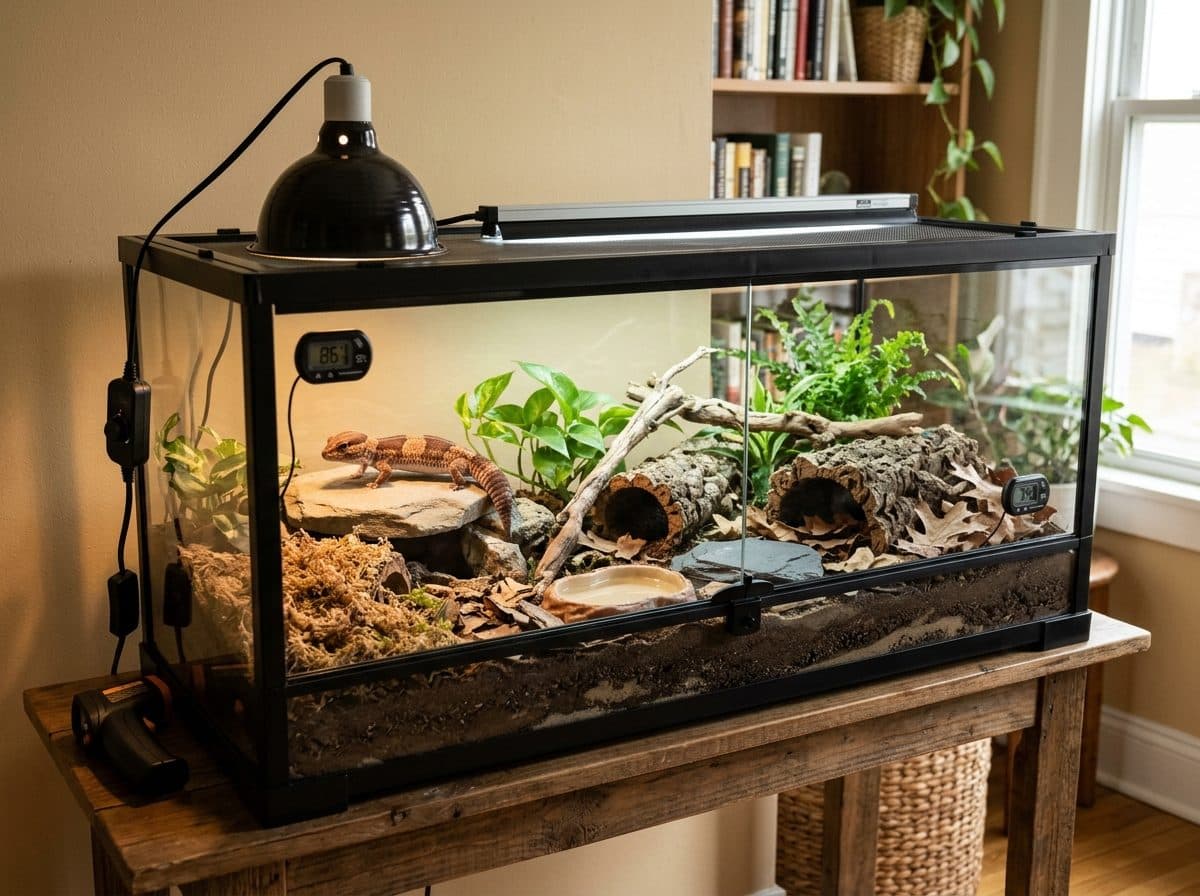
36 × 18 × 18 in (3 × 1.5 × 1.5 ft) for an adult. Front-opening glass or PVC terrarium, horizontal layout.
Juveniles can be raised in a 20-gallon enclosure or tub setup on paper towels to track feeding and bowel movements easily.
African Fat-Tailed Geckos are strictly solitary and should be housed individually to prevent territorial aggression and stress.
Lighting & heat
UVB: Low-level T5 HO linear UVB (e.g., Arcadia ShadeDweller 7% or ReptiSun 5.0) covering about half the enclosure length
Heat: Overhead halogen heat lamp on a dimming thermostat
Day length: 12–14 hours of light
Substrate
Good choices: paper towels (quarantine and young geckos); topsoil, play sand and excavator clay mix (40/40/20); naturalistic soil-sand reptile substrate.
Avoid: Calcium sand or crushed walnut shells; Pure play sand; Cedar or pine wood shavings; Reptile carpet.
What an African fat-tailed gecko needs
Everything for a complete adult setup. Essentials are ticked; untick anything you already have.
How much is an African fat-tailed gecko?
- The African fat-tailed gecko itselfPrices vary depending on color morph, age, sex, captive-bred status, and whether purchased from a wholesale pet distributor or an established breeder.
- $50–$200
- Setup, essentials
- $402–$763
- Every year after
- $210–$420
- First year, setup plus supplies
- $612–$1,183
What you keep buying, per year
| Live feeder insectsAfrican fat-tailed gecko diet consists entirely of live, gut-loaded insects like crickets, dubia roaches, and mealworms. | weekly | $120–$240 |
| Calcium and multivitamin supplementsDusting powders lose potency over time and must be replaced to prevent metabolic bone disease and vitamin deficiencies. | every 6 months | $20–$40 |
| Linear T5 UVB bulb replacementUVB output degrades over time even if the bulb still emits visible light. | every 12 months | $25–$45 |
| Substrate and humid moss refreshFull substrate replacements and fresh damp moss prevent bacteria build-up and maintain proper ambient humidity. | every 2-4 months | $30–$60 |
| Incandescent or halogen basking bulbsOverhead heat bulbs gradually lose thermal efficiency or burn out from daily dimming cycling. | every 6-12 months | $15–$35 |
Typical US prices. Vet care isn't included: budget for a check-up with an exotics vet after your pet comes home, and keep an emergency fund.
Are African fat-tailed geckos good pets?
Yes, and a good first pet.
African fat-tailed geckos live 15–20 years, need about 5–15 minutes of care a day and cost $210–$420 a year in supplies. They tolerate brief, calm handling.
- Handling
- Tolerates brief handling
- Difficulty
- Beginner
- Daily care
- 5–15 min
- Lives
- 15–20 years
- Before you buy
- Hawaii prohibits private possession of most reptiles, including geckos; elsewhere in the US they are generally legal.
Before your African fat-tailed gecko comes home
- 01
2-3 weeks before
Assemble enclosure and install substrate
Setting up the terrarium early allows the substrate and decor to settle and dry to appropriate ambient moisture levels.
- 02
1 week before
Test heat and lighting gradient
Running heat sources and UVB on thermostats ensures stable warm-side, cool-side, and humid hide temperatures before introducing the reptile.
- 03
48 hours before
Verify humidity and thermal stability
Monitoring double-probe digital thermometers and temp guns ensures no dangerous overheating or humidity spikes occur.
- 04
Day one
Transfer gecko directly to warm hide
Minimizing open handling allows the animal to immediately find secure shelter and reduce transportation stress.
- 05
First two weeks
Maintain strict quarantine and observe without handling
Allowing an acclimation period prevents stress-induced anorexia and lets you monitor stool quality and feeding response.
- 06
Within first month
Schedule a baseline exotics vet exam
An initial health check and fecal test catch intestinal parasites and underlying health issues early.
Common setup mistakes
- Treating them like desert leopard geckos and keeping the enclosure too dry.
- Failing to provide a dedicated humid hide with damp sphagnum moss, leading to lost toes from stuck shed
- Using dangerous calcium sand or rough reptile carpet that catches claws and causes impaction
- Housing multiple African Fat-Tailed Geckos together in one enclosure
- Relying on unregulated heat mats or heat rocks that burn the gecko's underside
Questions people ask
What size tank does an African Fat-Tailed Gecko need?
A single adult African Fat-Tailed Gecko needs a minimum 36" x 18" x 18" terrarium (approx. 40-gallon equivalent) to allow proper thermal gradients and multiple hide zones.
What temperatures do African Fat-Tailed Geckos need?
Keep the warm hide or basking surface at 90-94°F, the warm side around 82-88°F and the cool side at 70-77°F.
How much humidity does an African Fat-Tailed Gecko need?
Keep 50-80% humidity during the day, higher at night, plus a humid hide with damp substrate or sphagnum moss.
How much does a full African Fat-Tailed Gecko setup cost?
A proper setup with a 36x18x18 terrarium, heat lamp, thermostat, UVB, substrate, hides and supplements typically costs between $400 and $765.
Sources
The numbers on this page come from these care sheets and references, checked October 2026. How we make these guides.