Isopod colony enclosure & care
Isopods need at least a 12 × 7 × 6 in enclosure and a steady 72–78°F. They live 2–4 years, and a complete setup costs $52–$105.
- Lifespan
- 2–4 years
- Adult size
- 0.2-0.8 in (0.5-2 cm)
- Smallest enclosure
- 12×7×6 in
- Diet
- Leaf litter, decaying wood, protein
- Handling
- Hands-off: best watched
- First year
- $95–$210
What do isopods eat?
Primary diet consists of hardwood leaf litter and soft decaying wood. Supplement weekly with dietary protein (fish flakes, dried shrimp) and a continuous calcium source (cuttlebone) for exoskeleton development.
Isopod colony temperature & humidity
Warm side
72–78°F
Cool side
68–72°F
- Night
- 65–70°F
- Humidity
- 60–80%
Maintain a moisture gradient with a wet, sphagnum-moss side and a drier side to allow self-regulation. Cross-ventilation is essential to prevent stagnant air and lethal mold growth.
Isopod colony enclosure size
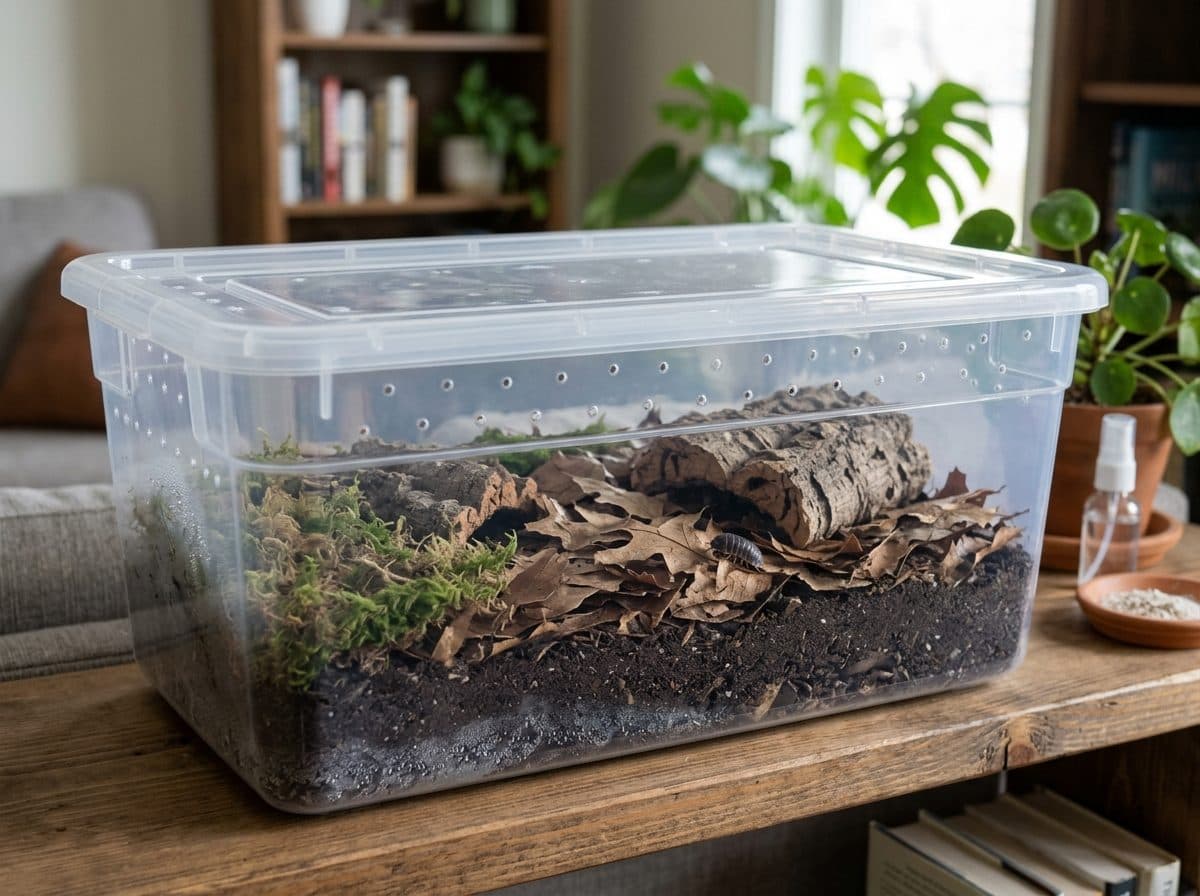
12 × 7 × 6 in (1 × 0.6 × 0.5 ft) for an adult. Ventilated plastic shoe box bin, acrylic enclosure, or glass terrarium, horizontal layout.
A starter culture of 10-20 isopods fits a 6-quart tub; move the colony to a larger bin (around 15 quarts or more) as it grows.
Isopods live as a breeding colony. Start with 10 or more of one species so you get both sexes, and expect numbers to grow; keep species separate.
Lighting & heat
UVB: not required
Heat: not required (standard ambient room temperature is sufficient for most species)
Day length: 8–12 on (ambient room light)
Substrate
Good choices: organic topsoil (pesticide-free); decaying hardwood leaf litter; rotted hardwood / flake soil; sphagnum moss; horticultural charcoal.
Avoid: 100% coconut coir (lacks nutrition); pesticide-treated soil; pine or cedar wood products; potting soil with chemical fertilizers.
What an isopod colony needs
Everything for a complete adult setup. Essentials are ticked; untick anything you already have.
How much is an isopod colony?
- The isopod colony itselfPer starter culture of about 10-12 isopods. Common Porcellio and Armadillidium species are at the low end; rare species and color morphs cost more.
- $10–$60
- Setup, essentials
- $52–$105
- Every year after
- $43–$105
- First year, setup plus supplies
- $95–$210
What you keep buying, per year
| Hardwood leaf litter and decaying woodLeaf litter serves as both the staple diet and primary cover for isopods, requiring regular top-offs as they consume it. | every 1-2 months | $15–$35 |
| Organic substrate materialsSubstrate gradually degrades and accumulates frass, needing periodic partial or full replacement to maintain a healthy environment. | every 6-12 months | $10–$25 |
| Sphagnum mossFresh moss maintains the essential hydration gradient required for isopods to breathe through their modified gills. | every 3-6 months | $8–$20 |
| Protein supplements and cuttleboneProtein prevents cannibalism during molts while calcium supports successful exoskeleton development. | monthly | $10–$25 |
Typical US prices. Vet care isn't included: budget for a check-up with an exotics vet after your pet comes home, and keep an emergency fund.
Are isopods good pets?
Yes, and a good first pet.
Isopods live 2–4 years, need about 1–3 minutes of care a day and cost $43–$105 a year in supplies. They are animals to watch, not hold.
- Handling
- Hands-off: best watched
- Difficulty
- Beginner
- Daily care
- 1–3 min
- Lives
- 2–4 years
- Before you buy
- USDA APHIS says a PPQ 526 permit is required to own many isopod species and to move invertebrates across state lines. Buy from US breeders who follow these rules, ask about a species before buying, and never release isopods outdoors.
Before your isopod colony comes home
- 01
1-2 weeks before
Assemble the substrate, hydration gradient, and hides
Setting up early allows the substrate moisture to equalize and establishes beneficial microflora before introducing the isopods.
- 02
48 hours before
Monitor temperature and moisture levels
Verifying that the moisture gradient is stable prevents lethal desiccation or waterlogging before animals arrive.
- 03
day one
Gently transfer isopods onto the leaf litter
Placing them directly near moisture and cover minimizes initial stress and allows them to retreat immediately.
- 04
first two weeks
Observe activity levels and adjust misting frequency without disturbing the colony
Isopods need time to acclimate to their new habitat, and frequent handling or digging can cause fatal stress or disrupt molting.
Common setup mistakes
- Soaking the entire enclosure substrate instead of creating a damp-to-dry moisture gradient
- Inadequate cross-ventilation leading to stagnant air and lethal mold buildup
- Using 100% coconut coir substrate, which provides zero nutrition for decaying-matter feeders
- Forgetting to provide a dedicated calcium source, causing fatal molting failures
- Placing enclosures in direct sunlight, causing rapid and lethal overheating
Questions people ask
What size tank do isopods need?
A starting colony of 10 to 20 isopods thrives in a simple 6-quart plastic storage container or shoe-box size enclosure (approx. 12x7x6 inches) with cross-ventilation holes drilled into the sides.
What temperature and humidity do isopods need?
Most common species prefer standard room temperatures between 68°F and 78°F with relative humidity between 60% and 80% maintained across a hydrated-to-dry moisture gradient.
What do I need to set up an isopod enclosure?
You need a ventilated tub, 2 to 3 inches of nutrient-rich organic soil mix, sphagnum moss on one side, cork bark hides, a layer of pesticide-free hardwood leaf litter, and a cuttlebone for calcium.
How much does an isopod setup cost?
A complete starter setup in a DIY plastic tub costs about $50 to $105 for the tub, soil, leaf litter, moss, cork bark, calcium and a mister, not counting the isopods themselves.
Sources
The numbers on this page come from these care sheets and references, checked October 2026. How we make these guides.