Hermit Crab Enclosure Setup
Land hermit crabs are social, long-lived nocturnal scavengers that require a tightly managed tropical environment to thrive. Successful keeping requires deep, damp substrate for burrowing and molting, consistently high relative humidity for their modified gills, and dual pools of fresh and marine saltwater.
- Minimum enclosure (adult)
- 29 gallons
- Temperature
- 78–85°F
- Humidity
- 75–85%
- Essentials cost
- $211–$396
The setup at a glance
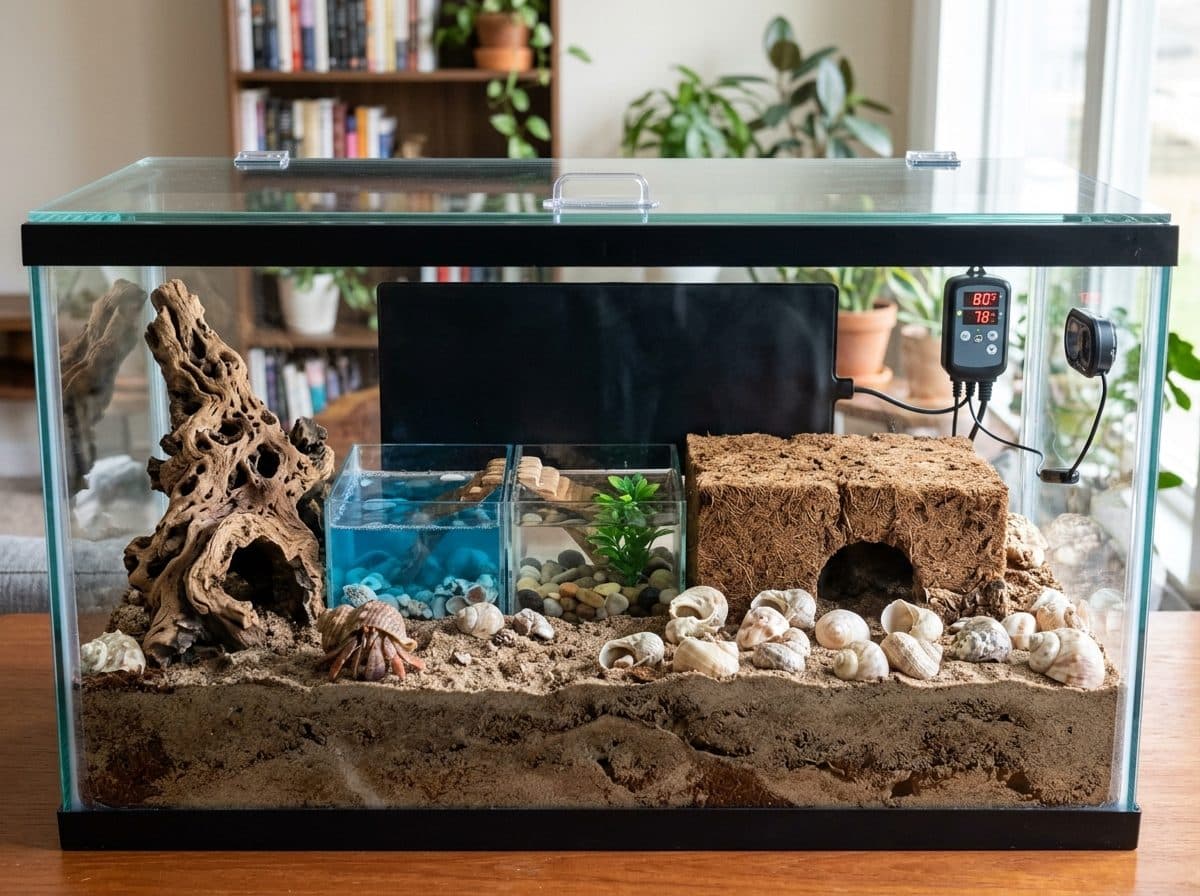
Enclosure size
Adult minimum: 30 × 12 × 18 in (2.5 × 1 × 1.5 ft), 29 gallons. Glass aquarium with solid glass or acrylic lid, horizontal layout.
Young crabs have the exact same environmental requirements as adults, including deep, damp substrate for molting.
Hermit crabs are social and should be kept in groups of two or more; allow at least 5 to 10 gallons of space per crab.
Adult size: 2-6 in (5-15 cm) body length. Lifespan: 10–40 years. Difficulty: intermediate. Hands-off: best watched; about 10–20 minutes of care a day.
Temperature & humidity
| Warm side | 78–85°F |
| Cool side | 75–78°F |
| Night | 75–80°F |
| Humidity | 75–85% |
Hermit crabs breathe via modified gills that dry out and suffocate the animal if ambient humidity drops below 70%. Heat mats must be mounted on the back wall of the tank above substrate level, never underneath.
Lighting & heat
UVB: not required
Heat: Heat mat mounted on the back wall above the substrate, connected to a digital thermostat
Day length: 12 on hours
Substrate & diet
Good choices: Play sand mixed with coconut coir in a 5:1 ratio; Substrate depth of at least 6 inches or 3x the height of the largest crab; Dampened with dechlorinated water to sandcastle consistency.
Avoid: Calcium sand or Calci-Sand; Pine or cedar wood shavings; Gravel or aquarium pebbles; Potting soil with fertilizers.
Diet: Land hermit crabs require a varied omnivorous diet of fresh protein (shrimp, fish, egg), plant matter (leafy greens, coconut, fruits), seed mixes, cuttlebone for calcium, and leaf litter. Avoid commercial pellets containing chemical preservatives or copper.
Hermit Crab setup checklist
Everything for a complete adult setup. Essentials are ticked; untick anything you already have.
What a Hermit Crab costs to keep
- Setup (essentials)
- $211–$396
- Every year after
- $105–$220
- First year, all in
- $316–$616
| Ongoing | How often | Per year |
|---|---|---|
| Fresh omnivorous food & seedsHermit crabs require a constant rotation of fresh proteins, vegetables, fruits, and seeds to maintain balanced nutrition. | weekly | $40–$80 |
| Dechlorinator & marine salt mixBoth fresh water and salt water pools must be treated continuously to remove chlorine/chloramines and provide essential ocean minerals. | every 3-6 months | $15–$30 |
| Cuttlebone & natural leaf litterCalcium sources and dry leaf litter are consumed regularly for exoskeletal health and natural foraging behavior. | every 2-3 months | $15–$35 |
| Substrate refresh (play sand & coconut coir)Deep substrate needs top-offs and deep-cleaning replacements to prevent bacterial bloom and maintain proper burrowing texture. | every 6-12 months | $15–$30 |
| Natural expansion shellsCrabs continuously grow and require a variety of larger, natural, unpainted shells to prevent aggressive shell-fighting. | every 6-12 months | $20–$45 |
Typical US prices. Vet care isn't included: budget for a check-up with an exotics vet after you bring your pet home, and keep an emergency fund.
Before your hermit crab comes home
2 weeks before
Mix substrate and fill the aquarium to required depth
Combining play sand and coconut coir to a sandcastle-consistency at a minimum depth of six inches allows it to settle before crabs arrive.
1 week before
Install heat mat, digital thermostat, and water pools
Setting up the environmental equipment early ensures all space is laid out safely before stabilizing microclimates.
48 hours before
Run heat source and verify stable temperature and humidity
Testing parameters without animals present prevents deadly overheating, severe chill, or dry conditions during initial transition.
day one
Prepare fresh water, marine salt water, fresh food, and place crabs quietly inside
Providing immediate hydration, minerals, and food in a calm environment reduces severe transport stress.
first two weeks
Leave crabs completely undisturbed except for routine food and water changes
New hermit crabs suffer extreme post-purchase stress and often de-stress by burrowing into the substrate, where disturbance can be fatal.
after first month
Schedule a routine wellness exam with an exotics veterinarian
Establishing care with a knowledgeable vet ensures early detection of bacterial or fungal infections common in newly acquired crabs.
Common setup mistakes
- Using open mesh wire screen tops that cause humidity to escape and dry out modified gills.
- Placing heat pads under the bottom of the tank, which bakes burrowed or molting crabs.
- Providing shallow substrate under 6 inches that prevents safe subterranean molting.
- Using calcium sand or painted shells, which can cause impaction or toxicity.
- Offering table salt or freshwater aquarium salt instead of true marine salt mix.
Questions people ask
What size tank do I need for hermit crabs?
A group of 2-3 small land hermit crabs needs at least a 29-gallon glass tank (a 10-gallon suits only two very small crabs), with 5 to 10 additional gallons per extra crab as they grow.
What temperature and humidity do hermit crabs need?
Keep temperatures between 78-85°F and relative humidity stable between 75-85% at all times to keep their modified gills moist.
Why do hermit crabs dig into the sand and disappear?
Hermit crabs burrow into deep substrate to molt their exoskeleton, which can take several weeks to months; never dig up a buried crab.
How much does a complete hermit crab setup cost?
A proper initial setup with a glass enclosure, heat mat, thermostat, substrate, salt mix, pools, and natural spare shells typically costs between $210 and $400.
Sources
The numbers on this page come from these care sheets and references, checked October 2026. How we make these guides.