Backyard Poultry · Anas platyrhynchos domesticus
Backyard duck coop & care
Backyard ducks need at least a 72 × 48 × 36 in coop. They live 5–12 years, and a complete setup costs $515–$1,367.
- Lifespan
- 5–12 years
- Adult size
- Call ducks under 2 lb; light breeds (Runner, Khaki Campbell) about 3.5-5 lb; heavy breeds (Pekin, Rouen) about 8-10 lb
- Smallest coop
- 72×48×36 in
- Diet
- Waterfowl pellets, water, greens
- Handling
- Tolerates brief handling
- First year
- $795–$1,937
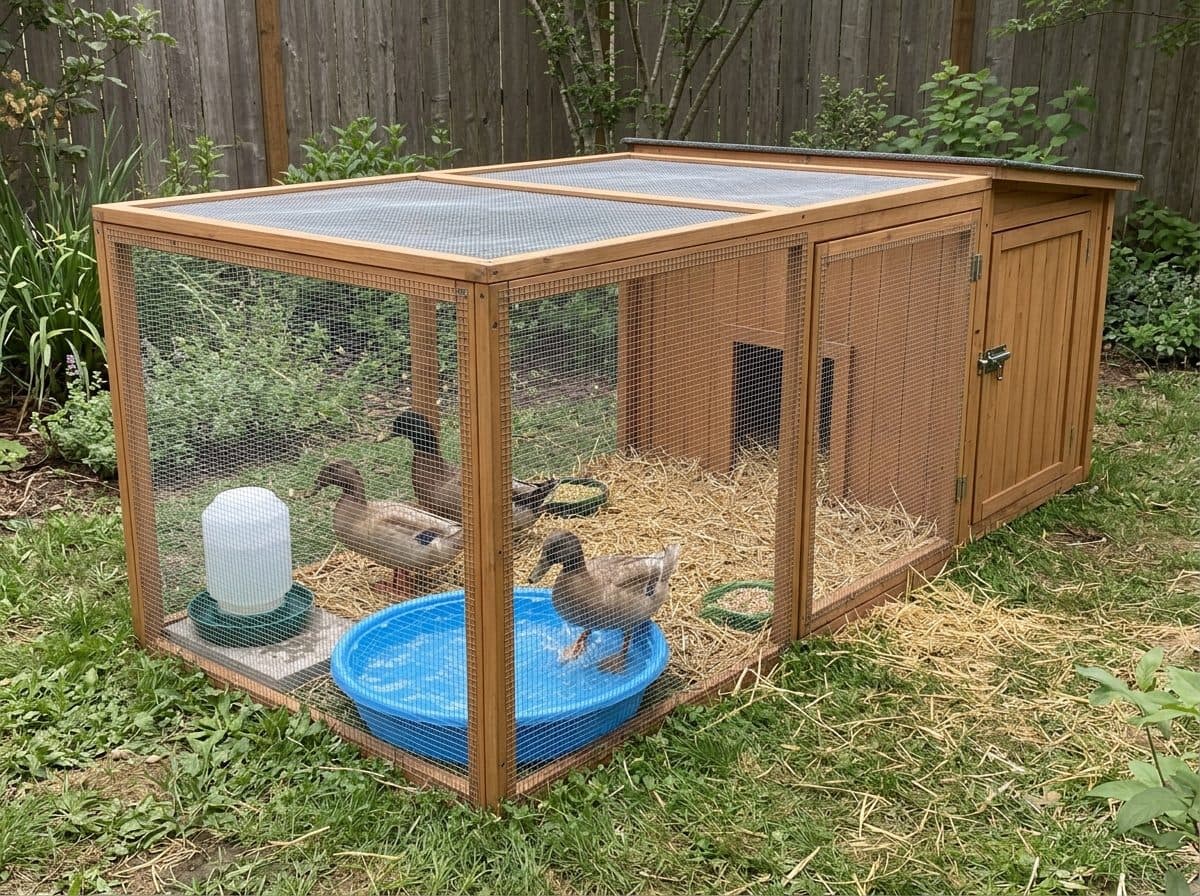
What do backyard ducks eat?
Feed a complete waterfowl pellet, or an unmedicated all-flock or layer pellet for laying ducks, free-choice, with drinking water right beside the feed: ducks need water to swallow and to clear their bills and nostrils. Ducklings need more niacin than chicks (Merck: about 55-70 mg/kg of feed); duckling or waterfowl starter has enough, but on chick starter add niacin to the water or brewer's yeast to the feed. Offer oyster shell to laying ducks on all-flock feed, insoluble grit if they forage, and greens and weeds as treats.
Food per year: $180–$350
Backyard duck temperature
Adult ducks need no basking spot, heat or water heating. They are very cold-hardy if the house is dry and draft-free with deep bedding; damp bedding is the real winter risk. In hot weather give shade and fresh water to dunk in. In freezing weather they still need unfrozen water deep enough to dip their heads, refreshed daily.
Backyard duck coop size
72 × 48 × 36 in (6 × 4 × 3 ft) for an adult. Predator-proof duck house (night shelter) with fenced run, horizontal layout.
Ducklings live in a heated brooder (see the duckling brooder guide). They can't shed water until their adult feathers come in, so supervise any swimming and keep them dry; fully feathered ducks (about 7-9 weeks) can live outdoors full-time.
House floor sized for 3-4 standard ducks (about 5-6 sq ft each); add about 5 sq ft of floor per extra duck, plus at least 15 sq ft of run per duck. Ducks are flock birds: keep at least 2-3, and give a drake several ducks rather than one.
Lighting & heat
UVB: not required
Heat: none for adults; avoid heat lamps in the duck house (fire risk)
Day length: natural daylight (laying slows as days shorten)
Substrate
Good choices: straw (wheat or oat); large-flake pine shavings; sand or pea gravel around the water in the run.
Avoid: cedar shavings; wet or moldy bedding (aspergillosis risk); fine sawdust; wire-mesh floors.
What a backyard duck needs
Everything for a complete adult setup. Essentials are ticked; untick anything you already have.
How much is a backyard duck?
- The backyard duck itselfDucklings run about $5-15 depending on breed and whether they are sexed; adult laying ducks about $20-40.
- $5–$40
- Setup, essentials
- $515–$1,367
- Every year after
- $280–$570
- First year, setup plus supplies
- $795–$1,937
What you keep buying, per year
| Waterfowl or all-flock pellets3-4 adult ducks eat roughly 400-600 lb of feed a year, more if they can't forage. | every 3-5 weeks | $180–$350 |
| Straw beddingDucks wet bedding fast; replacing it keeps the house dry and mold-free. | every 1-2 weeks | $80–$180 |
| Oyster shell and gritCalcium for laying ducks and grit for the gizzard. | every 3-6 months | $20–$40 |
Typical US prices. Vet care isn't included: budget for a check-up with an exotics vet after your pet comes home, and keep an emergency fund.
Are backyard ducks good pets?
Yes, and a good first pet.
Backyard ducks live 5–12 years, need about 20–40 minutes of care a day and cost $280–$570 a year in supplies. They tolerate brief, calm handling.
- Handling
- Tolerates brief handling
- Difficulty
- Beginner
- Daily care
- 20–40 min
- Lives
- 5–12 years
- Before you buy
- Check your city or county code and HOA rules before buying ducks: some places that allow backyard hens don't allow ducks, or class them as livestock with flock limits, permits and setback distances. Laying ducks are the noisy ones (drakes are quiet), so noise rules and neighbors matter too.
Before your backyard duck comes home
- 01
before you buy ducks
Check city code, permits and HOA rules for ducks specifically
Rules that allow hens don't always cover ducks, and flock limits or setbacks decide where the house can go.
- 02
1-2 weeks before
Build the duck house and covered run and wrap them in hardware cloth
Bury or apron the mesh and fit raccoon-proof latches before the first night, when losses are most likely.
- 03
a few days before
Set up the waterer and bathing tub on gravel or a drained spot in the run, and bed the house deeply
Keeping water out of the house and on a draining base is what keeps the bedding dry.
- 04
day one
Keep new ducks in the run for several days and herd them into the house at dusk
Ducks don't reliably put themselves to bed; a routine from day one makes evening lock-up easy.
- 05
first 30 days
Keep new birds apart from any existing flock and find a vet who treats poultry and waterfowl
Quarantine stops new birds bringing in disease, and many small-animal vets don't see ducks.
Common setup mistakes
- Giving water too shallow for ducks to dip their whole heads, which leads to crusted nostrils and eye infections.
- Leaving ducks out overnight; they need to be herded into a locked house every evening.
- Putting the water inside the night house, which soaks the bedding; wet, moldy bedding causes foot and respiratory problems.
- Raising ducklings on chick starter without added niacin, which causes bowed legs and lameness.
- Using chicken wire instead of 1/2-inch hardware cloth, which raccoons reach through.
- Adding roost bars or nest boxes up off the floor; ducks sleep and lay on the ground in deep bedding.
- Keeping wire-mesh floors, which hurt ducks' feet.
Questions people ask
How big does a duck house need to be?
Penn State Extension lists 3 sq ft per duck inside and 15 sq ft in the run; Merck gives 3-6 sq ft inside and 15-18 in the run. Plan on 5-6 sq ft each for heavy breeds like Pekins, so a 6 x 4 ft house fits 3-4 ducks.
Do ducks need a pond?
No, but they need water deep enough to dunk their whole heads to keep their eyes and nostrils clean, and a tub or kiddie pool to bathe in helps them keep their feathers in shape. Change it often; ducks foul water fast.
Do ducks need heat in the winter?
No. Adult ducks handle cold well in a dry, draft-free house with deep bedding. What they do need in freezing weather is open drinking water every day.
How much does it cost to set up for backyard ducks?
Expect about $515-$1,370 for a duck house and covered run for 3-4 ducks, hardware cloth, latches, a deep waterer, a bathing tub, feed, a feed pan, oyster shell, grit and straw. The house and run are most of it.
How long do backyard ducks live?
Commonly 8-12 years for light breeds kept safe from predators; heavy meat-type breeds like Pekins often live only 5-8.
Sources
The numbers on this page come from these care sheets and references, checked October 2026. How we make these guides.
- 1Small Scale Poultry Housing (Penn State Extension)
- 2Management of Backyard Poultry (Merck Veterinary Manual)
- 3Vitamin Deficiencies in Poultry (Merck Veterinary Manual)
- 4Feeding Ducks Intended for Consumption (Extension Foundation)
- 5Care of Ducks (University of Wisconsin-Madison Extension)
- 6Basic Duck Care (Cornell Duck Research Laboratory)
- 7Brooding and Rearing Ducklings and Goslings (University of Missouri Extension)
- 8Watertight: open water for farmed ducks (RSPCA science report)
- 9Rearing Instructions (Metzer Farms)