Backyard Poultry · Gallus gallus domesticus
Backyard chicken coop & care
Backyard chickens need at least a 48 × 48 × 48 in coop. They live 6–12 years, and a complete setup costs $510–$1,554.
- Lifespan
- 6–12 years
- Adult size
- Bantams about 1-2.5 lb; standard hens 4-8 lb; large breeds (Brahma, Jersey Giant) about 9-13 lb
- Smallest coop
- 48×48×48 in
- Diet
- Layer feed, oyster shell, grit
- Handling
- Tolerates brief handling
- First year
- $710–$2,004
What do backyard chickens eat?
Laying hens eat a complete layer feed (16-18% protein) free-choice, about 1/4 lb per hen a day, with clean water at all times. Offer crushed oyster shell free-choice for eggshell calcium and insoluble grit if they forage or get scraps. Don't feed layer feed to pullets before they start laying: the extra calcium can damage their kidneys. Keep treats and scraps a small part of the diet.
Food per year: $130–$260
Backyard chicken temperature
Adult chickens need no basking spot, heat or set temperature. Merck lists about 65-75°F as ideal; heat is the bigger danger, so in summer give shade, airflow and plenty of cool water (panting and held-out wings mean heat stress). Feathered adults handle freezing weather if the coop is dry and draft-free at roost level, with ventilation high on the walls to clear moisture and ammonia.
Backyard chicken coop size
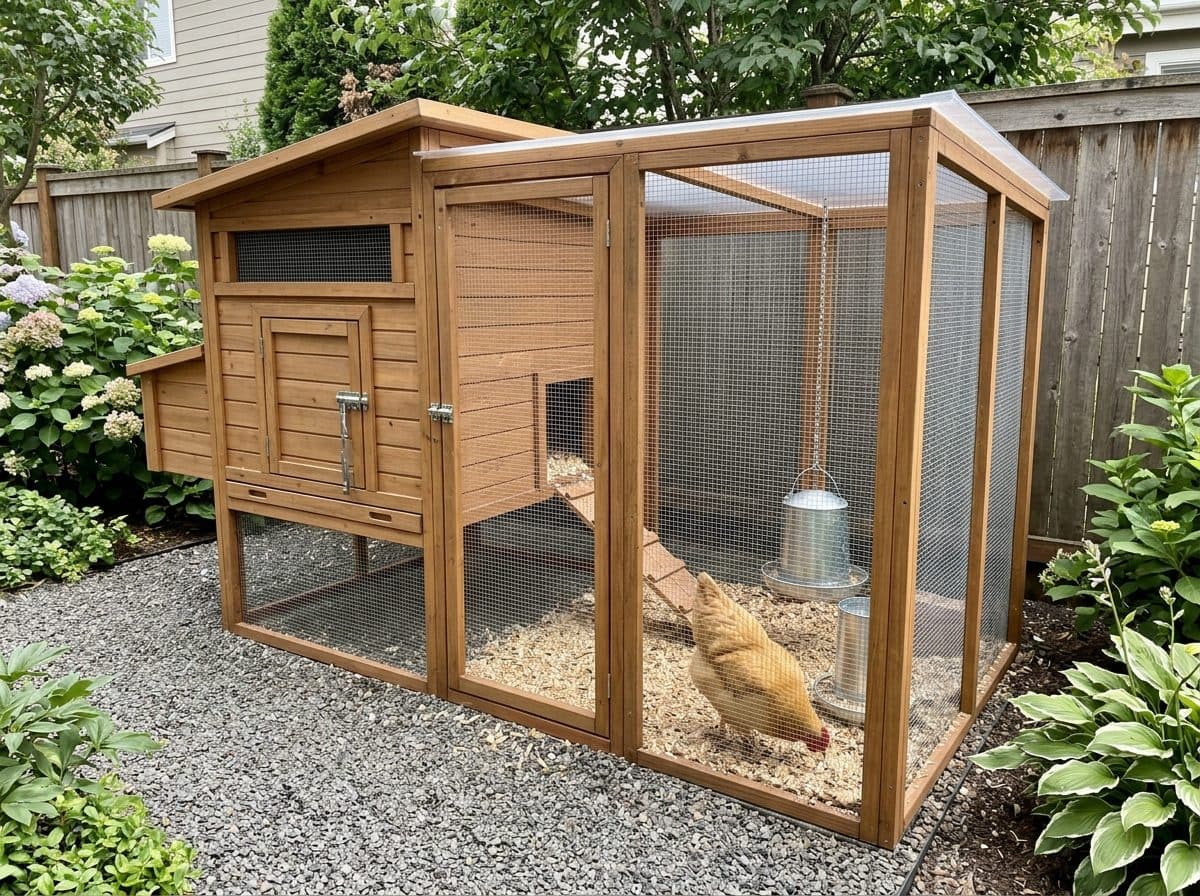
48 × 48 × 48 in (4 × 4 × 4 ft) for an adult. Coop with attached predator-proof run, horizontal layout.
Chicks live in a heated brooder (see the chick brooder guide) until fully feathered at about 6 weeks, then move to the coop. Feed grower, not layer feed, until the first egg (about 18-24 weeks).
Coop floor sized for 3-4 standard hens (about 4 sq ft each; bantams need about half); add about 4 sq ft of floor per extra bird, plus about 10 sq ft of run per bird. Chickens are flock animals: keep at least 3.
Lighting & heat
UVB: not required
Heat: none for adults; avoid heat lamps in the coop (a common cause of coop fires)
Day length: natural daylight (hens lay best with about 14 hours of light, so laying slows in winter)
Substrate
Good choices: pine shavings; chopped straw; coarse sand.
Avoid: cedar shavings; wet or moldy bedding; fine sawdust; wire-mesh floors.
What a backyard chicken needs
Everything for a complete adult setup. Essentials are ticked; untick anything you already have.
How much is a backyard chicken?
- The backyard chicken itselfDay-old chicks run about $3-8 (sexed pullets cost more than straight run); started or point-of-lay pullets about $20-50, depending on breed and seller.
- $3–$50
- Setup, essentials
- $510–$1,554
- Every year after
- $200–$450
- First year, setup plus supplies
- $710–$2,004
What you keep buying, per year
| Layer feedAbout 1/4 lb per hen a day: 3-4 hens go through roughly 7-9 bags of 50 lb a year. | every 4-6 weeks | $130–$260 |
| Pine shavings beddingTopping up and cleaning out wet litter keeps ammonia and parasites down. | monthly | $50–$150 |
| Oyster shell and gritFree-choice calcium for shells and grit for the gizzard. | every 3-6 months | $20–$40 |
Typical US prices. Vet care isn't included: budget for a check-up with an exotics vet after your pet comes home, and keep an emergency fund.
Are backyard chickens good pets?
Yes, and a good first pet.
Backyard chickens live 6–12 years, need about 10–30 minutes of care a day and cost $200–$450 a year in supplies. They tolerate brief, calm handling.
- Handling
- Tolerates brief handling
- Difficulty
- Beginner
- Daily care
- 10–30 min
- Lives
- 6–12 years
- Before you buy
- Check your city or county code before buying birds: many towns that allow hens cap the flock size, ban roosters, require a permit, or set minimum distances between the coop and property lines or houses. HOA covenants can forbid poultry even where the city allows it.
Before your backyard chicken comes home
- 01
before you buy birds
Check city code, permits and HOA rules
Flock limits, rooster bans and setback rules decide how many birds you can keep and where the coop can go.
- 02
1-2 weeks before
Build the coop and run and wrap them in hardware cloth
Bury or apron the mesh and fit raccoon-proof latches before the first night, when losses are most likely.
- 03
a few days before
Set up bedding, roost, nest box, feeder, waterer, oyster shell and grit
Hens settle faster into a coop that is ready, and you can check the roost sits higher than the nest box.
- 04
day one
Keep new birds shut in the coop and run for several days
They learn the coop is home and will go in to roost at dusk; lock the door every night.
- 05
first 30 days
Keep new birds apart from any existing flock and find a vet who sees poultry
Quarantine stops new birds bringing in disease or mites, and many small-animal vets don't treat chickens.
- 06
at the first egg (about 18-24 weeks)
Switch pullets from grower to layer feed and put out oyster shell
Layer feed's extra calcium is needed for shells but harms birds that aren't laying yet.
Common setup mistakes
- Using chicken wire instead of 1/2-inch hardware cloth on vents and the lower run, and not burying or aproning it against diggers.
- Leaving the coop door open at night; most predator losses happen after dark.
- Crowding the coop, which leads to feather pecking, wet litter and disease.
- Sealing the coop up for winter instead of ventilating high on the walls, so moisture and ammonia build up and cause frostbite and respiratory illness.
- Hanging a heat lamp in an adult coop, a common cause of coop fires.
- Feeding layer feed to pullets before they lay; the extra calcium can damage their kidneys.
- Putting nest boxes higher than the roost, so hens sleep in them and foul the eggs.
Questions people ask
How much space do chickens need in a coop and run?
Plan on about 4 sq ft of coop floor and 10 sq ft of run per standard hen; bantams need about half that, large breeds a little more. Extension minimums run lower (Penn State lists 1.5-2 sq ft inside), but more room means fewer pecking problems.
How long do backyard chickens live?
Penn State Extension says hens in small flocks live about 8 years and can reach 12-15, though most lay well only for their first two or three years.
How much does it cost to set up a chicken coop?
Expect about $510-$1,550 for a coop and covered run for 3-4 hens, hardware cloth, latches, feeder, waterer, bedding, a first bag of layer feed, oyster shell and grit. The coop and run are most of it.
Do chickens need heat in the coop during winter?
No. Feathered adult hens handle freezing weather if the coop is dry, draft-free at roost level and ventilated high on the walls. Heat lamps cause coop fires; a heated waterer base is the one winter electric item worth having.
Do hens need a rooster to lay eggs?
No. Hens lay without a rooster; day length, not a male, drives laying. Many towns ban roosters anyway.
Sources
The numbers on this page come from these care sheets and references, checked October 2026. How we make these guides.
- 1Small Scale Poultry Housing (Penn State Extension)
- 2Successfully Raising a Small Flock of Laying Chickens (Penn State Extension)
- 3Basics for Raising Backyard Chickens (Utah State University Extension)
- 4Living on the Land: Backyard Chicken Coop Design (Oregon State University Extension)
- 5Raising chickens for eggs (University of Minnesota Extension)
- 6Space Allowances in Housing for Small and Backyard Poultry Flocks (Extension Foundation)
- 7Management of Backyard Poultry (Merck Veterinary Manual)