Amphibians · Ceratophrys spp.
Pacman Frog Enclosure Setup
Pacman frogs are sedentary, round amphibians known for their huge appetites and unique sit-and-wait hunting style. They spend most of their time buried in damp soil with only their eyes exposed. Setup success requires deep, moist substrate, strict individual housing, precise tropical temperatures, and consistent high humidity.
- Minimum enclosure (adult)
- 24×18×18 in
- Basking spot
- 82–85°F
- Humidity
- 70–80%
- Essentials cost
- $285–$499
The setup at a glance
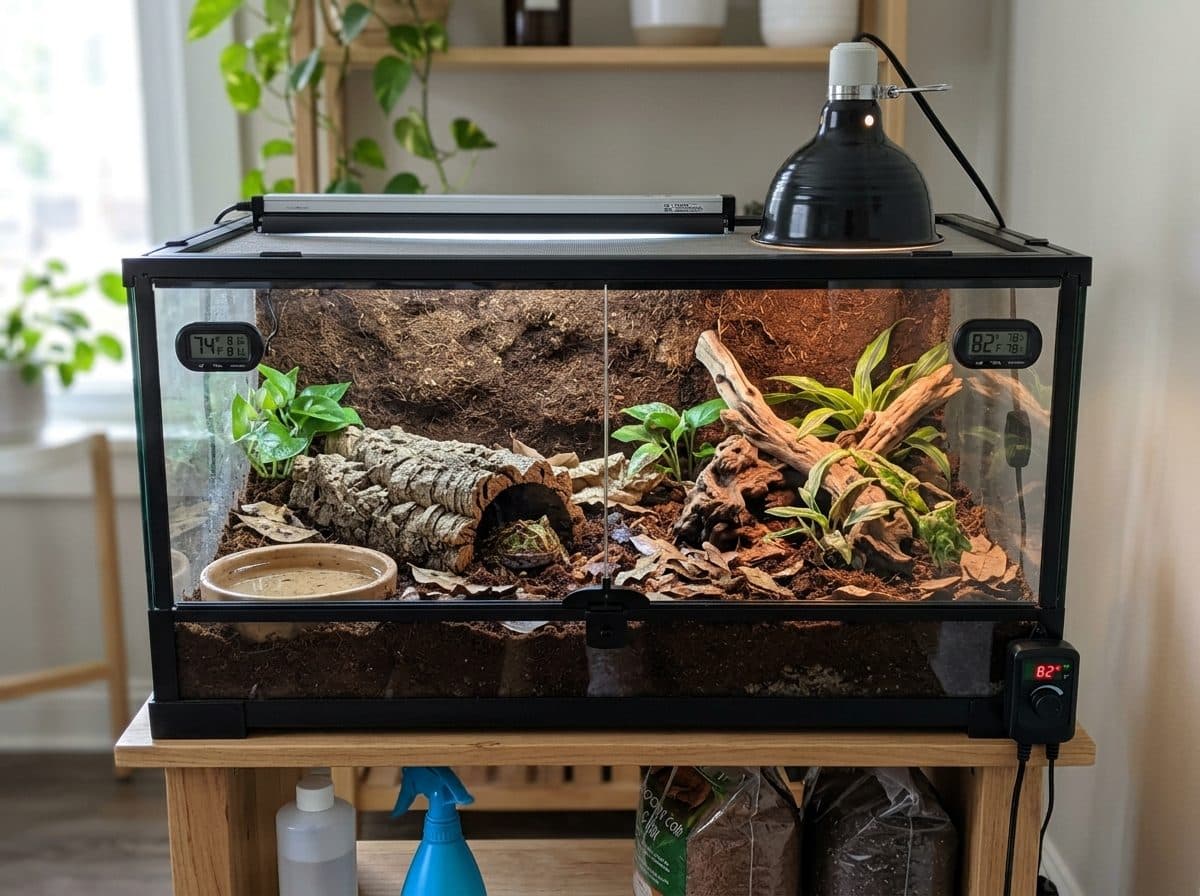
Enclosure size
Adult minimum: 24 × 18 × 18 in (2 × 1.5 × 1.5 ft). Front-opening glass or PVC terrarium, horizontal layout.
Babies under 3 inches can start in a 10-gallon tank or small tub to monitor feeding, but they grow very quickly and reach full size in 6–12 months.
Pacman frogs are strictly solitary and cannibalistic; housing multiple frogs together will result in injury or death.
Adult size: 4-7 in (10-18 cm) snout-to-vent. Lifespan: 10–15 years. Difficulty: beginner. Hands-off: best watched; about 5–15 minutes of care a day.
Temperature & humidity
| Basking surface | 82–85°F |
| Warm side | 80–83°F |
| Cool side | 72–78°F |
| Night | 68–75°F |
| Humidity | 70–80% |
Provide a thermal gradient using overhead heat regulated by a thermostat or dimmer. Maintain elevated humidity through deep, moist substrate and controlled misting with de-chlorinated water.
Lighting & heat
UVB: Linear T5 HO 2.4–6% (Ferguson Zone 1) covering 1/2 of enclosure length
Heat: Low-wattage overhead incandescent heat bulb or ceramic heat emitter controlled by a thermostat
Day length: 12-14 on hours
Substrate & diet
Good choices: Coconut coir (coco fiber); Unfertilized topsoil mix; Bioactive amphibian soil mix.
Avoid: Reptile bark chips; Gravel or small stones; Coarse loose sand; Loose top-layer sphagnum moss (impaction risk); Soils with chemical fertilizers or perlite.
Diet: Strict carnivore requiring live gut-loaded insects such as dubia roaches, nightcrawlers, and crickets, with occasional hornworms or small feeder rodents for large adults. Dust all food items with calcium with vitamin D3 and a general multivitamin supplement according to schedule.
Pacman Frog setup checklist
Everything for a complete adult setup. Essentials are ticked; untick anything you already have.
What a Pacman Frog costs to keep
- Setup (essentials)
- $285–$499
- Every year after
- $205–$410
- First year, all in
- $490–$909
| Ongoing | How often | Per year |
|---|---|---|
| Live feeder insectsPacman frogs require a steady supply of live, gut-loaded invertebrates like nightcrawlers, dubia roaches, and crickets. | weekly | $120–$240 |
| Coconut coir substrateSubstrate needs full monthly replacements to prevent dangerous ammonia buildup and bacterial or fungal infections. | monthly | $30–$60 |
| Water conditionerAmphibian skin absorbs water directly, making dechlorinated tap water necessary to prevent toxic chemical burns. | every 3-6 months | $10–$20 |
| Calcium and multivitamin powdersDusting powders degrade over time after opening and must be replaced to prevent metabolic bone disease and nutrient deficiencies. | every 6 months | $20–$40 |
| Linear T5 UVB lamp replacementUVB output degrades over time even while the bulb continues emitting visible light, requiring regular replacement. | every 12 months | $25–$50 |
Typical US prices. Vet care isn't included: budget for a check-up with an exotics vet after you bring your pet home, and keep an emergency fund.
Before your pacman frog comes home
2 weeks before
Assemble enclosure and add substrate
Setting up substrate and decor early allows you to prepare a deep, properly moistened burrowing layer before the frog arrives.
48 hours before
Run heating and lighting to verify thermal gradient
Testing the thermostat, overhead heat source, and digital hygrometers without the animal present prevents overheating or lethal drying.
Day one
Transfer frog gently into the enclosure with clean, wet hands or gloves
Minimizing touch during intake protects the frog's sensitive, permeable skin from oils or chemical residue.
First week
Leave the frog entirely alone except for quick misting and water changes
Pacman frogs experience extreme stress during relocation and need quiet seclusion to adjust and begin feeding.
First two weeks
Establish a health baseline and schedule a initial exotics vet exam
Early health screening and fecal analysis detect internal parasites or underlying health issues common in new amphibians.
Common setup mistakes
- Housing multiple Pacman frogs together, which leads to fatal cannibalism.
- Using un-thermostatted under-tank heat pads or heat rocks, which burn burrowing frogs.
- Using untreated tap water containing chlorine or heavy metals that harm permeable amphibian skin.
- Allowing substrate to dry out or become completely waterlogged and foul.
- Feeding prey on loose moss or small gravel, leading to fatal intestinal impaction.
Before you buy: Pacman frogs are generally legal across the US, but local ordinances or state wildlife laws may restrict exotic pet ownership; always check municipal rules.
Questions people ask
What tank size does an adult Pacman frog need?
An adult Pacman frog needs an enclosure with at least 24x18 inches of floor space (a 20-gallon long to 29-gallon equivalent minimum), though 36x18 inches is ideal for large females.
What temperature and humidity do Pacman frogs require?
Maintain a thermal gradient of 80–83°F on the warm side and 72–78°F on the cool side, with humidity kept consistently between 70% and 80%.
What equipment do I need to set up a Pacman frog habitat?
You need a front-opening enclosure, loose soil substrate (like coco coir), an overhead heat lamp on a thermostat, a low-output T5 UVB light, a shallow water dish, water dechlorinator, and digital thermometer/hygrometers.
How much does a full Pacman frog setup cost?
A complete starter setup typically costs between $290 and $500 USD including enclosure, lighting, heating, substrate, water treatments, and supplements.
Sources
The numbers on this page come from these care sheets and references, checked October 2026. How we make these guides.